


doi: 10.4161/temp.29761.
eCollection 2014 Jul-Sep.
Ischemia/reperfusion injury resistance in hibernators is more than an effect of reduced body temperature or winter season
Affiliations
- PMID: 27583285
- PMCID: PMC4977161
- DOI: 10.4161/temp.29761
Item in Clipboard
Ischemia/reperfusion injury resistance in hibernators is more than an effect of reduced body temperature or winter season
Temperature (Austin).
.
Abstract
Hibernating mammals are resistant to injury following cardiac arrest. The basis of this protection has been proposed to be due to their ability to lower body temperature or metabolic rate in a seasonally-dependent manner. However, recent studies have shown that neither reduced body temperature nor hibernation season are components this protection.
Keywords: body temperature; cardiac arrest; hemorrhagic shock; hibernation; hibernation season; ischemia/reperfusion; metabolism.
Figures
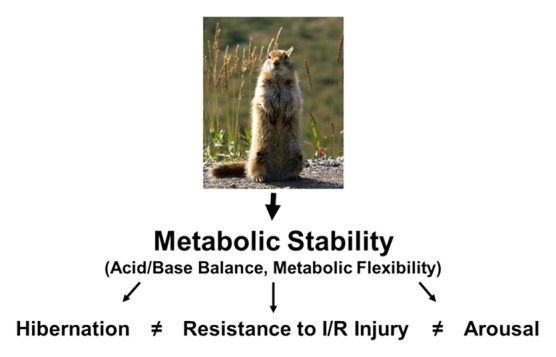
Figure 1.Ischemia/reperfusion injury resistance in arctic ground squirrels is not dependent on low body temperature or hibernation season but is due to metabolic stability defined as acid/base balance and the ability to switch between glucose and lipid energy sources to avoid lactate accumulation. (Photograph courtesy of Kim Turnball.)
References
-
- Bogren LK, Olson JM, Carpluk J, Moore JM, Drew KL. . Resistance to systemic inflammation and multi organ damage after global ischemia/reperfusion in the arctic ground squirrel. PLoS One 2014; 9:e94225; http://dx.doi.org/ 10.1371/journal.pone.0094225; PMID: 24728042 - DOI - PMC - PubMed
-
- Bernard SA, Gray TW, Buist MD, Jones BM, Silvester W, Gutteridge G, Smith K. . Treatment of comatose survivors of out-of-hospital cardiac arrest with induced hypothermia. N Engl J Med 2002; 346:557 - 63; http://dx.doi.org/ 10.1056/NEJMoa003289; PMID: 11856794 - DOI - PubMed
-
- Dave KR, Prado R, Raval AP, Drew KL, Perez-Pinzon MA. . The arctic ground squirrel brain is resistant to injury from cardiac arrest during euthermia. Stroke 2006; 37:1261 - 5; http://dx.doi.org/ 10.1161/01.STR.0000217409.60731.38; PMID: 16574920 - DOI - PubMed
-
- Andrews MT, Russeth KP, Drewes LR, Henry PG. . Adaptive mechanisms regulate preferred utilization of ketones in the heart and brain of a hibernating mammal during arousal from torpor. Am J Physiol Regul Integr Comp Physiol 2009; 296:R383 - 93; http://dx.doi.org/ 10.1152/ajpregu.90795.2008; PMID: 19052316 - DOI - PMC - PubMed
-
- Carey HV, Andrews MT, Martin SL. . Mammalian hibernation: cellular and molecular responses to depressed metabolism and low temperature. Physiol Rev 2003; 83:1153 - 81; PMID: 14506303 - PubMed
LinkOut - more resources
Full Text Sources
Other Literature Sources
