Pancreatic Neuroendocrine Tumor Secreting Vasoactive Intestinal Peptide and Dopamine With Pulmonary Emboli: A Case Report
- PMID: 27583474
- PMCID: PMC5052354
- DOI: 10.1210/jc.2016-2051
Pancreatic Neuroendocrine Tumor Secreting Vasoactive Intestinal Peptide and Dopamine With Pulmonary Emboli: A Case Report
Abstract
Context: The vasoactive intestinal peptide-secreting neuroendocrine tumor (VIPoma) is a very rare pancreatic tumor. We report the first case of a patient with VIPoma that co-secreted dopamine and had pulmonary emboli.
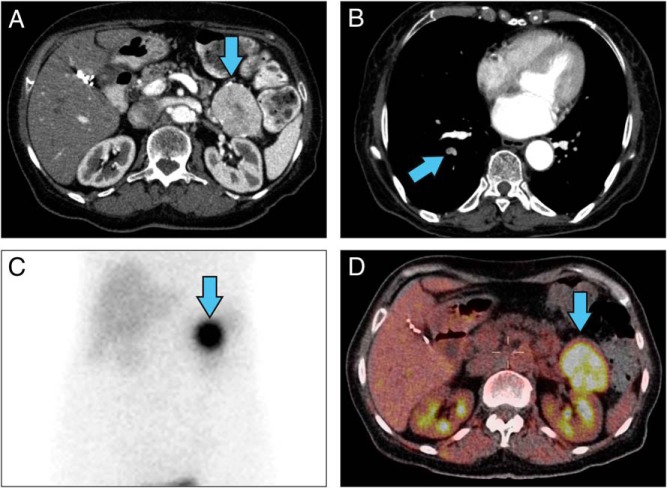
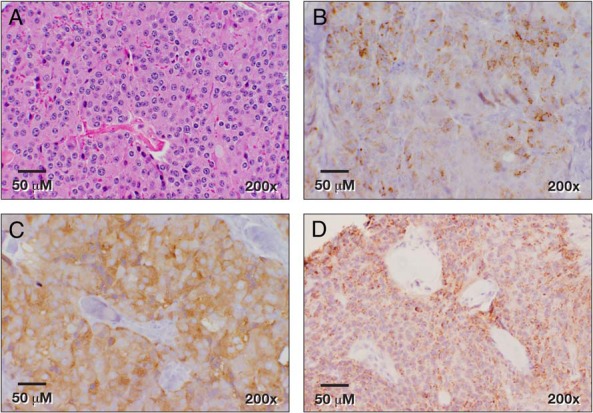
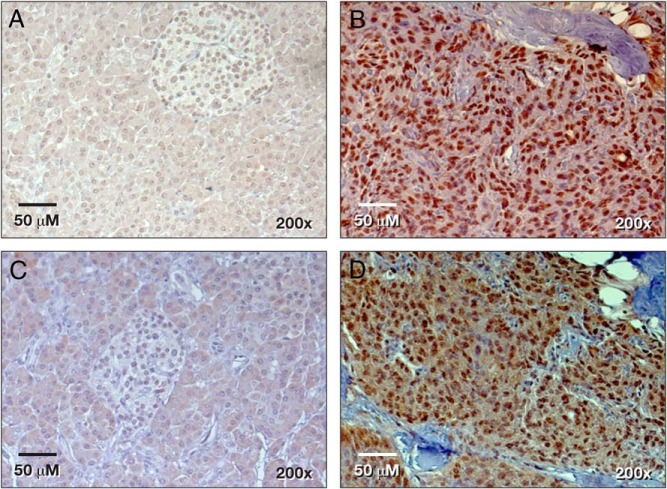
Case description: A 67-year-old woman presented with 2 months of watery diarrhea, severe generalized weakness,6.8 kg of weight loss, a facial rash, and hypokalemia. Colonoscopy did not reveal the cause of the chronic diarrhea. Initial biochemical testing showed markedly elevated serum vasoactive intestinal peptide (VIP) and pancreatic polypeptide. Computed tomography scan of the abdomen and pelvis revealed a 5.4-cm distal pancreatic mass. Octreoscan showed an intense uptake in the area of the pancreatic mass. Incidental pulmonary emboli were found and treated. Additional biochemical testing revealed a markedly elevated urinary dopamine level. The patient received preoperative α-blockade and octreotide. She underwent a successful laparoscopic distal pancreatectomy. Postoperative urinary dopamine and pancreatic polypeptide were within normal limits. Serum VIP decreased by half but remained elevated. Pathology confirmed a grade 1 pancreatic neuroendocrine tumor without lymph node metastasis. The patient's symptoms resolved and no longer required octreotide. Metastatic workup including computed tomography, F18-fluorodeoxglucose positron emission tomography, and Ga68-DOTATATE scans were negative during 4 years of follow-up.
Conclusions: VIPoma is a rare subtype of pancreatic neuroendocrine tumor that can secrete dopamine and can be associated with thromboembolism.
Figures
References
-
- Ghaferi AA, Chojnacki KA, Long WD, Cameron JL, Yeo CJ. Pancreatic VIPomas: subject review and one institutional experience. J Gastrointest Surg. 2008;12:382–393. - PubMed
-
- Bani Sacchi T, Bani D, Biliotti G. Are pancreatic VIPomas paraneuron neoplasms? A clue to the neuroectodermal origin of these tumors. Pancreas. 1992;7:87–97. - PubMed
-
- Chen YF, Liu TH, Chen SP, et al. Watery diarrhea syndrome caused by multihormonal malignant pancreatic islet cell tumor secreting somatostatin, vasoactive intestinal peptide, serotonin, and prostaglandin E–a clinicopathological, biochemical, immunohistochemical, and ultrastructural study. Pancreas. 1986;1:80–89. - PubMed
-
- Ciofu A, Baudin E, Chanson P, et al. Catecholamine production in patients with gastroenteropancreatic neuroendocrine tumors. Eur J Endocrinol. 1999;140:434–437. - PubMed
Publication types
MeSH terms
Substances
LinkOut - more resources
Full Text Sources
Other Literature Sources
Medical