


The Effects of Meaning-Based Auditory Training on Behavioral Measures of Perceptual Effort in Individuals with Impaired Hearing
- PMID: 27587913
- PMCID: PMC4910539
- DOI: 10.1055/s-0035-1564454
The Effects of Meaning-Based Auditory Training on Behavioral Measures of Perceptual Effort in Individuals with Impaired Hearing
Abstract
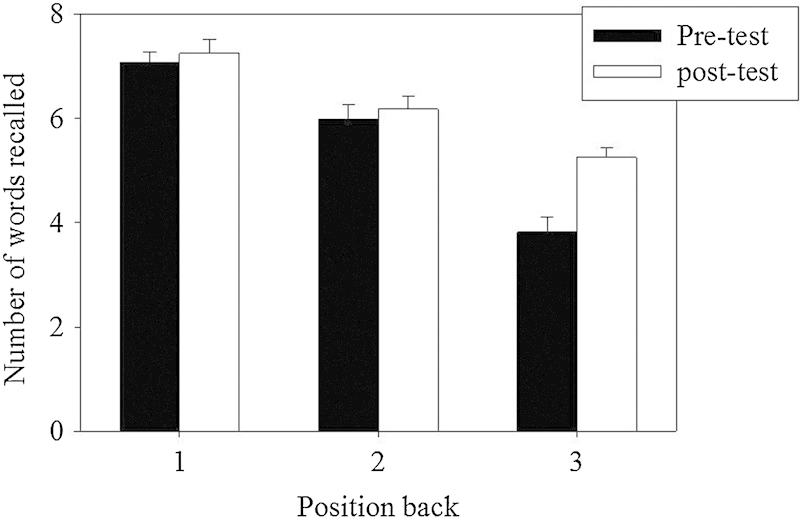
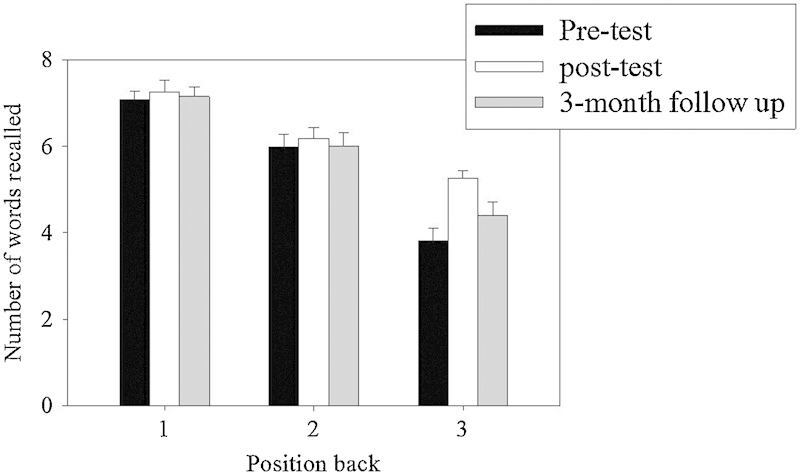
There has been considerable interest in measuring the perceptual effort required to understand speech, as well as to identify factors that might reduce such effort. In the current study, we investigated whether, in addition to improving speech intelligibility, auditory training also could reduce perceptual or listening effort. Perceptual effort was assessed using a modified version of the n-back memory task in which participants heard lists of words presented without background noise and were asked to continually update their memory of the three most recently presented words. Perceptual effort was indexed by memory for items in the three-back position immediately before, immediately after, and 3 months after participants completed the Computerized Learning Exercises for Aural Rehabilitation (clEAR), a 12-session computerized auditory training program. Immediate posttraining measures of perceptual effort indicated that participants could remember approximately one additional word compared to pretraining. Moreover, some training gains were retained at the 3-month follow-up, as indicated by significantly greater recall for the three-back item at the 3-month measurement than at pretest. There was a small but significant correlation between gains in intelligibility and gains in perceptual effort. The findings are discussed within the framework of a limited-capacity speech perception system.
Keywords: Auditory training; cognitive resources; perceptual effort.
Figures
References
-
- Schoenborn C A, Marano M. Current estimates from the National Health Interview Survey. Vital Health Stat 10. 1988;(166):1–233. - PubMed
-
- World Health Organization . Switzerland: WHO press; 2004. The Global Burden of Disease: 2004 update.
-
- Davis A, Smith P, Ferguson M, Stephens D, Gianopoulos I. Acceptability, benefit and costs of early screening for hearing disability: a study of potential screening tests and models. Health Technol Assess. 2007;11(42):1–294. - PubMed
-
- Humes L E, Wilson D L, Humes L, Barlow N N, Garner C B, Amos N. A comparison of two measures of hearing aid satisfaction in a group of elderly hearing aid wearers. Ear Hear. 2002;23(5):422–427. - PubMed
-
- Sweetow R, Palmer C V. Efficacy of individual auditory training in adults: a systematic review of the evidence. J Am Acad Audiol. 2005;16(7):494–504. - PubMed
Grants and funding
LinkOut - more resources
Full Text Sources
Other Literature Sources
