


Association of dementia with death after ischemic stroke: A two-year prospective study
- PMID: 27588095
- PMCID: PMC4998104
- DOI: 10.3892/etm.2016.3538
Association of dementia with death after ischemic stroke: A two-year prospective study
Abstract
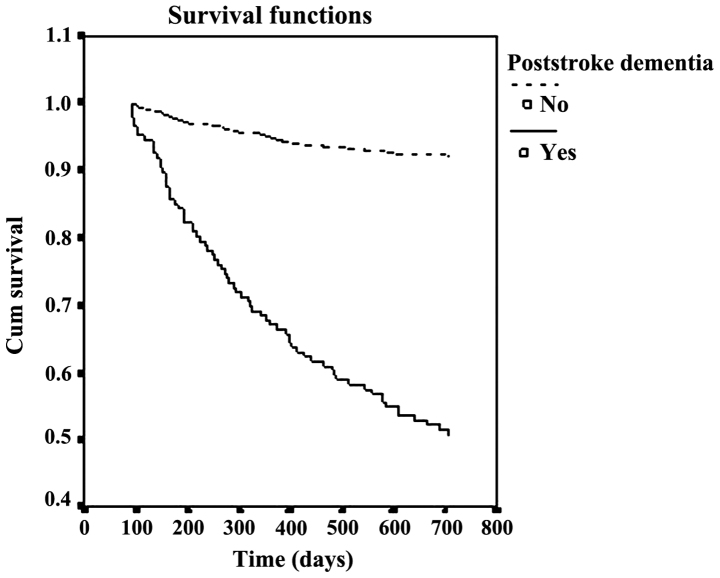
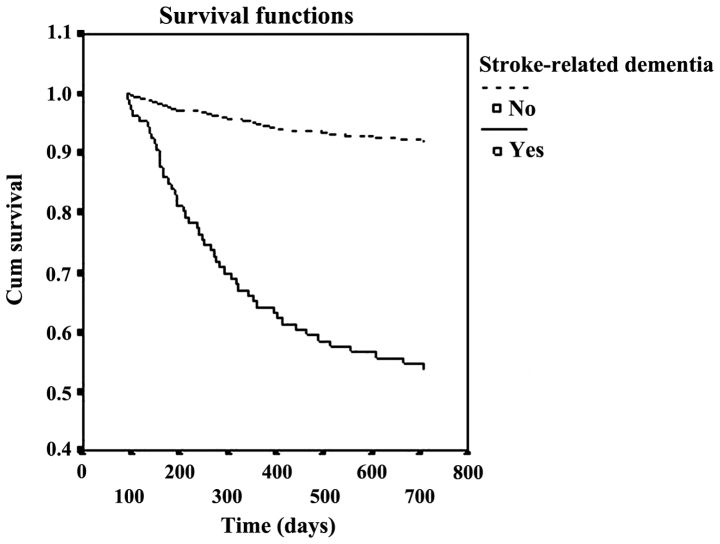
The association between dementia and the risk of death after ischemic stroke was investigated. Neurological, neuropsychological and functional assessments were evaluated in 619 patients with acute ischemic stroke. Dementia was diagnosed at admission and at three months after stroke onset. The patients were scheduled for a two-year follow-up after the index stroke. The Kaplan-Meier survival and Cox proportional hazards regression analyses were used to estimate the cumulative proportion of survival, and the association between dementia and risk of death after stroke. In total, 146 patients (23.6%) were diagnosed with dementia after stroke. The cumulative proportion of surviving cases was 49.3% in patients with dementia after a median follow-up of 21.2±5.6 months, and 92.5% in patients without dementia. Multivariate analysis revealed that dementia (HR, 7.21; 95% CI, 3.85-13.49) was associated with death, independent of age, atrial fibrillation, previous stroke and NIH stroke scale. In conclusion, the mortality rate is increased in stroke patients with dementia. Dementia is an important risk factor for death after stroke, independent of age, atrial fibrillation, previous stroke, and the severity of the stroke.
Keywords: dementia; mortality; stroke.
Figures
References
LinkOut - more resources
Full Text Sources
Other Literature Sources