


Trans-ethnic Fine Mapping Highlights Kidney-Function Genes Linked to Salt Sensitivity
- PMID: 27588450
- PMCID: PMC5011075
- DOI: 10.1016/j.ajhg.2016.07.012
Trans-ethnic Fine Mapping Highlights Kidney-Function Genes Linked to Salt Sensitivity
Abstract
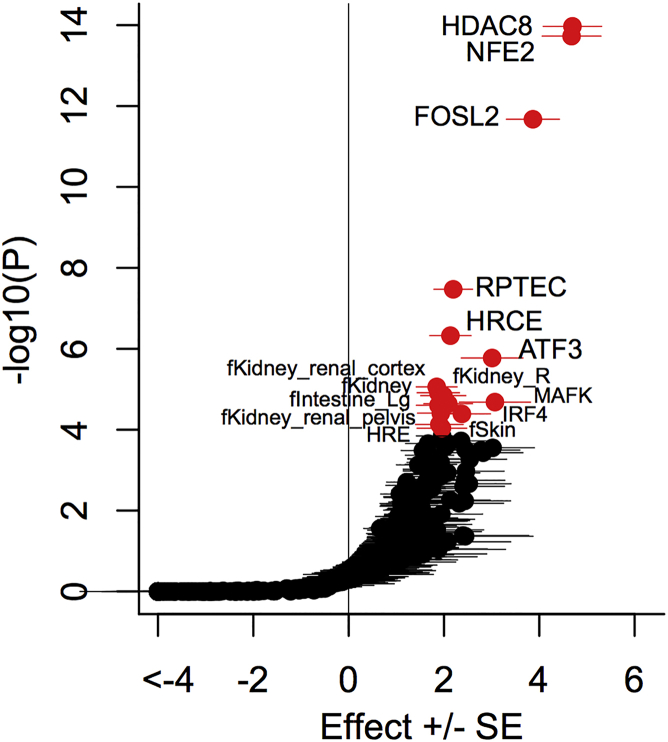
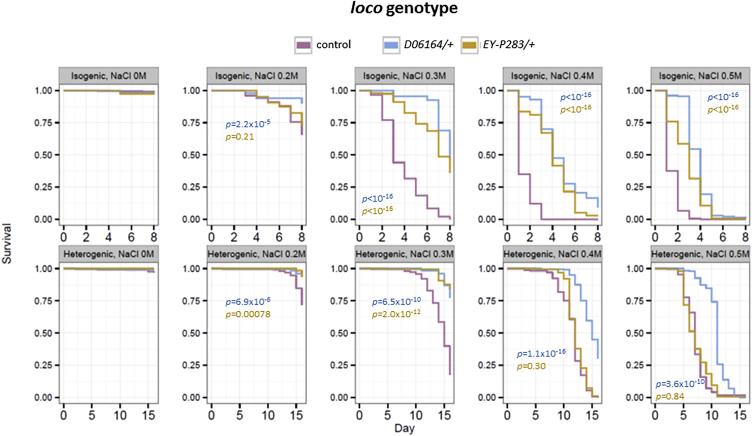
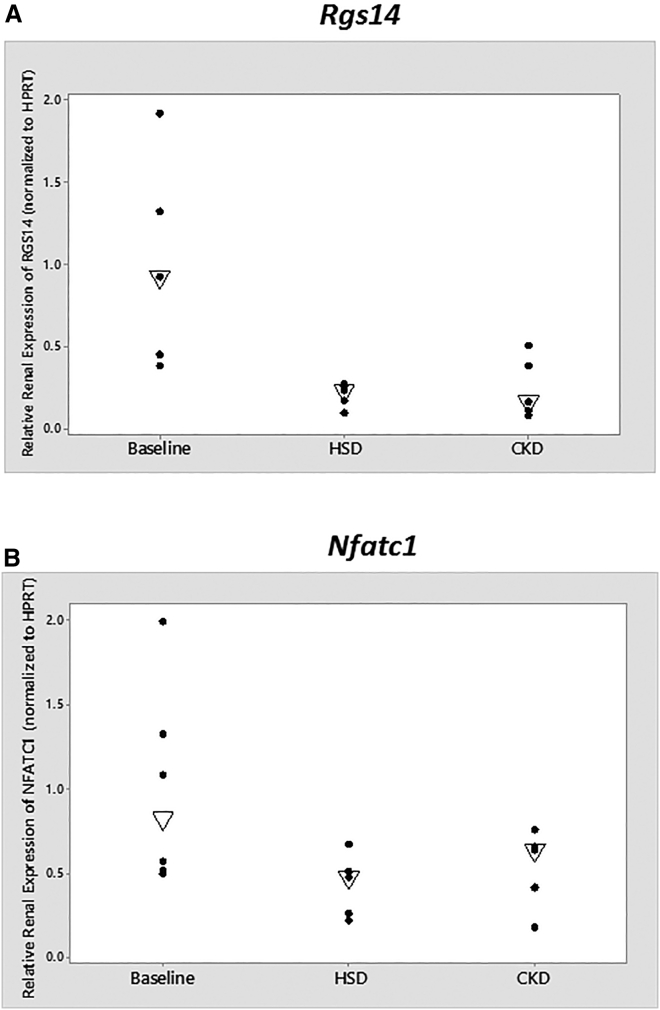
We analyzed genome-wide association studies (GWASs), including data from 71,638 individuals from four ancestries, for estimated glomerular filtration rate (eGFR), a measure of kidney function used to define chronic kidney disease (CKD). We identified 20 loci attaining genome-wide-significant evidence of association (p < 5 × 10(-8)) with kidney function and highlighted that allelic effects on eGFR at lead SNPs are homogeneous across ancestries. We leveraged differences in the pattern of linkage disequilibrium between diverse populations to fine-map the 20 loci through construction of "credible sets" of variants driving eGFR association signals. Credible variants at the 20 eGFR loci were enriched for DNase I hypersensitivity sites (DHSs) in human kidney cells. DHS credible variants were expression quantitative trait loci for NFATC1 and RGS14 (at the SLC34A1 locus) in multiple tissues. Loss-of-function mutations in ancestral orthologs of both genes in Drosophila melanogaster were associated with altered sensitivity to salt stress. Renal mRNA expression of Nfatc1 and Rgs14 in a salt-sensitive mouse model was also reduced after exposure to a high-salt diet or induced CKD. Our study (1) demonstrates the utility of trans-ethnic fine mapping through integration of GWASs involving diverse populations with genomic annotation from relevant tissues to define molecular mechanisms by which association signals exert their effect and (2) suggests that salt sensitivity might be an important marker for biological processes that affect kidney function and CKD in humans.
Copyright © 2016 The Author(s). Published by Elsevier Inc. All rights reserved.
Figures
References
-
- Levey A.S., Coresh J. Chronic kidney disease. Lancet. 2012;379:165–180. - PubMed
-
- Xue J.L., Eggers P.W., Agodoa L.Y., Foley R.N., Collins A.J. Longitudinal study of racial and ethnic differences in developing end-stage renal disease among aged medicare beneficiaries. J. Am. Soc. Nephrol. 2007;18:1299–1306. - PubMed
-
- Pattaro C., Köttgen A., Teumer A., Garnaas M., Böger C.A., Fuchsberger C., Olden M., Chen M.-H., Tin A., Taliun D., CARDIoGRAM Consortium. ICBP Consortium. CARe Consortium. Wellcome Trust Case Control Consortium 2 (WTCCC2) Genome-wide association and functional follow-up reveals new loci for kidney function. PLoS Genet. 2012;8:e1002584. - PMC - PubMed
Publication types
MeSH terms
Substances
Grants and funding
LinkOut - more resources
Full Text Sources
Other Literature Sources
Medical
Molecular Biology Databases
Research Materials
Miscellaneous
