Vascular actions of relaxin: nitric oxide and beyond
- PMID: 27590257
- PMCID: PMC5406296
- DOI: 10.1111/bph.13614
Vascular actions of relaxin: nitric oxide and beyond
Erratum in
-
Correction.Br J Pharmacol. 2017 Dec;174(24):4836. doi: 10.1111/bph.14111. Br J Pharmacol. 2017. PMID: 29235105 Free PMC article. No abstract available.
Abstract
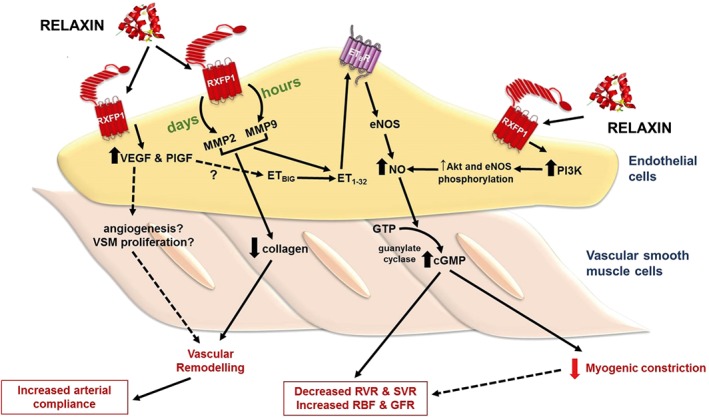
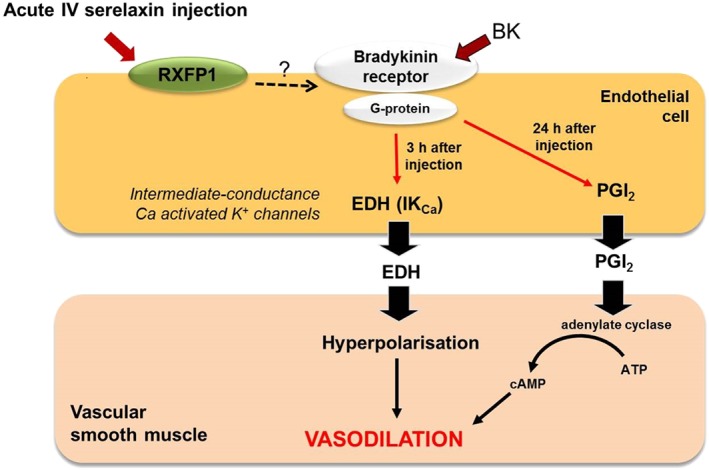
The peptide hormone relaxin regulates the essential maternal haemodynamic adaptations in early pregnancy through direct actions on the renal and systemic vasculature. These vascular actions of relaxin occur mainly through endothelium-derived NO-mediated vasodilator pathways and improvements in arterial compliance in small resistance-size arteries. This work catalysed a plethora of studies which revealed quite heterogeneous responses across the different regions of the vasculature, and also uncovered NO-independent mechanisms of relaxin action. In this review, we first describe the role of endogenous relaxin in maintaining normal vascular function, largely referring to work in pregnant and male relaxin-deficient animals. We then discuss the diversity of mechanisms mediating relaxin action in different vascular beds, including the involvement of prostanoids, VEGF, endothelium-derived hyperpolarisation and antioxidant activity in addition to the classic NO-mediated vasodilatory pathway. We conclude the review with current perspectives on the vascular remodelling capabilities of relaxin.
Linked articles: This article is part of a themed section on Recent Progress in the Understanding of Relaxin Family Peptides and their Receptors. To view the other articles in this section visit http://onlinelibrary.wiley.com/doi/10.1111/bph.v174.10/issuetoc.
© 2016 The British Pharmacological Society.
Figures
References
-
- Anumba DO, El Gelany S, Elliott SL, Li TC (2009). Serum relaxin levels are reduced in pregnant women with a history of recurrent miscarriage, and correlate with maternal uterine artery Doppler indices in first trimester. Eur J Obstet Gynecol Reprod Biol 147: 41–45. - PubMed
-
- Bani D, Failli P, Bello MG, Thiemermann C, Bani Sacchi T, Bigazzi M et al. (1998). Relaxin activates the L‐arginine‐nitric oxide pathway in vascular smooth muscle cells in culture. Hypertension 31: 1240–1247. - PubMed
Publication types
MeSH terms
Substances
LinkOut - more resources
Full Text Sources
Other Literature Sources