


Human T-cell leukemia virus-associated malignancy
- PMID: 27591679
- PMCID: PMC5102797
- DOI: 10.1016/j.coviro.2016.08.009
Human T-cell leukemia virus-associated malignancy
Abstract
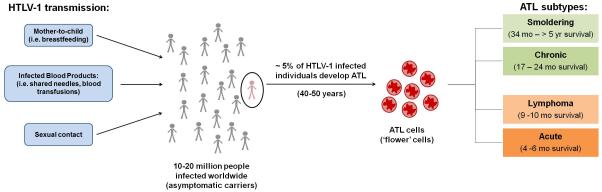
Human T-cell leukemia virus type 1 (HTLV-1) is a tumorigenic delta retrovirus and the causative infectious agent of a non-Hodgkin's peripheral T-cell malignancy called adult T-cell leukemia/lymphoma (ATL). ATL develops in approximately 5% of infected individuals after a significant clinical latency period of several decades. Clinical classifications of ATL include smoldering, chronic, lymphoma, and acute subtypes, with varying median survival ranges of a few months to several years. Depending on the ATL subtype and disease symptoms, treatment options include 'watchful waiting', chemotherapy, antiviral therapy, allogeneic hematopoietic stem cell transplantation (alloHSCT), and targeted therapies. Herein we review the characteristics and development of ATL, as well as current and future treatment options and perspectives.
Copyright © 2016 Elsevier B.V. All rights reserved.
Figures
References
-
- Matsuoka M, Jeang KT. Human T-cell leukemia virus type I at age 25: a progress report. Cancer Res. 2005;65(11):4467–70. - PubMed
-
- DeThe G, Bomford R. An HTLV-I vaccine: why, how, for whom? AIDS Res Hum Retroviruses. 1993;9:381–386. - PubMed
-
- Kohakura M, et al. Seroepidemiology of the human retrovirus (HTLV/ATLV) in Okinawa where adult T-cell leukemia is highly endemic. Japanese journal of cancer research : Gann. 1986;77(1):21–3. - PubMed
-
- Tajima K, et al. Epidemiological features of HTLV-I carriers and incidence of ATL in an ATL-endemic island: a report of the community-based co-operative study in Tsushima, Japan. International journal of cancer. 1987;40(6):741–6. - PubMed
Publication types
MeSH terms
Grants and funding
LinkOut - more resources
Full Text Sources
Other Literature Sources
