A Comparison of Cough Assistance Techniques in Patients with Respiratory Muscle Weakness
- PMID: 27593879
- PMCID: PMC5011283
- DOI: 10.3349/ymj.2016.57.6.1488
A Comparison of Cough Assistance Techniques in Patients with Respiratory Muscle Weakness
Abstract
Purpose: To assess the ability of a mechanical in-exsufflator (MI-E), either alone or in combination with manual thrust, to augment cough in patients with neuromuscular disease (NMD) and respiratory muscle dysfunction.
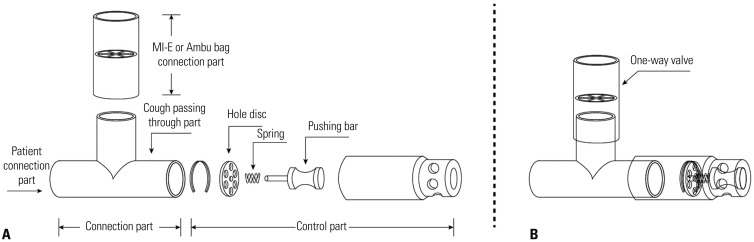
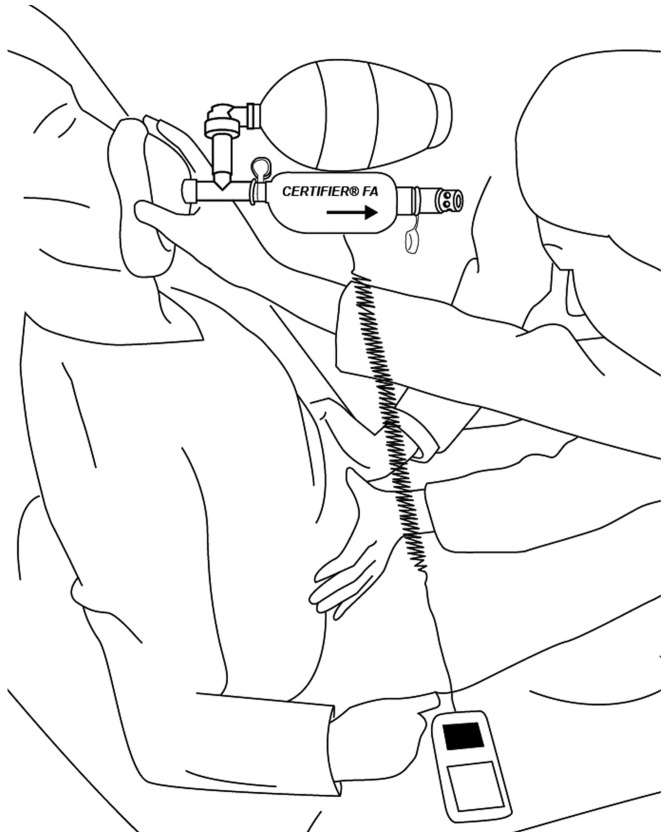
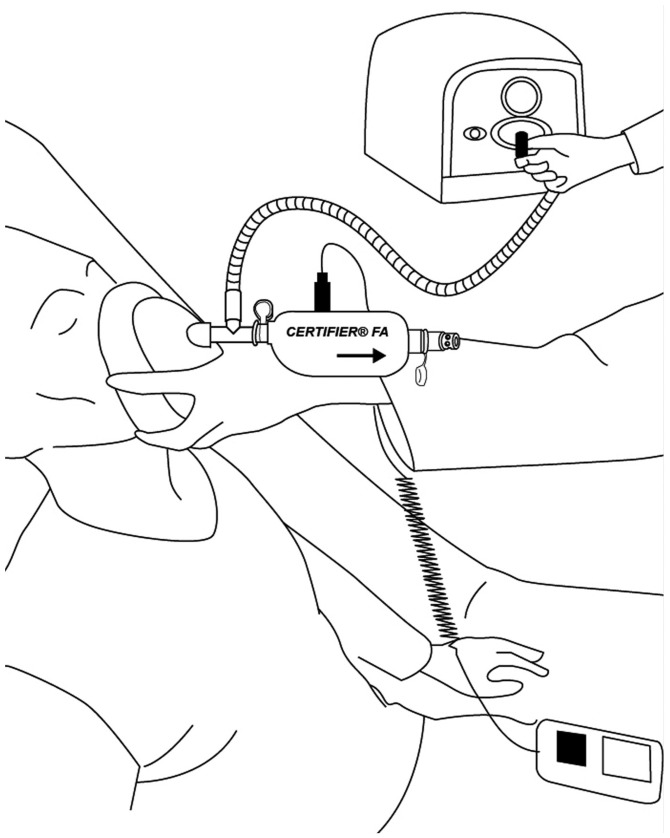
Materials and methods: For this randomized crossover single-center controlled trial, patients with noninvasive ventilator-dependent NMD were recruited. The primary outcome was peak cough flow (PCF), which was measured in each patient after a cough that was unassisted, manually assisted following a maximum insufflation capacity (MIC) maneuver, assisted by MI-E, or assisted by manual thrust plus MI-E. The cough augmentation techniques were provided in random order. PCF was measured using a new device, the Cough Aid.
Results: All 40 enrolled participants (37 males, three females; average age, 20.9±7.2 years) completed the study. The mean (standard deviation) PCFs in the unassisted, manually assisted following an MIC maneuver, MI-E-assisted, and manual thrust plus MI-E-assisted conditions were 95.7 (40.5), 155.9 (53.1), 177.2 (33.9), and 202.4 (46.6) L/min, respectively. All three interventions significantly improved PCF. However, manual assistance following an MIC maneuver was significantly less effective than MI-E alone. Manual thrust plus MI-E was significantly more effective than both of these interventions.
Conclusion: In patients with NMD and respiratory muscle dysfunction, MI-E alone was more effective than manual assistance following an MIC maneuver. However, MI-E used in conjunction with manual thrust improved PCF even further.
Keywords: Neuromuscular disease; cough augmentation; mechanical in-exsufflator; peak cough flow.
Conflict of interest statement
The authors have no financial conflicts of interest.
Figures
References
-
- Finder JD. Airway clearance modalities in neuromuscular disease. Paediatr Respir Rev. 2010;11:31–34. - PubMed
-
- Homnick DN. Mechanical insufflation-exsufflation for airway mucus clearance. Respir Care. 2007;52:1296–1305. - PubMed
-
- Bach JR. Mechanical insufflation-exsufflation. Comparison of peak expiratory flows with manually assisted and unassisted coughing techniques. Chest. 1993;104:1553–1562. - PubMed
-
- Morrow B, Zampoli M, van Aswegen H, Argent A. Mechanical insufflation-exsufflation for people with neuromuscular disorders. Cochrane Database Syst Rev. 2013;(12):CD010044. - PubMed
Publication types
MeSH terms
LinkOut - more resources
Full Text Sources
Other Literature Sources
Medical