


Circulating progenitor cells and coronary microvascular dysfunction: Results from the NHLBI-sponsored Women's Ischemia Syndrome Evaluation - Coronary Vascular Dysfunction Study (WISE-CVD)
- PMID: 27596135
- PMCID: PMC9197325
- DOI: 10.1016/j.atherosclerosis.2016.08.026
Circulating progenitor cells and coronary microvascular dysfunction: Results from the NHLBI-sponsored Women's Ischemia Syndrome Evaluation - Coronary Vascular Dysfunction Study (WISE-CVD)
Abstract
Background and aims: Ischemia stimulates a reparative response resulting in mobilization of circulating progenitor cells (CPCs). We hypothesized that women with chronic myocardial ischemia from coronary microvascular disease (CMD) will mobilize CPCs.
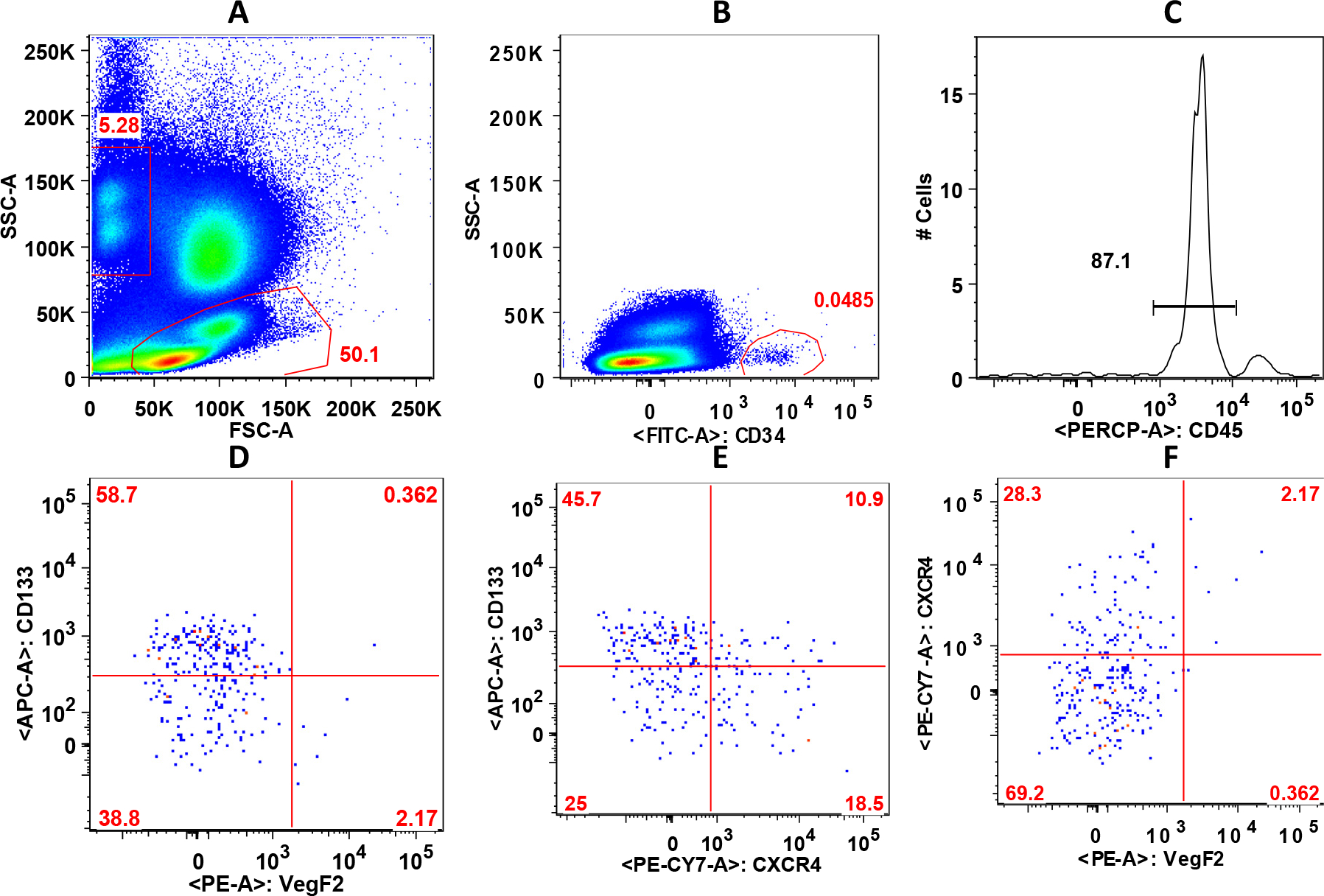
Methods: In 123 women with ischemic symptoms and signs but no obstructive coronary artery disease (CAD) enrolled in the Women's Ischemia Syndrome Evaluation - Coronary Vascular Dysfunction Study (WISE-CVD), we measured coronary flow reserve (CFR) in response to intracoronary adenosine. Peripheral blood CPCs were measured using flow cytometry for expression of CD34, CD133, CXCR4, and VEGFR2.
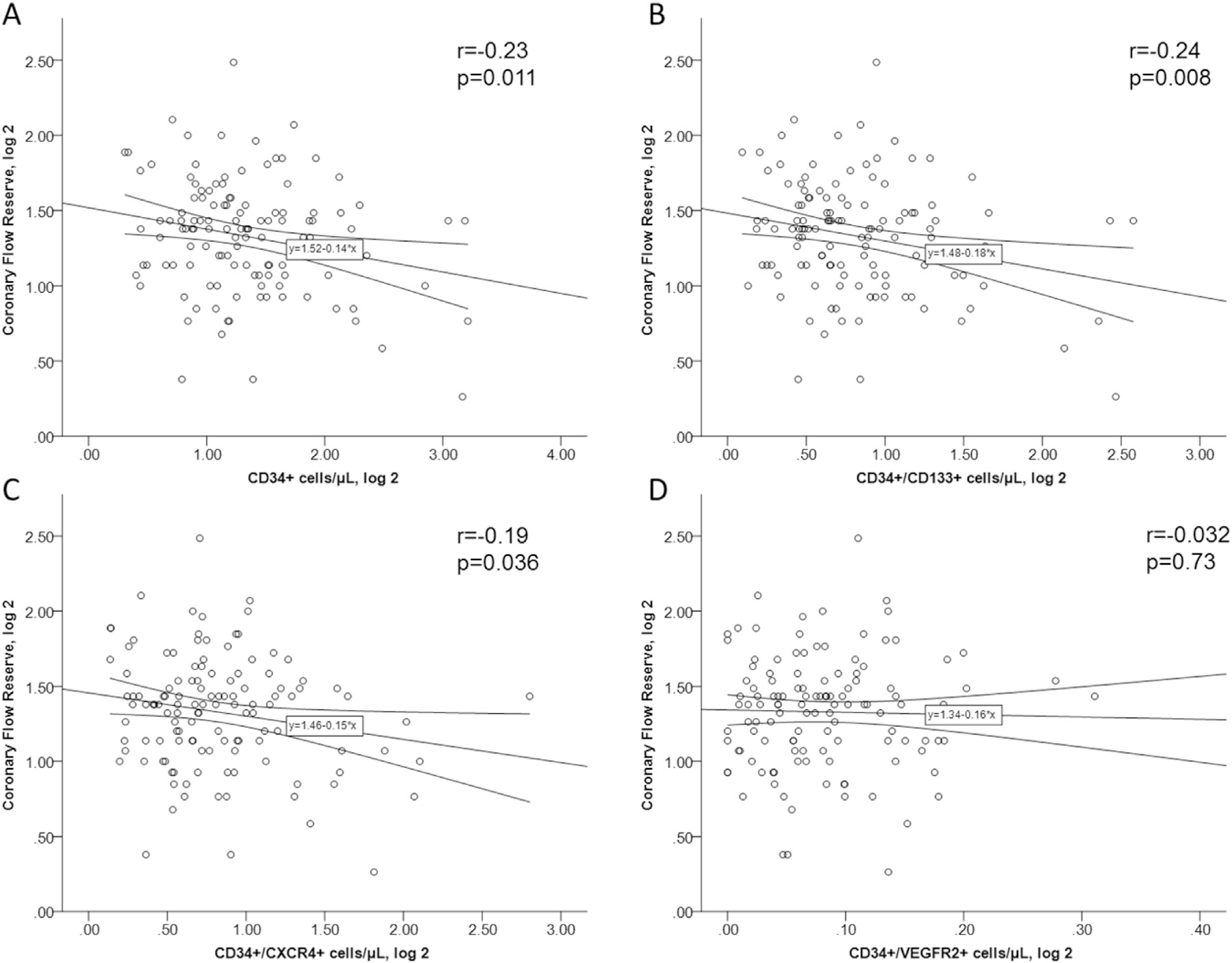
Results: Subjects were 53 ± 11 years, BMI 30 ± 8; 44% hypertensive, 11% diabetic, 23% hyperlipidemic and 7% smokers. Lower CFR correlated inversely with higher levels of hematopoietic-enriched CD34+ (r = -0.23, p = 0.011), CD34+/CD133+ (r = -0.24, p = 0.008), and CD34+/CXCR4+ (r = -0.19, p = 0.036) cells. In multivariable regression analyses, after adjusting for traditional cardiovascular risk factors, lower CFR remained significantly associated with elevated levels of CD34+ (β -0.18, p = 0.042), CD34+/CD133+ (β -0.24, p = 0.036), and CD34+/CXCR4+ (β -0.22, p = 0.050) cells. We found no association between CFR and CD34+/VEGFR2+ cells.
Conclusions: In women with non-obstructive CAD, impaired CFR is associated with higher levels of CPCs, suggesting that chronic myocardial ischemia from CMD stimulates CPC mobilization. The functional significance of elevated CPCs in these subjects requires further investigation as a potential biomarker and treatment target.
Keywords: Circulating progenitor cells; Coronary flow reserve; Microvascular function.
Copyright © 2016 Elsevier Ireland Ltd. All rights reserved.
Conflict of interest statement
Conflict of interest
GM is supported by a grant from the National Heart, Lung, and Blood Institute of the National Institutes of Health (P01HL101398). PKM: Gilead Research Grant; CJP: WISE Grant from NHLBI, CNBM: Honoraria from Annual DeStevens Lectureship, 24th Annual Dan May Lectureship, California Society for Cardiac Rehabilitation, NIHSEP, and ACC-SAP. All other authors have no disclosures.
Figures
References
-
- Mosca L, Benjamin EJ, Berra K, Bezanson JL, Dolor RJ, Lloyd-Jones DM, Newby LK, Pina IL, Roger VL, Shaw LJ, Zhao D, Beckie TM, Bushnell C, D’Armiento J, Kris-Etherton PM, Fang J, Ganiats TG, Gomes AS, Gracia CR, Haan CK, Jackson EA, Judelson DR, Kelepouris E, Lavie CJ, Moore A, Nussmeier NA, Ofili E, Oparil S, Ouyang P, Pinn VW, Sherif K, Smith SC Jr., Sopko G, Chandra-Strobos N, Urbina EM, Vaccarino V, Wenger NK, Effectiveness-based guidelines for the prevention of cardiovascular disease in women–2011 update: a guideline from the American heart association, Circulation 123 (2011) 1243–1262. - PMC - PubMed
-
- Eaker ED, Chesebro JH, Sacks FM, Wenger NK, Whisnant JP, Winston M, Cardiovascular disease in women, Circulation 88 (1993) 1999–2009. - PubMed
-
- Shaw LJ, Bairey Merz CN, Pepine CJ, Reis SE, Bittner V, Kelsey SF, Olson M, Johnson BD, Mankad S, Sharaf BL, Rogers WJ, Wessel TR, Arant CB, Pohost GM, Lerman A, Quyyumi AA, Sopko G, Insights from the NHLBI-sponsored Women’s Ischemia Syndrome Evaluation (WISE) study: part I: gender differences in traditional and novel risk factors, symptom evaluation, and gender-optimized diagnostic strategies, J. Am. Coll. Cardiol 47 (2006) S4–s20. - PubMed
-
- Ashley KE, Geraci SA, Ischemic heart disease in women, South. Med. J 106 (2013) 427–433. - PubMed
-
- Bairey Merz CN, Shaw LJ, Reis SE, Bittner V, Kelsey SF, Olson M, Johnson BD, Pepine CJ, Mankad S, Sharaf BL, Rogers WJ, Pohost GM, Lerman A, Quyyumi AA, Sopko G, Insights from the NHLBI-sponsored Women’s Ischemia Syndrome Evaluation (WISE) study: part II: gender differences in presentation, diagnosis, and outcome with regard to gender-based pathophysiology of atherosclerosis and macrovascular and microvascular coronary disease, J. Am. Coll. Cardiol 47 (2006) S21–S29. - PubMed
Publication types
MeSH terms
Substances
Grants and funding
LinkOut - more resources
Full Text Sources
Other Literature Sources
Medical
Research Materials
Miscellaneous
