


Consumers attitudes and beliefs towards the receipt of antenatal corticosteroids and use of clinical practice guidelines
- PMID: 27596254
- PMCID: PMC5011343
- DOI: 10.1186/s12884-016-1043-4
Consumers attitudes and beliefs towards the receipt of antenatal corticosteroids and use of clinical practice guidelines
Abstract
Background: Active participation of consumers in health care decision making, policy and clinical research is increasingly encouraged by governments, influential bodies and funders. Identifying the best way to achieve this is difficult due to the paucity of evidence. Consumers have mixed feelings towards clinical practice guidelines (CPG) demonstrating scepticism towards their purpose and applicability to their needs. There is no information pertaining to consumers' views and attitudes on the receipt of antenatal corticosteroids (ACS). The aim of this study was to examine the barriers and enablers to receiving ACS and use of CPG amongst consumers.
Methods: Consumers were recruited from neonatal units across three district health boards (DHBs) in Auckland, New Zealand. Participants completed a semi-structured interview or questionnaire. The questions posed and analyses were informed by the Theoretical Domains Framework (TDF). Barriers and enablers were identified by the presence of conflicting beliefs within a domain; the frequency of beliefs; and the likely strength of the impact of a belief on use of CPG and receipt of ACS.
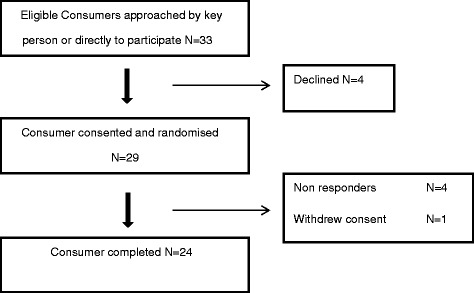
Results: Twenty four consumers participated in the study. Six domains were identified as barriers to receipt of ACS and use of CPG. Key barriers to receipt of ACS included: difficulty retaining information conveyed, requiring further information in a variety of formats, and time constraints faced by consumers and health professionals in the provision and understanding of information to facilitate decision making. Barriers to use of CPG included: uncertainty about applicability of guideline use among consumers and scepticism about health professionals adhering too rigidly to guidelines. Enablers to receipt of ACS included: optimism toward ACS use, a strong knowledge of why ACS were administered, improved resilience in their pregnancy and confidence in their decision making following receipt of information about ACS. Enablers to use of CPG included: validation and standardisation of decision making among health professionals providing care and facilitating the best care for women and their babies.
Conclusions: Key barriers and enablers exist among consumers regarding receipt of ACS and use of CPG. These need to be addressed or modified in any intervention strategy to facilitate implementation of the ACS CPG.
Keywords: Antenatal corticosteroids; Clinical practice guidelines; Consumer; Implementation; Theoretical domains framework.
References
-
- World Health Organization . Born too soon: the global action report on preterm birth. Geneva: WHO; 2012.
-
- Blencowe H, Cousens S, Oestergaard MZ, Chou D, Moller AB. National, regional, and worldwide estimates of preterm birth rates in the year 2010 with time trends since 1990 for selected countries: a systematic analysis and implications. Lancet. 2012;379(9832):2162–72. doi: 10.1016/S0140-6736(12)60820-4. - DOI - PubMed
-
- Roberts D, Dalziel S. Antenatal corticosteroids for accelerating fetal lung maturation for women at risk of preterm birth. Cochrane Database Syst Rev. 2006;3(3). - PubMed
-
- Antenatal Corticosteroid Clinical Practice Guidelines Panel. Antenatal corticosteroids given to women prior to birth to improve fetal, infant, child and adult health: Clinical practice guidelines . Liggins Institute, The University of Auckland. New Zealand: Auckland; 2015.
Publication types
MeSH terms
Substances
LinkOut - more resources
Full Text Sources
Other Literature Sources
Medical
