


From Erythromycin to Azithromycin and New Potential Ribosome-Binding Antimicrobials
- PMID: 27598215
- PMCID: PMC5039525
- DOI: 10.3390/antibiotics5030029
From Erythromycin to Azithromycin and New Potential Ribosome-Binding Antimicrobials
Abstract
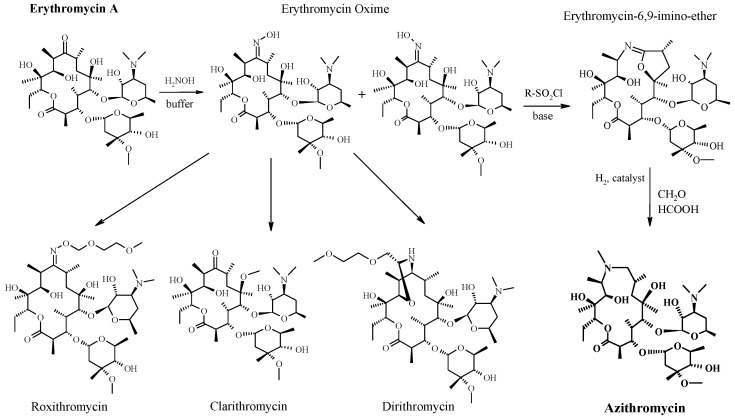
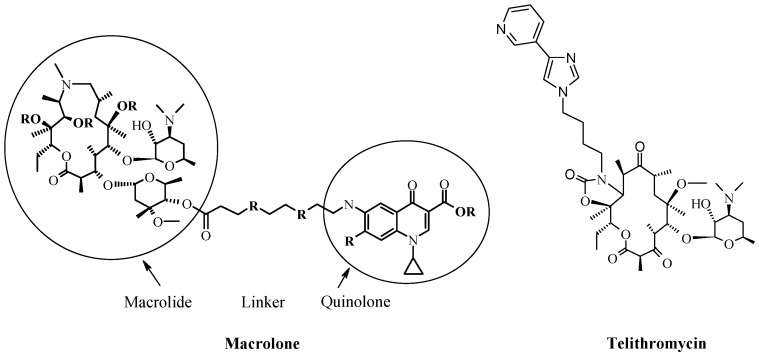
Macrolides, as a class of natural or semisynthetic products, express their antibacterial activity primarily by reversible binding to the bacterial 50S ribosomal subunits and by blocking nascent proteins' progression through their exit tunnel in bacterial protein biosynthesis. Generally considered to be bacteriostatic, they may also be bactericidal at higher doses. The discovery of azithromycin from the class of macrolides, as one of the most important new drugs of the 20th century, is presented as an example of a rational medicinal chemistry approach to drug design, applying classical structure-activity relationship that will illustrate an impressive drug discovery success story. However, the microorganisms have developed several mechanisms to acquire resistance to antibiotics, including macrolide antibiotics. The primary mechanism for acquiring bacterial resistance to macrolides is a mutation of one or more nucleotides from the binding site. Although azithromycin is reported to show different, two-step process of the inhibition of ribosome function of some species, more detailed elaboration of that specific mode of action is needed. New macrocyclic derivatives, which could be more potent and less prone to escape bacterial resistance mechanisms, are also continuously evaluated. A novel class of antibiotic compounds-macrolones, which are derived from macrolides and comprise macrocyclic moiety, linker, and either free or esterified quinolone 3-carboxylic group, show excellent antibacterial potency towards key erythromycin-resistant Gram-positive and Gram-negative bacterial strains, with possibly decreased potential of bacterial resistance to macrolides.
Keywords: azithromycin; dual-binding inhibition; erythromycin; macrocycles; macrolides; quinolones; ribosome binding.
Conflict of interest statement
The authors declare no conflict of interest.
Figures
References
Publication types
LinkOut - more resources
Full Text Sources
Other Literature Sources
