Review
. 2016 Oct;35(4):281-8.
doi: 10.14366/usg.16030. Epub 2016 Jul 21.

Molecular subtypes and imaging phenotypes of breast cancer

Affiliations
Review

Molecular subtypes and imaging phenotypes of breast cancer

Nariya Cho. Ultrasonography. 2016 Oct.

Abstract

During the last 15 years, traditional breast cancer classifications based on histopathology have been reorganized into the luminal A, luminal B, human epidermal growth factor receptor 2 (HER2), and basal-like subtypes based on gene expression profiling. Each molecular subtype has shown varying risk for progression, response to treatment, and survival outcomes. Research linking the imaging phenotype with the molecular subtype has revealed that non-calcified, relatively circumscribed masses with posterior acoustic enhancement are common in the basal-like subtype, spiculated masses with a poorly circumscribed margin and posterior acoustic shadowing in the luminal subtype, and pleomorphic calcifications in the HER2-enriched subtype. Understanding the clinical implications of the molecular subtypes and imaging phenotypes could help radiologists guide precision medicine, tailoring medical treatment to patients and their tumor characteristics.

Keywords: Breast neoplasms; Diagnosis; Gene expression profiling; Ultrasonography.


Conflict of interest statement

No potential conflict of interest relevant to this article was reported.

Figures
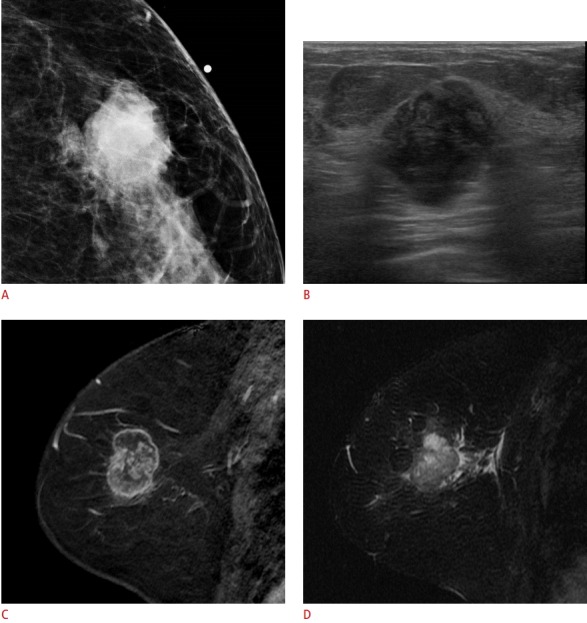
Fig. 1.
Fig. 1.. A 59-year-old woman with a basal-like breast cancer.
A. Mammography shows an irregular mass with an indistinct margin without calcifications. B. Sonograms shows an irregular mass with a circumscribed margin and a posterior acoustic enhancement. C. Gadolinium-enhanced T1-weighted magnetic resonance (MR) image shows an irregular mass with rim-enhancement. D. T2-weighted MR image shows an irregular mass with internal high signal intensity. Histopathology revealed an invasive ductal carcinoma with high histologic grade. Immunohistochemistry analysis showed estrogen receptor-negative, progesterone receptor-negative, human epidermal growth factor receptor 2-negative, cytokeratin 5/6-positive, and Ki-67-30% positive.
Fig. 2.
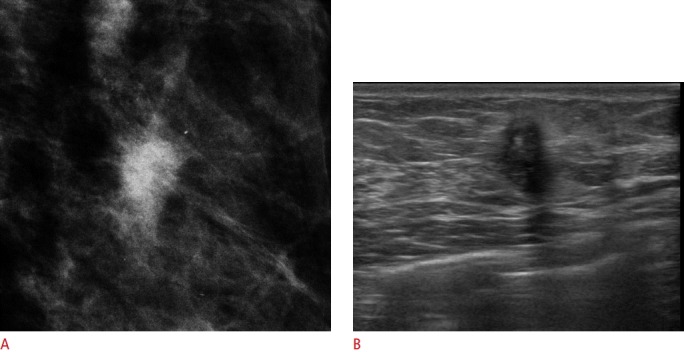
Fig. 2.. A 45-year-old woman with a luminal A-like breast cancer.
A. Mammography shows a spiculated mass with calcifications. B. Sonogram shows an irregular mass with spiculated margin and posterior acoustic shadowing. Histopathology revealed an invasive ductal carcinoma with low histologic grade. Immunohistochemistry analysis showed estrogen receptor-85% positive, progesterone receptor-90% positive, and human epidermal growth factor receptor 2-negative.
Fig. 3.
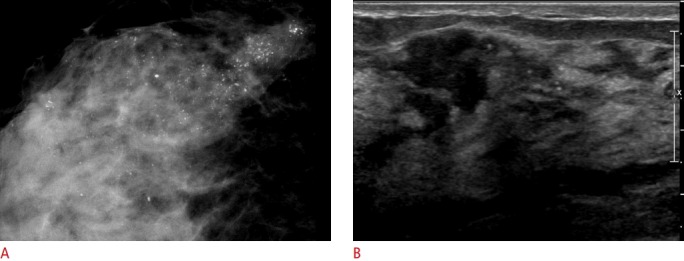
Fig. 3.. A 35-year-old woman with a human epidermal growth factor receptor 2 (HER2)-positive breast cancer.
A. Mammography shows segmental, pleomorphic, linear branching microcalcifications. B. Songogram shows an ill-defined, irregular mass with calcifications within surrounding ductal changes. Histopathology revealed an invasive ductal carcinoma with high histologic grade. Immunohistochemistry analysis showed estrogen receptor-negative and progesterone receptor-negative. HER2 was positive on fluorescence in situ hybridization.

Similar articles

Cited by

References

    1. Ng CK, Schultheis AM, Bidard FC, Weigelt B, Reis-Filho JS. Breast cancer genomics from microarrays to massively parallel sequencing: paradigms and new insights. J Natl Cancer Inst. 2015;107:djv015. - PubMed
    1. Cancer Genome Atlas Network Comprehensive molecular portraits of human breast tumours. Nature. 2012;490:61–70. - PMC - PubMed
    1. Sorlie T, Perou CM, Tibshirani R, Aas T, Geisler S, Johnsen H, et al. Gene expression patterns of breast carcinomas distinguish tumor subclasses with clinical implications. Proc Natl Acad Sci U S A. 2001;98:10869–10874. - PMC - PubMed
    1. Parker JS, Mullins M, Cheang MC, Leung S, Voduc D, Vickery T, et al. Supervised risk predictor of breast cancer based on intrinsic subtypes. J Clin Oncol. 2009;27:1160–1167. - PMC - PubMed
    1. Goldhirsch A, Winer EP, Coates AS, Gelber RD, Piccart-Gebhart M, Thurlimann B, et al. Personalizing the treatment of women with early breast cancer: highlights of the St Gallen International Expert Consensus on the Primary Therapy of Early Breast Cancer 2013. Ann Oncol. 2013;24:2206–2223. - PMC - PubMed

LinkOut - more resources