


Glycoarray Technologies: Deciphering Interactions from Proteins to Live Cell Responses
- PMID: 27600069
- PMCID: PMC5003448
- DOI: 10.3390/microarrays5010003
Glycoarray Technologies: Deciphering Interactions from Proteins to Live Cell Responses
Abstract
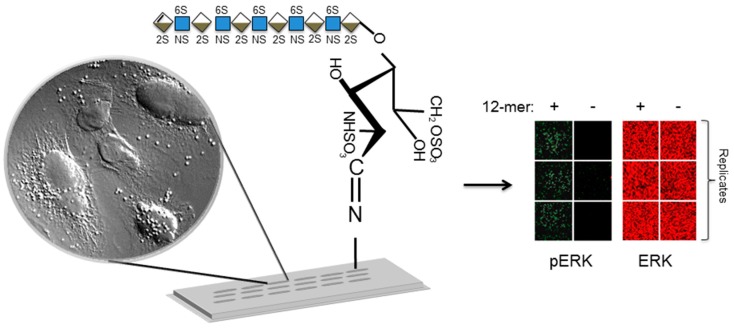
Microarray technologies inspired the development of carbohydrate arrays. Initially, carbohydrate array technology was hindered by the complex structures of glycans and their structural variability. The first designs of glycoarrays focused on the HTP (high throughput) study of protein-glycan binding events, and subsequently more in-depth kinetic analysis of carbohydrate-protein interactions. However, the applications have rapidly expanded and now achieve successful discrimination of selective interactions between carbohydrates and, not only proteins, but also viruses, bacteria and eukaryotic cells, and most recently even live cell responses to immobilized glycans. Combining array technology with other HTP technologies such as mass spectrometry is expected to allow even more accurate and sensitive analysis. This review provides a broad overview of established glycoarray technologies (with a special focus on glycosaminoglycan applications) and their emerging applications to the study of complex interactions between glycans and whole living cells.
Keywords: glycobioarrays; glycoconjugates; glycomics; heparan sulfate; saccharide libraries.
Figures

References
-
- Prydz K., Dalen K.T. Synthesis and sorting of proteoglycans. J. Cell Sci. 2000;113:193–205. - PubMed
-
- Boehm G., Stahl B. Oligosaccharides from milk. J. Nutr. 2007;137(Suppl. S2):847S–849S. - PubMed
-
- Bertozzi C.R., Sasisekharan R. Glycomics. In: Ajit V., Richard D.C., Jeffrey D.E., Hudson H.F., Pamela S., Carolyn R.B., Gerald W.H., Marilynn E.E., editors. Essentials of Glycobiology. 2nd ed. Cold Spring Harbor Laboratory Press; Cold Spring Harbor, NY, USA: 2009.
Publication types
LinkOut - more resources
Full Text Sources
Other Literature Sources
