


Variants in Ion Channel Genes Link Phenotypic Features of Bipolar Illness to Specific Neurobiological Process Domains
- PMID: 27602355
- PMCID: PMC4996004
- DOI: 10.1159/000371886
Variants in Ion Channel Genes Link Phenotypic Features of Bipolar Illness to Specific Neurobiological Process Domains
Abstract
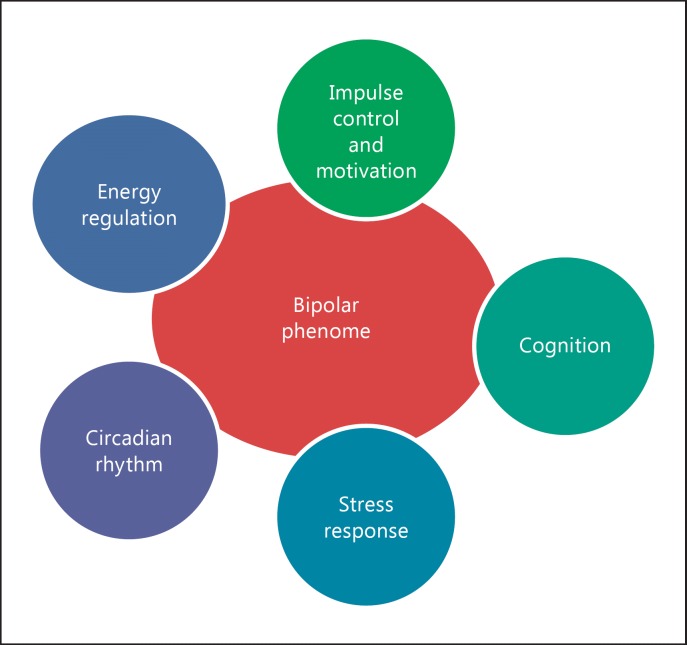
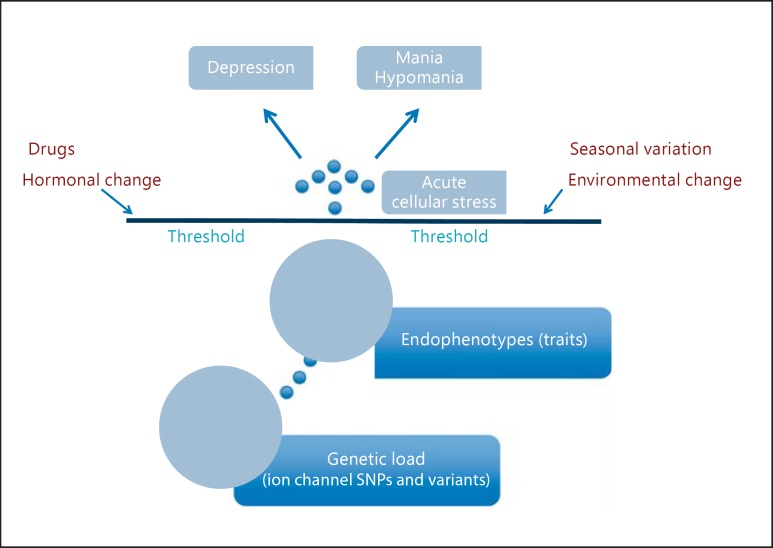
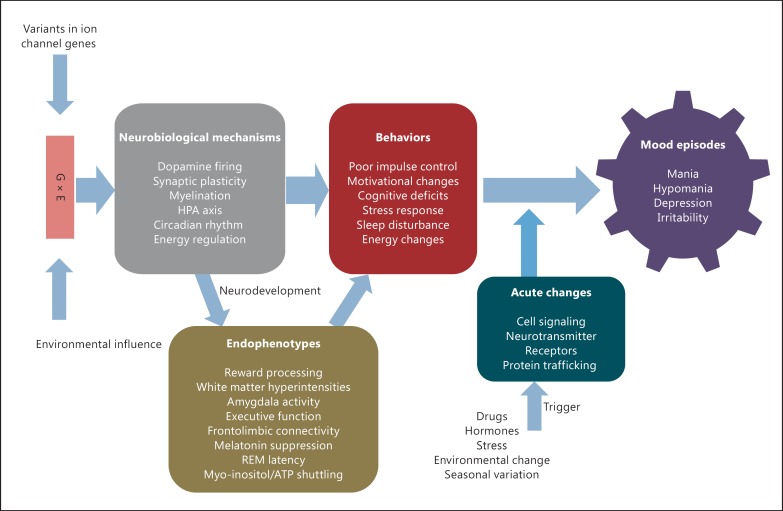
Recent advances in genome-wide association studies are pointing towards a major role for voltage-gated ion channels in neuropsychiatric disorders and, in particular, bipolar disorder (BD). The phenotype of BD is complex, with symptoms during mood episodes and deficits persisting between episodes. We have tried to elucidate the common neurobiological mechanisms associated with ion channel signaling in order to provide a new perspective on the clinical symptoms and possible endophenotypes seen in BD patients. We propose a model in which the multiple variants in genes coding for ion channel proteins would perturb motivational circuits, synaptic plasticity, myelination, hypothalamic-pituitary-adrenal axis function, circadian neuronal rhythms, and energy regulation. These changes in neurobiological mechanisms would manifest in endophenotypes of aberrant reward processing, white matter hyperintensities, deficits in executive function, altered frontolimbic connectivity, increased amygdala activity, increased melatonin suppression, decreased REM latency, and aberrant myo-inositol/ATP shuttling. The endophenotypes result in behaviors of poor impulse control, motivational changes, cognitive deficits, abnormal stress response, sleep disturbances, and energy changes involving different neurobiological process domains. The hypothesis is that these disturbances start with altered neural circuitry during development, following which multiple environmental triggers may disrupt the neuronal excitability balance through an activity-dependent molecular process, resulting in clinical mood episodes.
Keywords: Bipolar disorder; Circadian rhythm; Cognitive deficits; Energy disturbances; Environmental trigger; Genetic load; Impulse control; Mood episodes; Neurobiological process domains; Phenome; Voltage-gated ion channels.
Figures
References
-
- Askland K, Read C, Moore J. Pathways-based analyses of whole-genome association study data in bipolar disorder reveal genes mediating ion channel activity and synaptic neurotransmission. Hum Genet. 2009;125:63–79. - PubMed
-
- Le-Niculescu H, Patel SD, Bhat M, Kuczenski R, Faraone SV, Tsuang MT, et al. Convergent functional genomics of genome-wide association data for bipolar disorder: comprehensive identification of candidate genes, pathways and mechanisms. Am J Med Genet B Neuropsychiatr Genet. 2009;150B:155–181. - PubMed
Publication types
Grants and funding
LinkOut - more resources
Full Text Sources
Other Literature Sources
