Current status of managing diabetes mellitus in Korea
- PMID: 27604796
- PMCID: PMC5016294
- DOI: 10.3904/kjim.2016.253
Current status of managing diabetes mellitus in Korea
Abstract
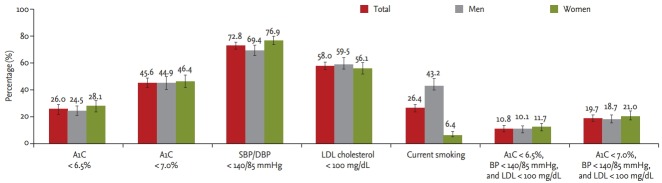
Diabetes mellitus is an increasing global health problem. Guidelines for diabetic care recommend management of lifestyle and risk factors (glucose, blood pressure, and cholesterol), as well as regular screening for complications associated with treatment of the conditions related to diabetes. The prevalence of diabetes increased from 8.6% to 11.0% from 2001 to 2013. According to the diabetes fact sheet 2015, the proportion of patients with diabetes treated with antihypertensive medications increased from 56.0% to 62.5% from 2006 to 2013, and 49.5% of those with diabetes were being treated with lipid-lowering medications in 2013, a 1.8-fold increase since 2006. According to the 2014 Korea National Health and Nutrition Examination Survey data, 45.6% of patients with diabetes achieved a hemoglobin A1c level of < 7.0%, 72.8% achieved a blood pressure of < 140/85 mmHg, and 58.0% achieved a low density lipoprotein cholesterol level of < 100 mg/dL. Only 19.7% of patients with diabetes had good control of all three of these parameters. Despite improvements in health promotion efforts, the rates of adherence to medication and risk-factor control are low. Therefore, a systematic approach to managing diabetes, including self-management education, is needed to prevent or delay complications. The government needs to establish a long-term policy to address the growing burden of diabetes.
Keywords: Diabetes management; Diabetes mellitus; Korea.
Conflict of interest statement
No potential conflict of interest relevant to this article was reported.
Figures
References
-
- Guariguata L, Whiting DR, Hambleton I, Beagley J, Linnenkamp U, Shaw JE. Global estimates of diabetes prevalence for 2013 and projections for 2035. Diabetes Res Clin Pract. 2014;103:137–149. - PubMed
-
- Alva ML, Gray A, Mihaylova B, Leal J, Holman RR. The impact of diabetes-related complications on healthcare costs: new results from the UKPDS (UKPDS 84) Diabet Med. 2015;32:459–466. - PubMed
-
- Inzucchi SE, Bergenstal RM, Buse JB, et al. Management of hyperglycemia in type 2 diabetes, 2015: a patient-centered approach: update to a position statement of the American Diabetes Association and the European Association for the Study of Diabetes. Diabetes Care. 2015;38:140–149. - PubMed
Publication types
MeSH terms
LinkOut - more resources
Full Text Sources
Other Literature Sources
Medical