


Long-term health effects of the Eyjafjallajökull volcanic eruption: a prospective cohort study in 2010 and 2013
- PMID: 27609845
- PMCID: PMC5020842
- DOI: 10.1136/bmjopen-2016-011444
Long-term health effects of the Eyjafjallajökull volcanic eruption: a prospective cohort study in 2010 and 2013
Abstract
Objectives: To examine the long-term development of physical and mental health following exposure to a volcanic eruption.
Design: Population-based prospective cohort study.
Setting: In spring 2010, the Icelandic volcano Eyjafjallajökull erupted. Data were collected at 2 time points: in 2010 and 2013.
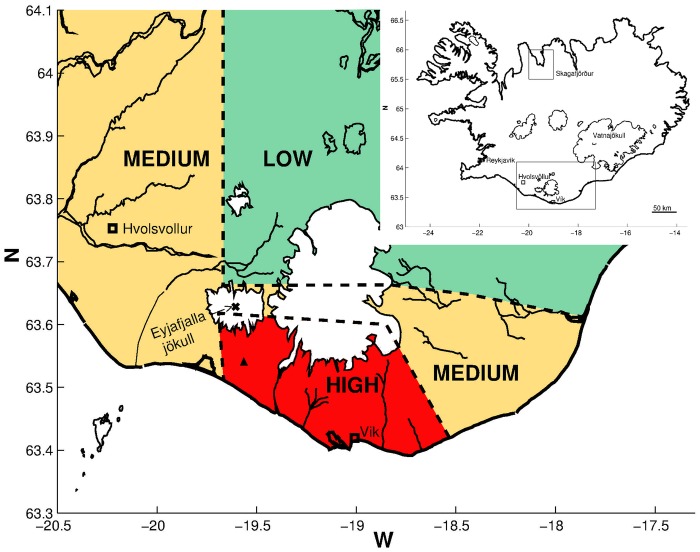
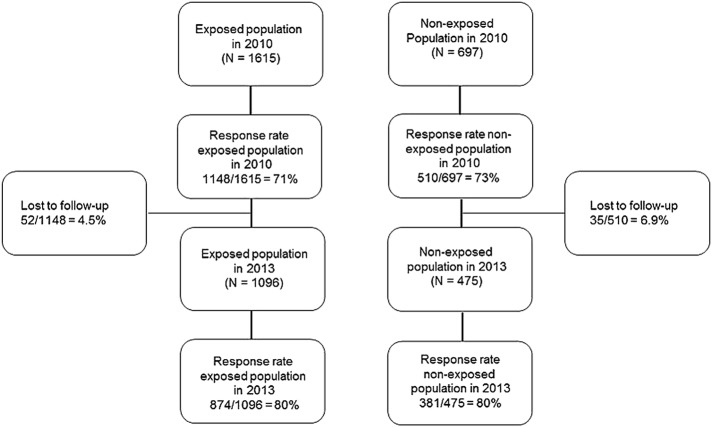
Participants: Adult residents in areas close to the Eyjafjallajökull volcano (N=1096), divided according to exposure levels, and a non-exposed sample (n=475), with 80% participation rate in 2013.
Main outcome measures: Physical symptoms in the previous year (chronic) and previous month (recent), and psychological distress (General Health Questionnaire-12-item version, GHQ-12), perceived stress (Perceived Stress Scale, PSS-4) and post traumatic stress disorder (PTSD) symptoms (Primary Care PTSD, PC-PTSD).
Results: In the exposed group, certain symptoms were higher in 2013 than in 2010, for example, morning phlegm during winter (OR 2.14; 95% CI 1.49 to 3.06), skin rash/eczema (OR 2.86; 95% CI 1.76 to 4.65), back pain (OR 1.45; 95% CI 1.03 to 2.05) and insomnia (OR 1.53; 95% CI 1.01 to 2.30), in addition to a higher prevalence of regular use of certain medications (eg, for asthma (OR 2.80; 95% CI 1.01 to 7.77)). PTSD symptoms decreased between 2010 and 2013 (OR 0.33; 95% CI 0.17 to 0.61), while the prevalence of psychological distress and perceived stress remained similar. In 2013, the exposed group showed a higher prevalence of various respiratory symptoms than did the non-exposed group, such as wheezing without a cold (high exposure OR 2.35; 95% CI 1.27 to 4.47) and phlegm (high exposure OR 2.81; 95% CI 1.48 to 5.55), some symptoms reflecting the degree of exposure (eg, nocturnal chest tightness (medium exposed OR 3.09; 95% CI 1.21 to 10.46; high exposed OR 3.42; 95% CI 1.30 to 11.79)).
Conclusions: The findings indicate that people exposed to a volcanic eruption, especially those most exposed, exhibit increased risk of certain symptoms 3-4 years after the eruption.
Keywords: MENTAL HEALTH; Natural disaster; Respiratory health; Volcanic ash.
Published by the BMJ Publishing Group Limited. For permission to use (where not already granted under a licence) please go to http://www.bmj.com/company/products-services/rights-and-licensing/
Figures
References
-
- Horwell CJ, Baxter PJ, Hillman SE et al. Physicochemical and toxicological profiling of ash from the 2010 and 2011 eruptions of Eyjafjallajökull and Grímsvötn volcanoes, Iceland using a rapid respiratory hazard assessment protocol. Environ Res 2013;127:63–73. 10.1016/j.envres.2013.08.011 - DOI - PubMed
-
- Thorsteinsson T, Jóhannsson T, Stohl A et al. High levels of particulate matter in Iceland due to direct ash emissions by the Eyjafjallajökull eruption and resuspension of deposited ash. J Geophys Res Solid Earth 2012;117:1–9. 10.1029/2011JB008756 - DOI
Publication types
MeSH terms
LinkOut - more resources
Full Text Sources
Other Literature Sources
Medical
Research Materials
Miscellaneous
