


Cancer stem cells: understanding tumor hierarchy and heterogeneity
- PMID: 27611934
- PMCID: PMC5599210
- DOI: 10.1097/MD.0000000000004764
Cancer stem cells: understanding tumor hierarchy and heterogeneity
Abstract
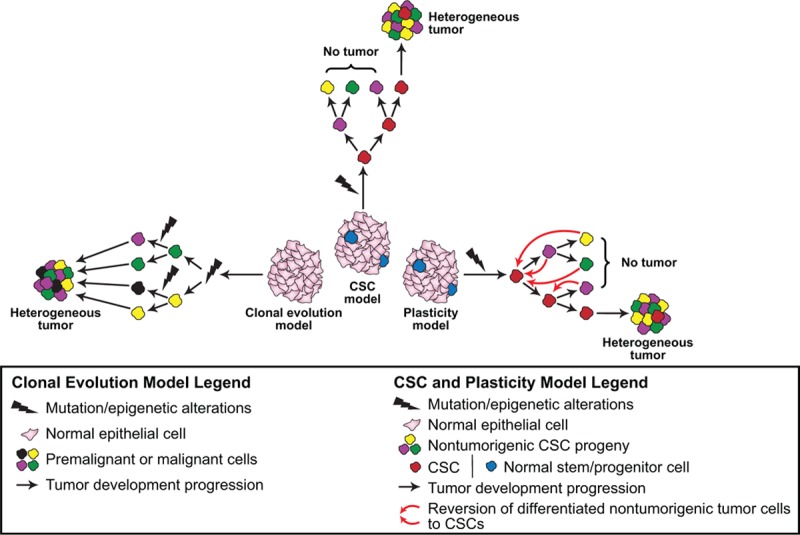
Heterogeneity within and between tumors is a well-known phenomenon that greatly complicates the diagnosis and treatment of cancer. A large body of research indicates that heterogeneity develops through time as tumor-initiating stem cells, also known as cancer stem cells (CSCs), evolve genetic or epigenetic alterations that allow them to differentiate into multiple tumor cell types. Similar to normal stem cells, CSCs can self-renew and possess long-term repopulation potential. However, unlike normal stem cells, CSCs are not subject to the usual controls that limit growth. Different models have been postulated to explain the heterogeneity of tumors, but it is widely agreed that interactions between tumor cells and their microenvironment create niches that promote CSC properties and enable their survival. Within the microenvironment, CSC self-renewal, replication, and differentiation are postulated to produce a hierarchy of cells constituting the tumor mass. Increased understanding of the factors that create and contribute to tumor heterogeneity may support the design of therapies that affect CSC function and their microenvironments.
Conflict of interest statement
The author reports no conflicts of interest.
Figures

References
-
- Huntly BJ, Gilliland DG. Leukaemia stem cells and the evolution of cancer-stem-cell research. Nat Rev Cancer 2005; 5:311–321. - PubMed
-
- Bonnet D, Dick JE. Human acute myeloid leukemia is organized as a hierarchy that originates from a primitive hematopoietic cell. Nat Med 1997; 3:730–737. - PubMed
-
- Kreso A, Dick JE. Evolution of the cancer stem cell model. Cell Stem Cell 2014; 14:275–291. - PubMed
-
- Burrell RA, McGranahan N, Bartek J, et al. The causes and consequences of genetic heterogeneity in cancer evolution. Nature 2013; 501:338–345. - PubMed
Publication types
MeSH terms
LinkOut - more resources
Full Text Sources
Other Literature Sources
