


Hip dysplasia in the young adult caused by residual childhood and adolescent-onset dysplasia
- PMID: 27613709
- PMCID: PMC5127949
- DOI: 10.1007/s12178-016-9369-0
Hip dysplasia in the young adult caused by residual childhood and adolescent-onset dysplasia
Abstract
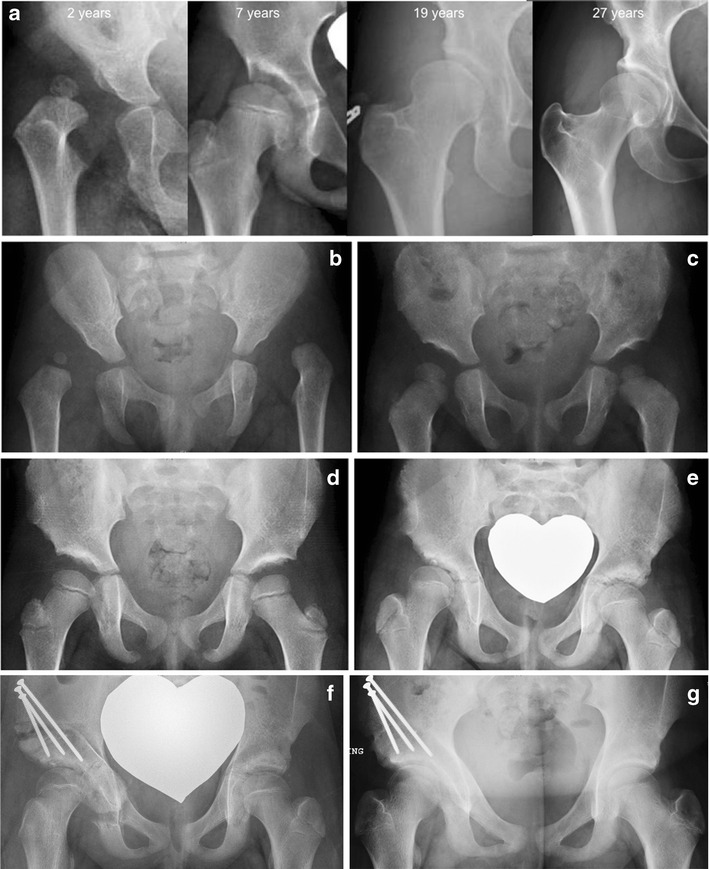
Hip dysplasia is a treatable developmental disorder that presents early in life but if neglected can lead to chronic disability due to pain, decreased function, and early osteoarthritis. The main causes of hip dysplasia in the young adult are residual childhood developmental dysplasia of the hip (DDH) and adolescent-onset acetabular dysplasia. These two distinct disease processes affect the growing hip during different times of development but result in a similar deformity and pathomechanism of hip degeneration. Routine screening for DDH and counseling regarding risks for acetabular dysplasia in families with a history of early hip osteoarthritis may allow early identification and intervention in these hips with anatomical risk factors for joint degeneration.
Keywords: Acetabular dysplasia; DDH; Hip dysplasia; PAO; Periacetabular osteotomy; Residual hip dysplasia.
Conflict of interest statement
The author declares that she has no conflict of interest. Human and animal rights and informed consent This article does not contain any studies with human or animal subjects performed by any of the authors.
Figures
References
Publication types
LinkOut - more resources
Full Text Sources
Other Literature Sources
Research Materials
