


Mutations in MBOAT7, Encoding Lysophosphatidylinositol Acyltransferase I, Lead to Intellectual Disability Accompanied by Epilepsy and Autistic Features
- PMID: 27616480
- PMCID: PMC5065650
- DOI: 10.1016/j.ajhg.2016.07.019
Mutations in MBOAT7, Encoding Lysophosphatidylinositol Acyltransferase I, Lead to Intellectual Disability Accompanied by Epilepsy and Autistic Features
Abstract
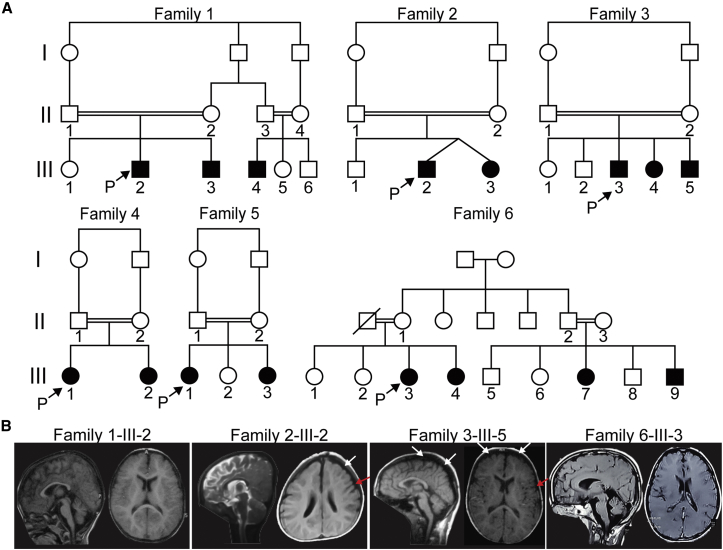
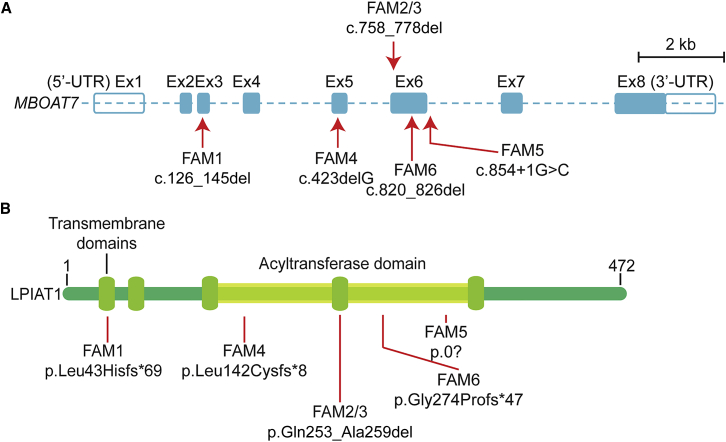
The risk of epilepsy among individuals with intellectual disability (ID) is approximately ten times that of the general population. From a cohort of >5,000 families affected by neurodevelopmental disorders, we identified six consanguineous families harboring homozygous inactivating variants in MBOAT7, encoding lysophosphatidylinositol acyltransferase (LPIAT1). Subjects presented with ID frequently accompanied by epilepsy and autistic features. LPIAT1 is a membrane-bound phospholipid-remodeling enzyme that transfers arachidonic acid (AA) to lysophosphatidylinositol to produce AA-containing phosphatidylinositol. This study suggests a role for AA-containing phosphatidylinositols in the development of ID accompanied by epilepsy and autistic features.
Keywords: LPIAT1; MBOAT7; arachidonic acid; autism; epilepsy; inflammation; intellectual disability; lipid; phosphatidylinositol.
Copyright © 2016. Published by Elsevier Inc.
Figures
References
-
- Maulik P.K., Mascarenhas M.N., Mathers C.D., Dua T., Saxena S. Prevalence of intellectual disability: a meta-analysis of population-based studies. Res. Dev. Disabil. 2011;32:419–436. - PubMed
-
- Vissers L.E., Gilissen C., Veltman J.A. Genetic studies in intellectual disability and related disorders. Nat. Rev. Genet. 2016;17:9–18. - PubMed
-
- American Psychiatric Association . American Psychiatric Publishing; 2013. Diagnostic and Statistical Manual of Mental Disorders, Fifth Edition (DSM-5)
-
- Gilissen C., Hehir-Kwa J.Y., Thung D.T., van de Vorst M., van Bon B.W., Willemsen M.H., Kwint M., Janssen I.M., Hoischen A., Schenck A. Genome sequencing identifies major causes of severe intellectual disability. Nature. 2014;511:344–347. - PubMed
MeSH terms
Substances
Grants and funding
LinkOut - more resources
Full Text Sources
Other Literature Sources
Medical
Molecular Biology Databases
Miscellaneous
