


Assessing electronic health record phenotypes against gold-standard diagnostic criteria for diabetes mellitus
- PMID: 27616701
- PMCID: PMC6080723
- DOI: 10.1093/jamia/ocw123
Assessing electronic health record phenotypes against gold-standard diagnostic criteria for diabetes mellitus
Abstract
Objective: We assessed the sensitivity and specificity of 8 electronic health record (EHR)-based phenotypes for diabetes mellitus against gold-standard American Diabetes Association (ADA) diagnostic criteria via chart review by clinical experts.
Materials and methods: We identified EHR-based diabetes phenotype definitions that were developed for various purposes by a variety of users, including academic medical centers, Medicare, the New York City Health Department, and pharmacy benefit managers. We applied these definitions to a sample of 173 503 patients with records in the Duke Health System Enterprise Data Warehouse and at least 1 visit over a 5-year period (2007-2011). Of these patients, 22 679 (13%) met the criteria of 1 or more of the selected diabetes phenotype definitions. A statistically balanced sample of these patients was selected for chart review by clinical experts to determine the presence or absence of type 2 diabetes in the sample.
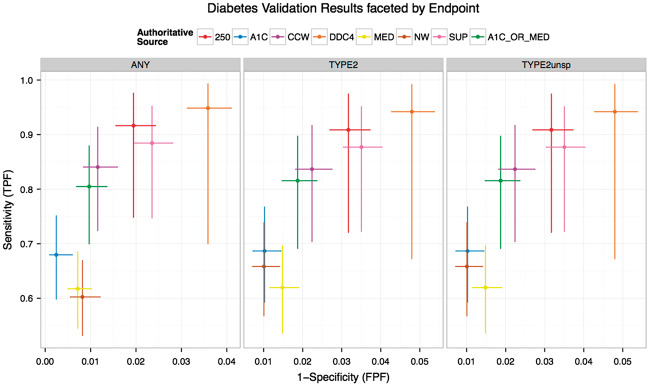
Results: The sensitivity (62-94%) and specificity (95-99%) of EHR-based type 2 diabetes phenotypes (compared with the gold standard ADA criteria via chart review) varied depending on the component criteria and timing of observations and measurements.
Discussion and conclusions: Researchers using EHR-based phenotype definitions should clearly specify the characteristics that comprise the definition, variations of ADA criteria, and how different phenotype definitions and components impact the patient populations retrieved and the intended application. Careful attention to phenotype definitions is critical if the promise of leveraging EHR data to improve individual and population health is to be fulfilled.
Keywords: EHR phenotypes; diabetes identification; diabetes registries.
© The Author 2016. Published by Oxford University Press on behalf of the American Medical Informatics Association. All rights reserved. For Permissions, please email: journals.permissions@oup.com
Figures
References
-
- The Diabetes Control and Complications Trial Research Group. The effect of intensive treatment of diabetes on the development and progression of long-term complications in insulin-dependent diabetes mellitus. N Engl J Med. 1993;329:977–86. - PubMed
-
- Centers for Disease Control and Prevention. National Diabetes Statistics Report, 2014: Estimates of Diabetes and Its Burden in the United States. Atlanta, GA: US Department of Health and Human Services; 2014. http://www.cdc.gov/diabetes/pubs/statsreport14/national-diabetes-report-.... Accessed November 2, 2015.
-
- American Diabetes Association. Classification and diagnosis of diabetes. Diabetes Care. 2016;39 (Suppl 1): S13–22. - PubMed
MeSH terms
Substances
Grants and funding
LinkOut - more resources
Full Text Sources
Other Literature Sources
Medical
Research Materials
Miscellaneous
