


Mechanics of neurulation: From classical to current perspectives on the physical mechanics that shape, fold, and form the neural tube
- PMID: 27620928
- PMCID: PMC9972508
- DOI: 10.1002/bdra.23557
Mechanics of neurulation: From classical to current perspectives on the physical mechanics that shape, fold, and form the neural tube
Abstract
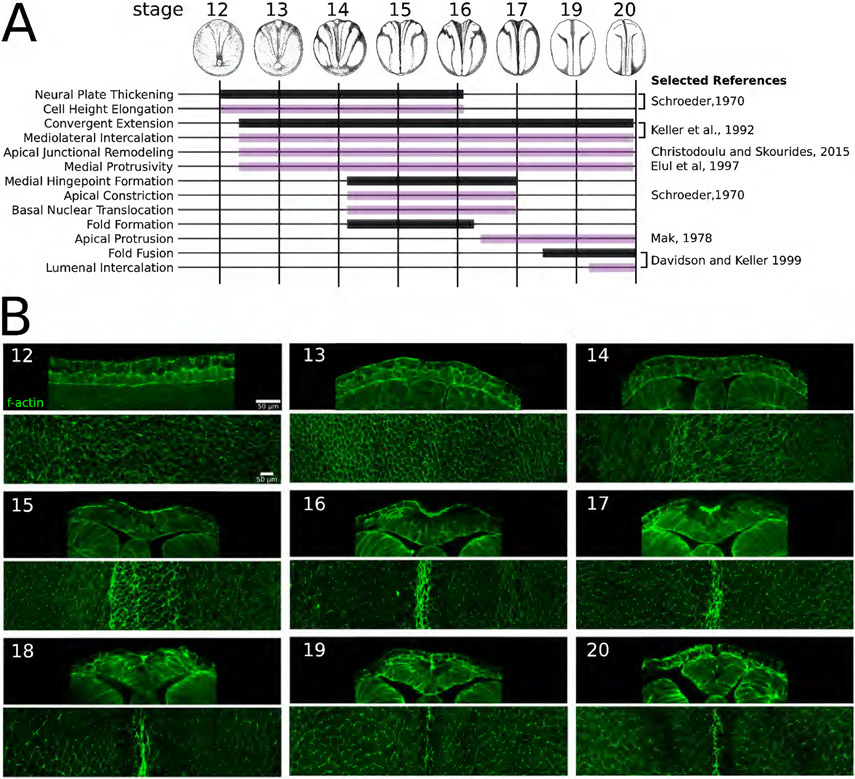
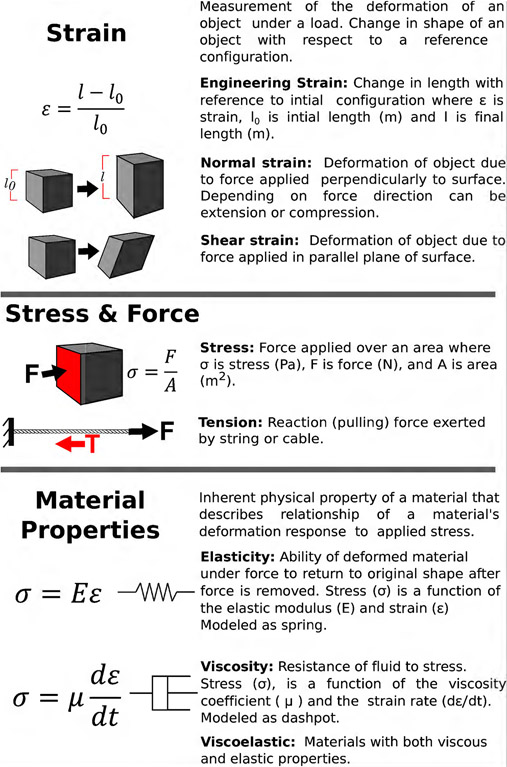
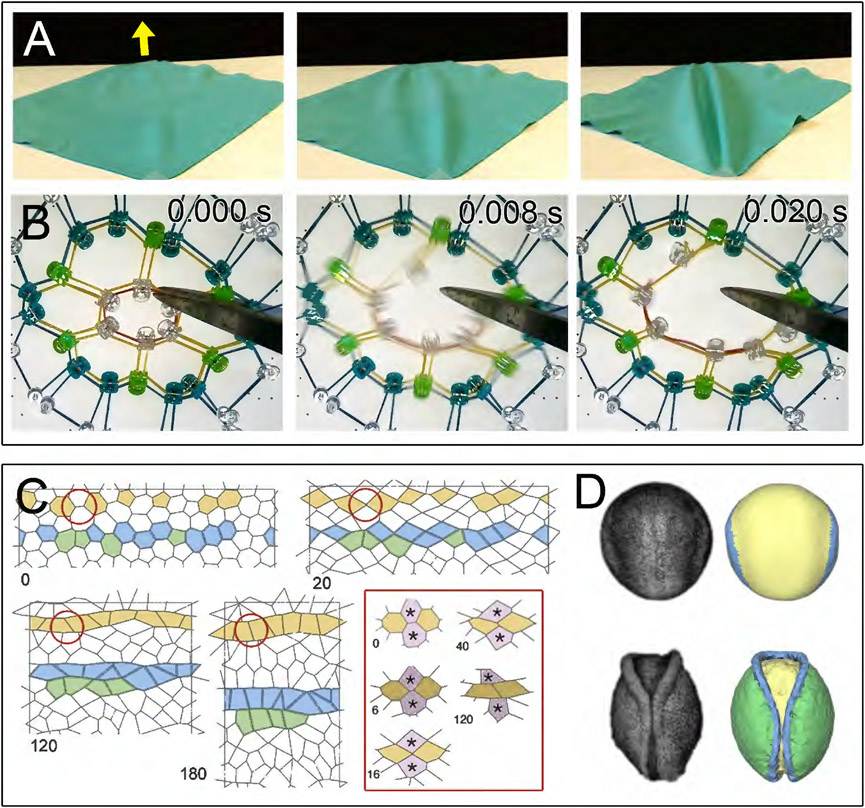
Neural tube defects arise from mechanical failures in the process of neurulation. At the most fundamental level, formation of the neural tube relies on coordinated, complex tissue movements that mechanically transform the flat neural epithelium into a lumenized epithelial tube (Davidson, 2012). The nature of this mechanical transformation has mystified embryologists, geneticists, and clinicians for more than 100 years. Early embryologists pondered the physical mechanisms that guide this transformation. Detailed observations of cell and tissue movements as well as experimental embryological manipulations allowed researchers to generate and test elementary hypotheses of the intrinsic and extrinsic forces acting on the neural tissue. Current research has turned toward understanding the molecular mechanisms underlying neurulation. Genetic and molecular perturbation have identified a multitude of subcellular components that correlate with cell behaviors and tissue movements during neural tube formation. In this review, we focus on methods and conceptual frameworks that have been applied to the study of amphibian neurulation that can be used to determine how molecular and physical mechanisms are integrated and responsible for neurulation. We will describe how qualitative descriptions and quantitative measurements of strain, force generation, and tissue material properties as well as simulations can be used to understand how embryos use morphogenetic programs to drive neurulation. Birth Defects Research 109:153-168, 2017. © 2016 Wiley Periodicals, Inc.
Keywords: biomechanics; biophysics; cell mechanics; epithelia; epithelial folding; morphogenesis; neural tube defects; quantitative analysis.
© 2016 Wiley Periodicals, Inc.
Figures
References
-
- Aigouy B, Farhadifar R, Staple DB, Sagner A, Roper JC, Julicher F, Eaton S. 2010. Cell flow reorients the axis of planar polarity in the wing epithelium of Drosophila. Cell 142(5):773–786. - PubMed
-
- Alvarez IS, Schoenwolf GC. 1992. Expansion of surface epithelium provides the major extrinsic force for bending of the neural plate. Journal of Experimental Zoology 261(3):340–348. - PubMed
-
- Araya C, Ward LC, Girdler GC, Miranda M. 2016. Coordinating cell and tissue behavior during zebrafish neural tube morphogenesis. Dev Dyn 245(3):197–208. - PubMed
-
- Baker PC, Schroeder TE. 1967. Cytoplasmic filaments and morphogenetic movement in the amphibian neural tube. Developmental Biology 15(5):432–450. - PubMed
-
- Barbier de Reuille P, Routier-Kierzkowska AL, Kierzkowski D, Bassel GW, Schupbach T, Tauriello G, Bajpai N, Strauss S, Weber A, Kiss A, Burian A, Hofhuis H, Sapala A, Lipowczan M, Heimlicher MB, Robinson S, Bayer EM, Basler K, Koumoutsakos P, Roeder AH, Aegerter-Wilmsen T, Nakayama N, Tsiantis M, Hay A, Kwiatkowska D, Xenarios I, Kuhlemeier C, Smith RS. 2015. MorphoGraphX: A platform for quantifying morphogenesis in 4D. Elife 4:05864. - PMC - PubMed
Publication types
MeSH terms
Substances
Grants and funding
LinkOut - more resources
Full Text Sources
Other Literature Sources
Medical
