Inhibition of the PI3K/AKT/mTOR Pathway in Solid Tumors
- PMID: 27621407
- PMCID: PMC6366304
- DOI: 10.1200/JCO.2014.59.0018
Inhibition of the PI3K/AKT/mTOR Pathway in Solid Tumors
Abstract
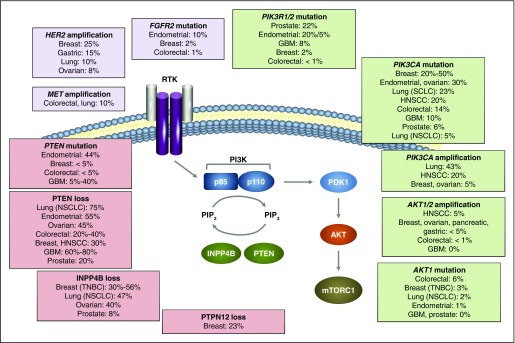
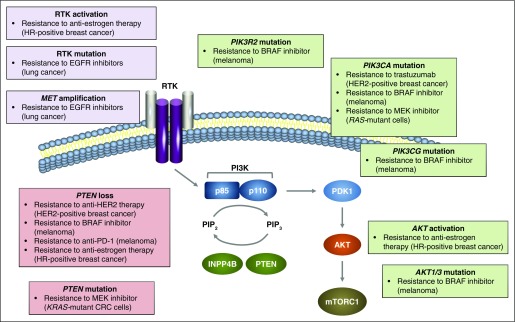
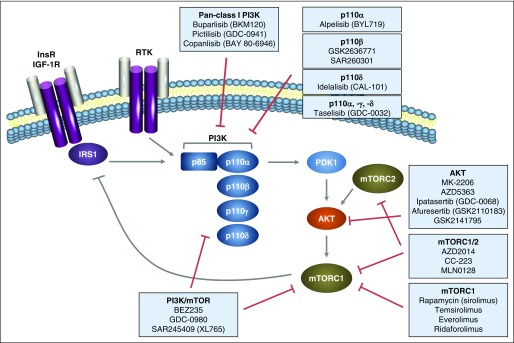
The phosphoinositide 3-kinase (PI3K) pathway plays an integral role in many cellular processes and is frequently altered in cancer, contributing to tumor growth and survival. Small molecule inhibitors have been developed that target the three major nodes of this pathway: PI3K, AKT, and mammalian target of rapamycin. However, because oncogenic PI3K pathway activation is achieved in diverse, potentially redundant ways, the clinical efficacy of these inhibitors as monotherapies has, so far, been limited, despite demonstrating promising preclinical activity. Moreover, pathway activation is associated with resistance to other therapies; thus, in combination, PI3K pathway inhibitors could restore therapeutic sensitivity to these agents. To maximize therapeutic benefit, drug combinations and schedules must be explored to identify those with the highest efficacy and lowest toxicity overlap. In addition, defining appropriate patient subpopulations, for both monotherapy and drug combinations, will be important. However, identifying predictive biomarkers remains a challenge.
Conflict of interest statement
Author’s disclosures of potential conflicts of interest are found in the article online at
Figures
References
-
- Dienstmann R, Rodon J, Serra V, et al. Picking the point of inhibition: A comparative review of PI3K/AKT/mTOR pathway inhibitors. Mol Cancer Ther. 2014;13:1021–1031. - PubMed
-
- Engelman JA, Luo J, Cantley LC. The evolution of phosphatidylinositol 3-kinases as regulators of growth and metabolism. Nat Rev Genet. 2006;7:606–619. - PubMed
Publication types
MeSH terms
Substances
Grants and funding
LinkOut - more resources
Full Text Sources
Other Literature Sources
Medical
Miscellaneous