. 2016 Sep 14:6:33052.
doi: 10.1038/srep33052.

Curcumin protects ANIT-induced cholestasis through signaling pathway of FXR-regulated bile acid and inflammation

Affiliations

Curcumin protects ANIT-induced cholestasis through signaling pathway of FXR-regulated bile acid and inflammation

Fan Yang et al. Sci Rep. .

Abstract

Cholestasis is a clinically significant symptom and widely associated with liver diseases, however, there are very few effective therapies for cholestasis. Danning tablet (DNT, a Chinese patent medicine preparation) has been clinically used to treat human liver and gallbladder diseases for more than 20 years in China. However, which ingredients of DNT contributed to this beneficial effect and their mechanistic underpinnings have been largely unknown. In the present study, we discovered that DNT not only demonstrated greater benefits for cholecystitis patients after cholecystectomy surgery in clinic but also showed protective effect against alpha-naphthylisothiocyanate (ANIT)-induced cholestasis model in rodent. Curcumin, one major compound derived from DNT, exerted the protective effect against cholestasis through farnesoid X receptor (FXR), which has been focused as potential therapeutic targets for treating cholestasis. The underlying mechanism of curcumin against cholestasis was restoring bile acid homeostasis and antagonizing inflammatory responses in a FXR-dependent manner and in turn contributed to overall cholestasis attenuation. Collectively, curcumin can be served as a potential treatment option for liver injury with cholestasis.


Figures
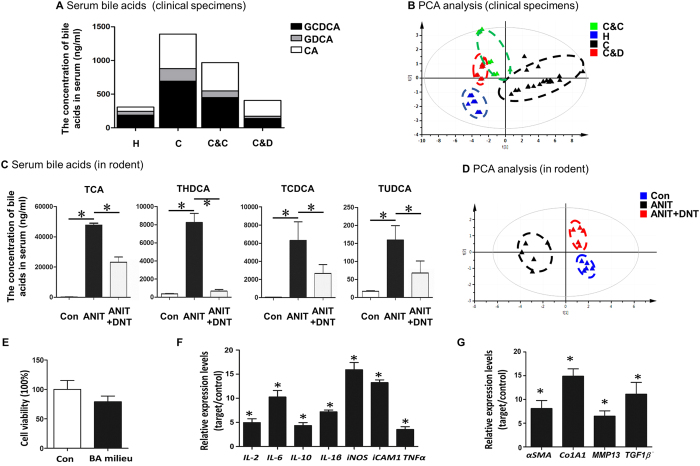
Figure 1
Figure 1. DNT reduced pathological bile acid accumulation and inflammation in cholecystitis patients and rodents.
(A,B) Twenty patients with cholecystitis (represents C) and 10 healthy people (represents H) were participated in this study. They are double-blind randomized into two groups after cholecystectomy operation. The treatment groups received DNT regimen (represents C&D) for 12 weeks since 5 days after operation relative to the normal antibiotics therapy which control groups received (represents C&C). Their blood was collected at 13 weeks after the operation. All samples were prepared for detection of bile acid concentrations (A) and inflammatory cytokines (B). (C,D) ANIT-induced animal model was established to assess the protective effect of DNT in rodent. Serum levels of TCA, THDCA, TCDCA, and TUDCA were quantified by UPLC-MS (C) and hepatic inflammation-related genes were studied by Real-time PCR and visualized by PCA (D). (E–G) Primary mouse hepatocyte cells were exposure to bile acid milieu for 24 h. Cell viability was measured by CCK-8 assay (E). Inflammation-related genes, IL-2, IL-6, IL-10, IL-1β, iNOS, iCAM1 and TNFα (F) as well as fibrosis-related genes, αSMA, Co1A1, MMP13 and TGF1β (G) were detected by Real-time PCR. Data are presented as mean ± SD. *p < 0.05.
Figure 2
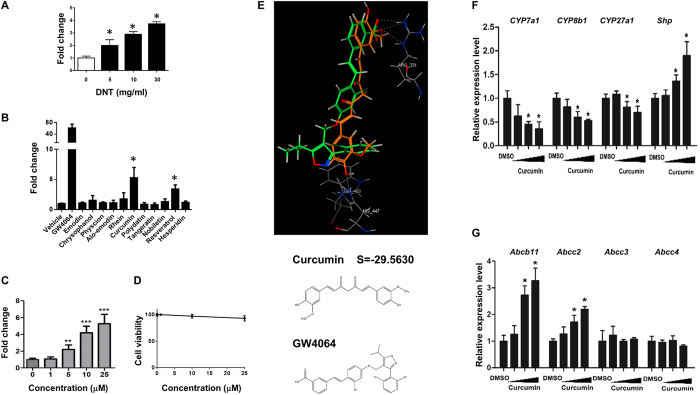
Figure 2. DNT and curcumin activated FXR in vitro.
(A) HEK293T cells were exposure to dose-dependent concertation of DNT for 24 h after transfected with FXR plasmid DNA for 6 h. (B) Emodin, chrysophanol, physcion, alo-emodin, rhein, curcumin, polydatin, tangeratin, nobiletin, resveratrol and hesperidin, main compounds extracted from DNT, were studied for FXR activation. The doses of all compounds were used at 20 μM, while GW4064, a FXR synthesized agonist, at dose of 10 μM was used as positive control. (C,D) Curcumin at dose of 1 μM, 5 μM, 10 μM and 25 μM were treated in HEK293T cells after promoter region of FXR downstream gene and FXR overexpression plasmid co-transfection. FXR activity (C) and cell viability (D) were measured by the Dual-luciferase Reporter system and CCK-8 kit, respectively. (E) Molecular docking analysis between curcumin and FXR by computer simulation. GW4064 served as FXR docking template. Curcumin docking value with FXR was -29.5630 and potentially considered as FXR agonist. (F,G) Huh7 cells were treated with DMSO or curcumin (20 μM) for 24 h. Target genes regulated by FXR were studied by Real-time PCR. Bile acid synthesis and efflux genes, including Cyp7a1, Cyp8b1, Cyp27a1, Shp, Abcb11, Abcc2, Abcc3 and Abcc4 were involved. Data are presented as mean ± SD. *p < 0.05.
Figure 3
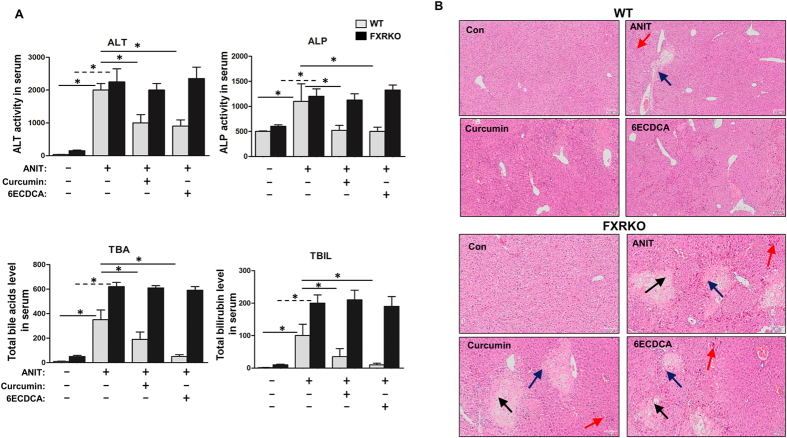
Figure 3. Curcumin protected ANIT-induced liver injury with cholestasis in presence of FXR by biochemical and histological analysis.
(A) Serum TBA, ALP, ALT, DBIL and TBIL were detected in both WT and FXRKO mice serum. (B) Liver tissues from all groups in both WT and FXRKO mice were fixed and followed by H&E staining (black arrow: liver injury with ballooning; red arrow: cholestaisis; blue arrow: inflammation). Data are presented as mean ± SD. *p < 0.05.
Figure 4
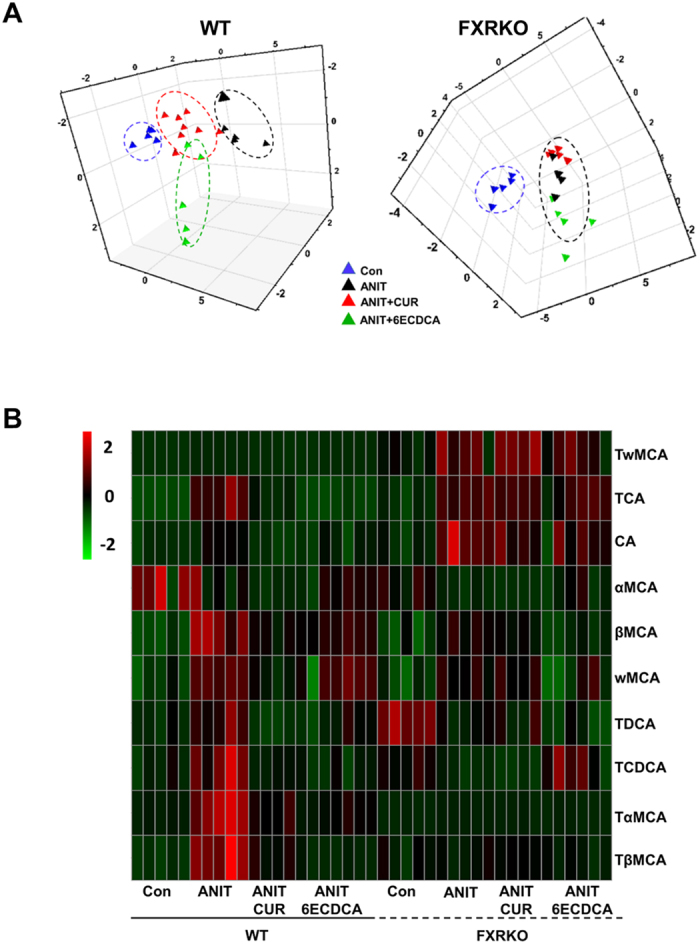
Figure 4. The effect of curcumin on ANIT-induced cholestasis through FXR-regulated bile acids profiles.
Ten individual bile acids were quantified by LC-MS in both WT and FXRKO mouse livers, which were visualized in score plot of principal component analysis (PCA) (A) and heatmap (B). The colors on the heatmap correspond to the contents of bile acids Red represents the increase, while green represents the decrease. Hierarchical clustering separates X axis of heatmap represents different groups within 5 samples, while Y axis stands for bile acid levels.
Figure 5
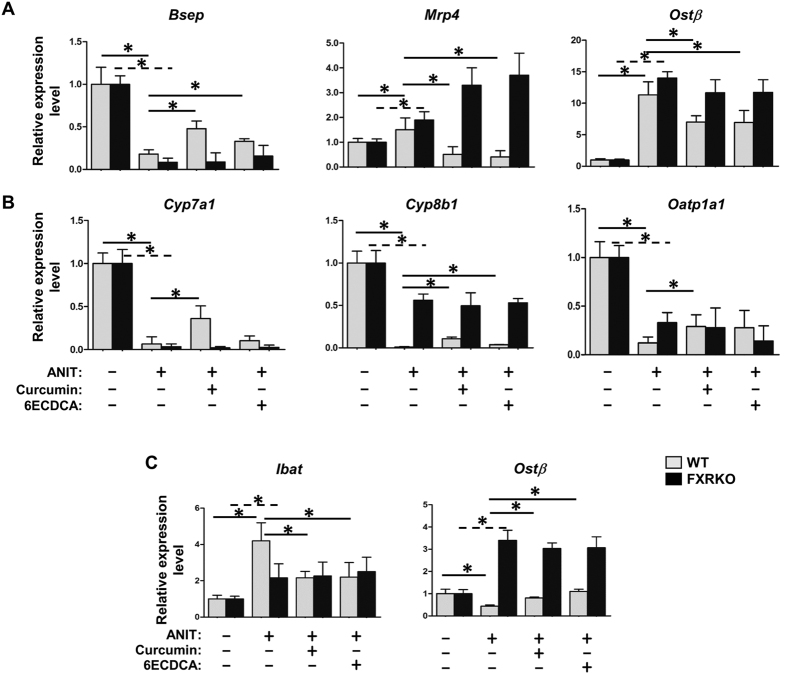
Figure 5. The effect of curcumin on bile acid signaling related genes after ANIT administration in WT and FXRKO mice.
Liver and ileum tissues from both mice were used for gene expression. Bile acid transport (A), biosynthesis and uptake (B) and enterohepatic circulation related genes (C), including Bsep, Mrp4, Ostβ, Cyp7a1, Cyp8b1, Oatp1a1 and Ibat were detected by Real-time PCR. Data are presented as mean ± SD. *p < 0.05.
Figure 6
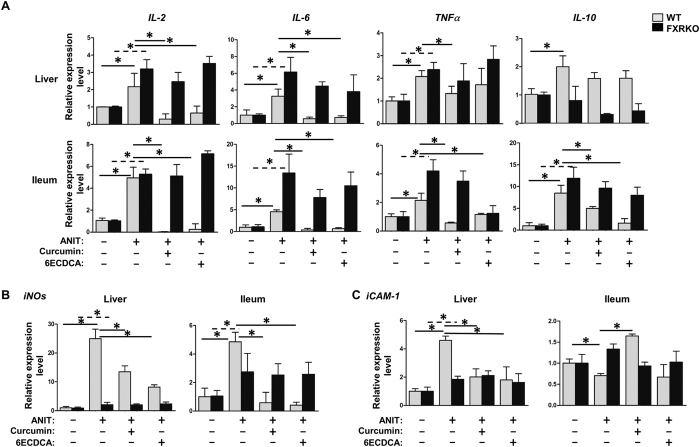
Figure 6. The effect of curcumin on inflammatory signaling related genes after ANIT administration in WT and FXRKO mice.
Liver and ileum tissues from both WT and FXRKO mice were measured gene expression. Inflammation related genes, including IL-2, IL-6, IL-10, TNFα (A), iNOS(B) and iCAM-1(C), were detected by Real-time PCR. Data are presented as mean ± SD. *p < 0.05.

References

    1. Yoshidome H. et al.. Obstructive jaundice impairs hepatic sinusoidal endothelial cell function and renders liver susceptible to hepatic ischemia/reperfusion. J. Hepatol. 33, 59–67 (2000). - PubMed
    1. Mieli-Vergani G. & Vergani D. Biliary atresia. Semin Immunopathol. 31, 371–381 (2009). - PubMed
    1. Moghadamrad S., Montani M., Weimann R. & De Gottardi A. Cholestasis in a patient with gallstones and a normal gamma-glutamyl transferase. Hepatology 57, 2539–2541 (2013). - PubMed
    1. Tekin R. et al.. Evaluation of adults with acute viral hepatitis a and review of the literature. Clin Ter. 164, 537–541 (2013). - PubMed
    1. Flora K. D. & Benner K. G. Liver disease in cystic fibrosis. Clin Liver Dis. 2, 51–61 (1998). - PubMed

Publication types

MeSH terms

LinkOut - more resources