Immunohistochemical correlates of TP53 somatic mutations in cancer
- PMID: 27626311
- PMCID: PMC5323125
- DOI: 10.18632/oncotarget.11912
Immunohistochemical correlates of TP53 somatic mutations in cancer
Abstract
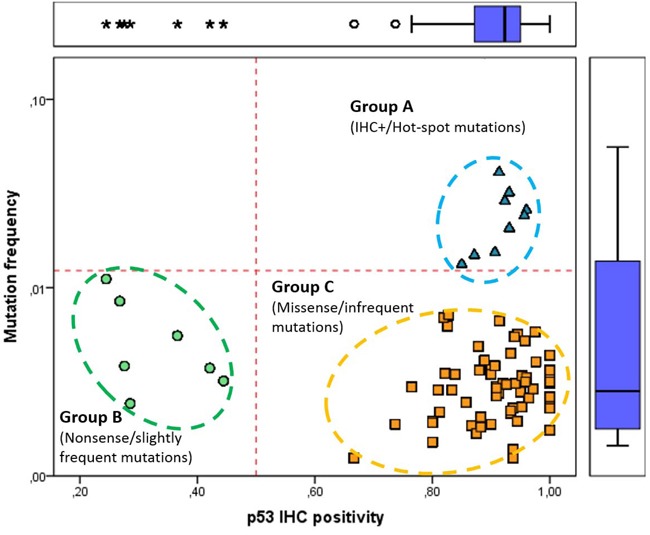
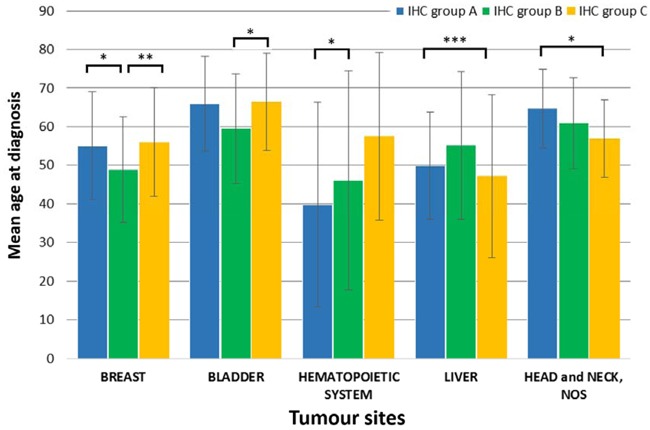
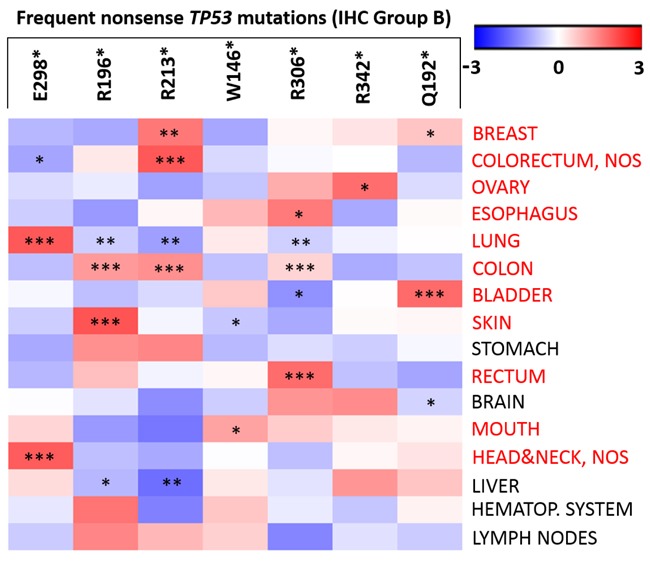
Despite controversy on the correlation between p53 accumulation and TP53 mutational status, immunohistochemical (IHC) detection of overexpressed protein has long been used as a surrogate method for mutation analysis. The aim of our study was to characterise the IHC expression features of TP53 somatic mutations and define their occurrence in human cancers. A large-scale database analysis was conducted in the IARC TP53 Database (R17); 7878 mutations with IHC features were retrieved representing 60 distinct tumour sites. The majority of the alterations were immunopositive (p <0.001). Sex was known for 4897 mutations showing a female dominance (57.2%) and females carrying negative mutations were significantly younger. TP53 mutations were divided into three IHC groups according to mutation frequency and IHC positivity. Each group had female dominance. Among the IHC groups, significant correlations were observed with age at diagnosis in breast, bladder, liver, haematopoietic system and head & neck cancers. An increased likelihood of false negative IHC associated with rare nonsense mutations was observed in certain tumour sites. Our study demonstrates that p53 immunopositivity largely correlates with TP53 mutational status but expression is absent in certain mutation types.Besides, describing the complex IHC expression of TP53 somatic mutations, our results reveal some caveats for the diagnostic practice.
Keywords: IARC TP53 Database; TP53 mutations; cancer; p53; immunohistochemistry.
Conflict of interest statement
The Authors do not have any conflicts of interest.
Figures
References
-
- Petitjean A, Achatz M, Borresen-Dale A, Hainaut P, Olivier M. TP53 mutations in human cancers: functional selection and impact on cancer prognosis and outcomes. Oncogene. 2007;26:2157–65. - PubMed
-
- Tan E, Cheok C. Bringing p53 into the Clinic. J Cancer Sci Ther. 2014;6:363–9.
-
- Schlomm T, Iwers L, Kirstein P, Jessen B, Köllermann J, Minner S, Passow-Drolet A, Mirlacher M, Milde-Langosch K, Graefen M. Clinical significance of p53 alterations in surgically treated prostate cancers. Mod Pathol. 2008;21:1371–8. - PubMed
MeSH terms
Substances
LinkOut - more resources
Full Text Sources
Other Literature Sources
Research Materials
Miscellaneous