


The persistence of pesticides in atmospheric particulate phase: An emerging air quality issue
- PMID: 27628441
- PMCID: PMC5024296
- DOI: 10.1038/srep33456
The persistence of pesticides in atmospheric particulate phase: An emerging air quality issue
Abstract
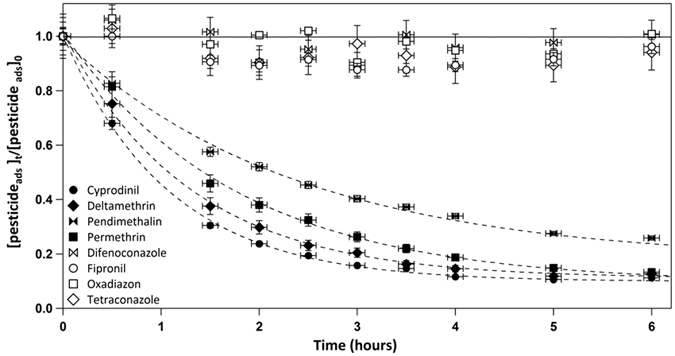
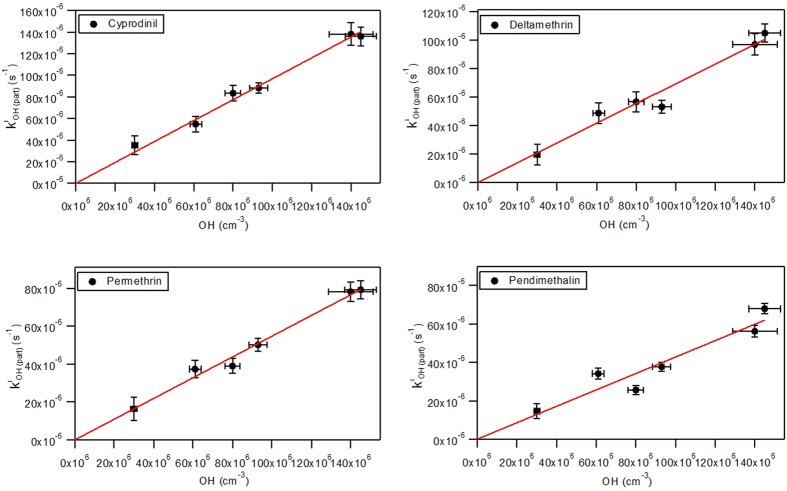
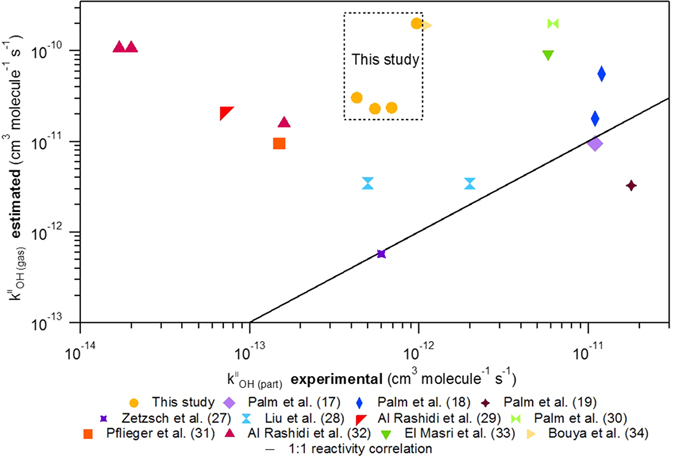
The persistent organic pollutants (POPs) due to their physicochemical properties can be widely spread all over the globe; as such they represent a serious threat to both humans and wildlife. According to Stockholm convention out of 24 officially recognized POPs, 16 are pesticides. The atmospheric life times of pesticides, up to now were estimated based on their gas-phase reactivity. It has been only speculated that sorption to aerosol particles may increase significantly the half-lives of pesticides in the atmosphere. The results presented here challenge the current view of the half-lives of pesticides in the lower boundary layer of the atmosphere and their impact on air quality and human health. We demonstrate that semivolatile pesticides which are mostly adsorbed on atmospheric aerosol particles are very persistent with respect to the highly reactive hydroxyl radicals (OH) that is the self-cleaning agent of the atmosphere. The half-lives in particulate phase of difenoconazole, tetraconazole, fipronil, oxadiazon, deltamethrin, cyprodinil, permethrin, and pendimethalin are in order of several days and even higher than one month, implying that these pesticides can be transported over long distances, reaching the remote regions all over the world; hence these pesticides shall be further evaluated prior to be confirmed as POPs.
Figures
References
-
- Lelieveld J., Evans J. S., Fnais M., Giannadaki D. & Pozzer A. The contribution of outdoor air pollution sources to premature mortality on a global scale. Nature 525, 367–371 (2015). - PubMed
-
- Pope C. A. & Dockery D. W. Health effects of fine particulate air pollution: Lines that connect. J. Air Waste Manag. Assoc. 56, 709–742 (2006). - PubMed
-
- Sinfort C. et al. Influence des conditions et matériels de pulvérisation sur les pertes de pesticides au sol et dans l’air en viticulture Languedocienne. XXXIX congrès du Groupe Français des Pesticides (2009).
-
- Yates S. R. et al. Emissions of 1,3-Dichloropropene and Chloropicrin after Soil Fumigation under Field Conditions. J. Agric. Food Chem. 63, 5354–5363 (2015). - PubMed
-
- Jakobi G. et al. Atmospheric bulk deposition measurements of organochlorine pesticides at three alpine summits. Atmos. Environ. 101, 158–165 (2015).
Publication types
LinkOut - more resources
Full Text Sources
Other Literature Sources
