


Plantar pressures are higher in cases with diabetic foot ulcers compared to controls despite a longer stance phase duration
- PMID: 27629263
- PMCID: PMC5024422
- DOI: 10.1186/s12902-016-0131-9
Plantar pressures are higher in cases with diabetic foot ulcers compared to controls despite a longer stance phase duration
Abstract
Background: Current international guidelines advocate achieving at least a 30 % reduction in maximum plantar pressure to reduce the risk of foot ulcers in people with diabetes. However, whether plantar pressures differ in cases with foot ulcers to controls without ulcers is not clear. The aim of this study was to assess if plantar pressures were higher in patients with active plantar diabetic foot ulcers (cases) compared to patients with diabetes without a foot ulcer history (diabetes controls) and people without diabetes or a foot ulcer history (healthy controls).
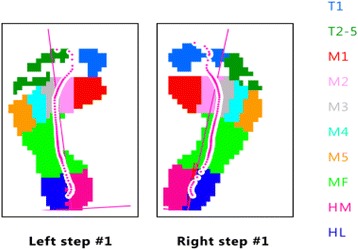
Methods: Twenty-one cases with diabetic foot ulcers, 69 diabetes controls and 56 healthy controls were recruited for this case-control study. Plantar pressures at ten sites on both feet and stance phase duration were measured using a pre-established protocol. Primary outcomes were mean peak plantar pressure, pressure-time integral and stance phase duration. Non-parametric analyses were used with Holm's correction to correct for multiple testing. Binary logistic regression models were used to adjust outcomes for age, sex and body mass index. Median differences with 95 % confidence intervals and Cohen's d values (standardised mean difference) were reported for all significant outcomes.
Results: The majority of ulcers were located on the plantar surface of the hallux and toes. When adjusted for age, sex and body mass index, the mean peak plantar pressure and pressure-time integral of toes and the mid-foot were significantly higher in cases compared to diabetes and healthy controls (p < 0.05). The stance phase duration was also significantly higher in cases compared to both control groups (p < 0.05). The main limitations of the study were the small number of cases studied and the inability to adjust analyses for multiple factors.
Conclusions: This study shows that plantar pressures are higher in cases with active diabetic foot ulcers despite having a longer stance phase duration which would be expected to lower plantar pressure. Whether plantar pressure changes can predict ulcer healing should be the focus of future research. These results highlight the importance of offloading feet during active ulceration in addition to before ulceration.
Keywords: Biomechanics; Diabetic foot disease; Foot ulceration; Offloading; Peripheral diabetic neuropathy; Plantar pressure; Plantar ulcers.
Figures
References
MeSH terms
LinkOut - more resources
Full Text Sources
Other Literature Sources
Medical
