Effect of Fine Particulate Matter (PM2.5) on Rat Placenta Pathology and Perinatal Outcomes
- PMID: 27629830
- PMCID: PMC5036383
- DOI: 10.12659/msm.897808
Effect of Fine Particulate Matter (PM2.5) on Rat Placenta Pathology and Perinatal Outcomes
Abstract
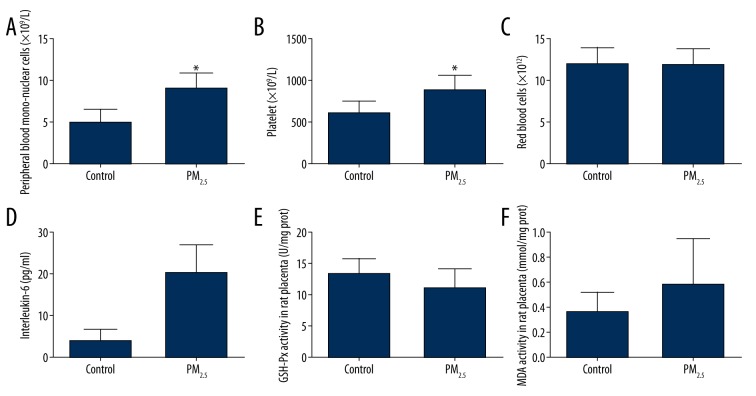
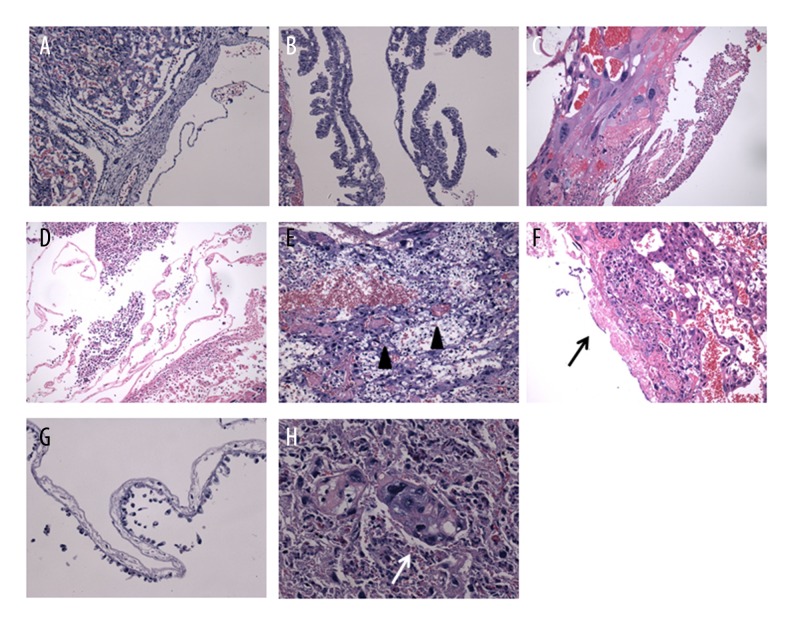
BACKGROUND Fine particulate matter with aerodynamic diameters smaller than 2.5 μm (PM2.5) has been reported to cause adverse effects on human health. Evidence has shown the association between PM2.5 exposure and adverse perinatal outcomes, and the most common method is epidemiological investigation. We wished to investigate the impact of PM2.5 on placenta and prenatal outcomes and its related mechanisms in a rat model. MATERIAL AND METHODS Pregnant rats were exposed to a low PM2.5 dose (15 mg/kg) with intratracheal instillation at pregnant day 10 and day 18, while the controls received an equivalent volume normal saline. All rats received cesarean section 24 h after the last intratracheal instillation and were sacrificed with anesthesia. Blood routine tests (BRT) and interleukin-6 (IL-6) were detected for analyzing inflammation and blood coagulation. Placenta tissue sections underwent pathologic examination, and the levels of homogenate glutathione peroxidase (GSH-Px) and methane dicarboxylic aldehyde (MDA) were determined for oxidative stress estimation. RESULTS Increased absorbed blastocysts, and lower maternal weight gain and fetal weight were found in the PM2.5 exposure group compared to controls (p<0.05). Exposure to PM2.5 caused a significant increase of blood mononuclear cells (PBMC), platelets, and IL-6 levels (P<0.01). There were no differences in GSH-Px and MDA of placenta homogenate between the 2 groups (P>0.05). Placenta pathological examination demonstrated thrombus and chorioamnionitis in the PM2.5 exposure group. CONCLUSIONS PM2.5 exposure can result in placental pathological changes and adverse perinatal outcomes. The placental inflammation and hypercoagulability with vascular thrombosis may play important roles in placental impairment, but oxidative stress appears to be less important.
Figures
References
-
- Malmqvist E, Larsson HE, Jonsson I, et al. Maternal exposure to air pollution and type 1 diabetes – accounting for genetic factors. Environ Res. 2015;140:268–74. - PubMed
-
- Dales R, Chen L, Frescura AM, et al. Acute effects of outdoor air pollution on forced expiratory volume in 1 s: A panel study of schoolchildren with asthma. Eur Respir J. 2009;34:316–23. - PubMed
MeSH terms
Substances
LinkOut - more resources
Full Text Sources
Other Literature Sources