. 2017 Feb;101(2):543-554.
doi: 10.1189/jlb.4A1215-581R. Epub 2016 Sep 14.

Interleukin 7 immunotherapy improves host immunity and survival in a two-hit model of Pseudomonas aeruginosa pneumonia

Affiliations

Interleukin 7 immunotherapy improves host immunity and survival in a two-hit model of Pseudomonas aeruginosa pneumonia

Yuichiro Shindo et al. J Leukoc Biol. 2017 Feb.

Abstract

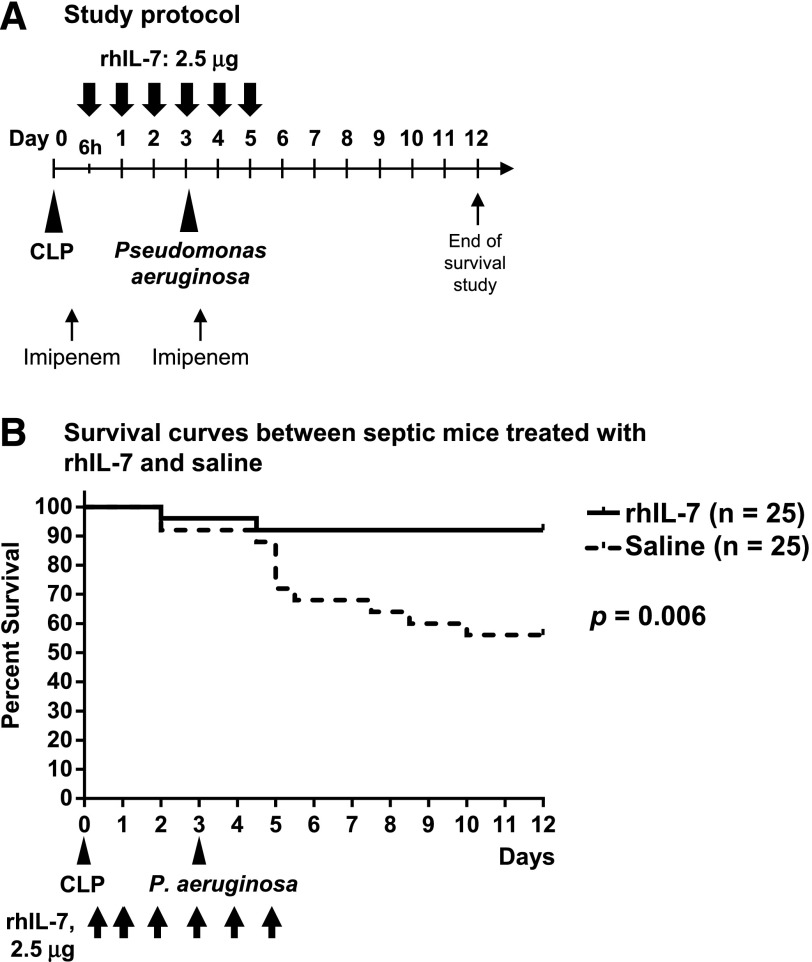
Patients with protracted sepsis develop impaired immunity, which predisposes them to acquiring secondary infections. One of the most common and lethal secondary infections is Pseudomonas aeruginosa pneumonia. Immunoadjuvant therapy is a promising approach to reverse sepsis-induced immunosuppression and improve morbidity and mortality from secondary infections. Interleukin-7 is an immunoadjuvant that improves survival in clinically relevant animal models of polymicrobial peritonitis and in fungal sepsis. This study investigated the effect of recombinant human interleukin-7 (rhIL-7) on survival in a 2-hit model of sublethal cecal ligation and puncture followed by P. aeruginosa pneumonia. Potential immunologic mechanisms responsible for the rhIL-7 putative beneficial effect were also examined, focusing on IL-17, IL-22, IFN-γ, and TNF-α, cytokines that are critical in the control of sepsis and pulmonary Pseudomonas infections. Results showed that rhIL-7 was highly effective in preventing P. aeruginosa-induced death, i.e., 92% survival in rhIL-7-treated mice versus 56% survival in control mice. rhIL-7 increased absolute numbers of immune effector cells in lung and spleen and ameliorated the sepsis-induced loss of lung innate lymphoid cells (ILCs). rhIL-7 also significantly increased IL-17-, IFN-γ-, and TNF-α-producing lung ILCs and CD8 T cells as well as IFN-γ- and TNF-α-producing splenic T cell subsets and ILCs. Furthermore, rhIL-7 enhanced NF-κB and STAT3 signaling in lungs during sepsis and pneumonia. Given the high mortality associated with secondary P. aeruginosa pneumonia, the ability of rhIL-7 to improve immunity and increase survival in multiple animal models of sepsis, and the remarkable safety profile of rhIL-7, clinical trials with rhIL-7 should be considered.

Keywords: IFN-γ; IL-17; TNF-α; immunosuppression; innate lymphoid cell; sepsis.


Figures

Figure 1.
Figure 1.. rhIL-7 treatment improves survival in an animal model of sepsis followed by P. aeruginosa pneumonia.
(A) Experimental design. Mice underwent CLP on d 0 by puncturing the cecum once using a 27-gauge needle. On d 3 after CLP, 25 μl of 0.5 A600 P. aeruginosa suspension (corresponding to 4.4–7.6 × 10⁶ CFUs) was injected intratracheally. Mice received s.c. rhIL-7 injections on 6 d consecutively starting at 6 h after CLP; a dose of imipenem was administered both at 4 h after CLP and at 2 h after P. aeruginosa infection. (B) Survival curves of CLP mice treated with rhIL-7 (solid line) or saline (dotted line). Results of 3 independent experiments were combined. One mouse in the rhIL-7–treated group and 2 in the saline-treated (control) groups died before intratracheal P. aeruginosa injection. After the P. aeruginosa infection, 23 of 24 mice survived in rhIL-7–treated groups. However, 9 of 23 mice died in the control groups; of which, more than a half died within 48 h after P. aeruginosa injection.
Figure 2.
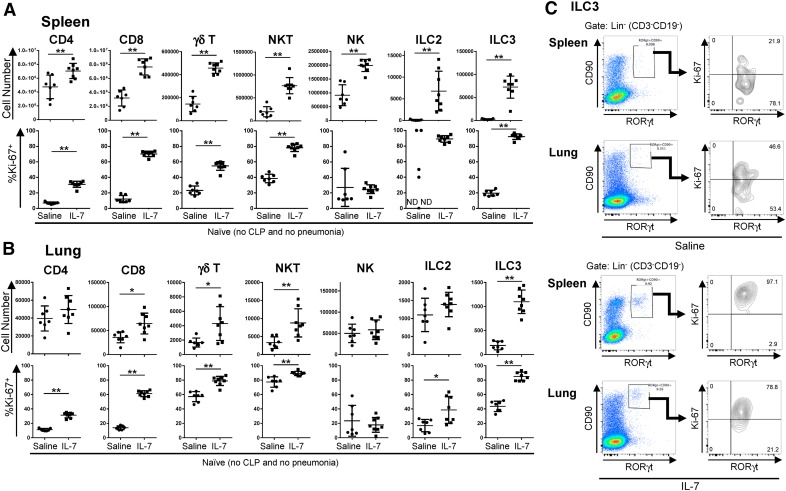
Figure 2.. rhIL-7 induces proliferation of ILCs and other innate-like lymphocytes in spleen and lung.
Numbers of immune cells and frequencies of proliferating (Ki-67+) cells within each subset, in spleens (A) and lungs (B) were analyzed in naïve mice (no CLP or pneumonia) with either rhIL-7 or saline treatment for a consecutive 5 d. (C) Representative dot plots showing the gating strategies and the percentage of Ki-67+ cells in RORγt+ ILC3s in spleen and lung. Cells were gated on live CD45+ cells. For identification of T cells, cells were gated on CD3+ cells and on the corresponding additional receptors (CD4, CD8, TCR-γδ, or NK1.1). NK cells were identified as CD3CD19NK1.1+, ILC2s as CD3CD19CD90+ST2+GATA3+, and ILC3s as CD3CD19CD90+RORγt+. Results of 2 independent experiments were combined. Horizontal lines and error bars represent means ± sd. Asterisks indicate significant differences in values (*P < 0.05; **P < 0.01). ND (not detected) indicates that no ILC2s were detected in the spleens of 2 out of 7 saline-treated mice.
Figure 3.
Figure 3.. rhIL-7 increases the absolute number of lymphocytes in lung and spleen.
Numbers of immune cells within lungs (A) and spleens (B) were analyzed in mice after sham-surgery or CLP with either rhIL-7 or saline treatment at 16 h after P. aeruginosa infection. Cells were gated on live CD45+ cells. T cells and NK cells were gated as indicated in Fig. 2, with ILC2s as CD3CD19NK1.1CD90+ST2+ and group ILC3s as CD3CD19NK1.1CD90+ST2. Results of 3 independent experiments were combined. Horizontal lines and error bars represent means ± sd. Asterisks indicate significant differences in values (*P < 0.05; **P < 0.01). (A) Lungs from CLP mice with P. aeruginosa pneumonia treated with saline tended to have decreased numbers of ILC2s and ILC3s compared with sham-operated mice with P. aeruginosa pneumonia treated with saline; however, rhIL-7 treatment significantly increased the number of ILC2s and ILC3s in CLP mice with P. aeruginosa pneumonia compared with the saline treatment. Pa, Pseudomonas aeruginosa infection.
Figure 4.
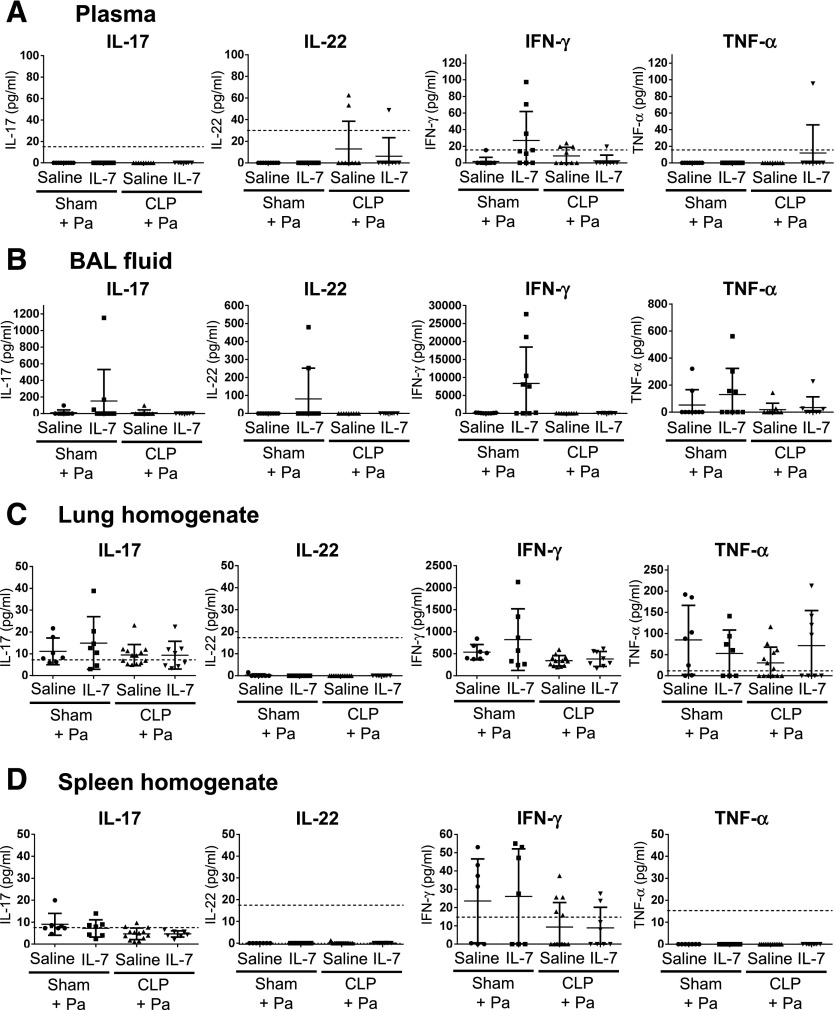
Figure 4.. rhIL-7 treatment before Pseudomonas pneumonia does not change levels of circulating or local cytokines.
All data were assessed by ELISA. Cytokine levels in plasma (A), BAL fluid (B), and lung (C) and spleen (D) homogenates were analyzed in mice after sham surgery or CLP with either rhIL-7 or saline treatments at 16 h after P. aeruginosa infection. Results of 3 independent experiments were combined. Horizontal lines and error bars represent means ± sd. Dotted lines indicate lower detection limits. Pa, Pseudomonas aeruginosa infection.
Figure 5.
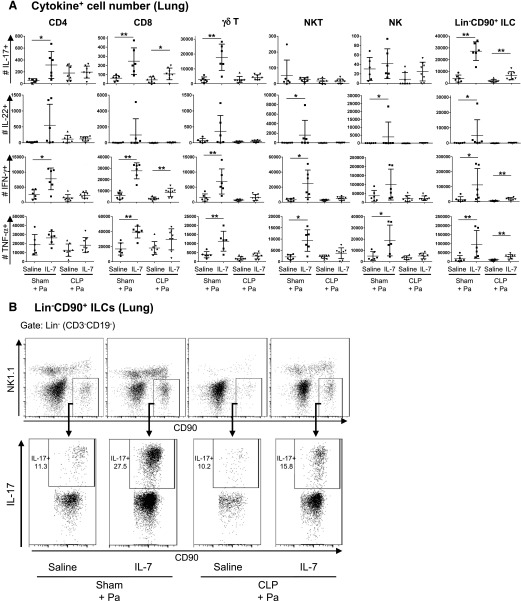
Figure 5.. rhIL-7 increases the number of cytokine-producing lymphocytes in lung.
The numbers of IL-17–, IL-22–, IFN-γ–, and TNF-α–producing cells within lungs were analyzed by flow cytometry in mice with sham surgery or CLP, treated with either rhIL-7- or saline, at 16 h after P. aeruginosa infection. (A) Graphs show the absolute numbers of IL-17–, IL-22–, IFN-γ–, and TNF-α–producing T cell and ILC subsets in lungs of infected mice. Cells were restimulated in vitro with PMA and ionomycin for 4 h before analysis. Cells were gated on live CD45+ cells. T cells and NK cells were gated as indicated in Fig. 2. CD3CD19NK1.1CD90+ cells were defined as LinCD90+ ILCs. In CLP mice with P. aeruginosa pneumonia, rhIL-7 treatment increased the number of IL-17– and IFN-γ–producing CD8 T cells and that of IL-17–, IFN-γ–, and TNF-α–producing ILCs in lungs. Results of 3 independent experiments were combined. Horizontal lines and error bars represent means ± sd. Asterisks indicate significant differences in values (*P < 0.05; **P < 0.01). (B) Representative dot plots showing the gating strategies and the percentage of IL-17–producing cells in LinCD90+ ILCs in lungs. Pa, Pseudomonas aeruginosa infection.
Figure 6.
Figure 6.. rhIL-7 increases the number of cytokine-producing lymphocytes in spleen.
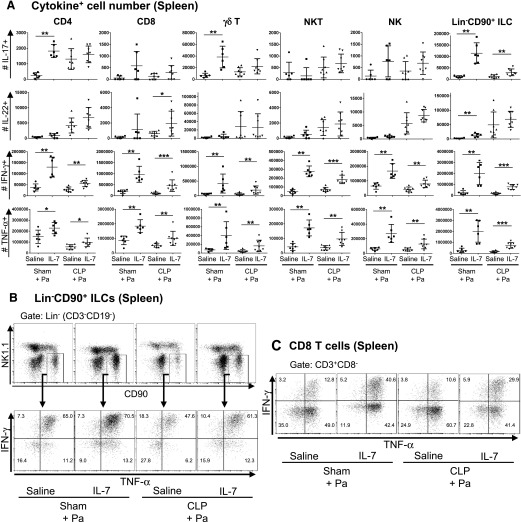
The numbers of IL-17–, IL-22–, IFN-γ–, and TNF-α–producing cells within spleens were analyzed by flow cytometry in mice with sham surgery or CLP, treated with either rhIL-7- or saline, at 16 h after P. aeruginosa infection. (A) Graphs show the absolute numbers of IL-17–, IL-22–, IFN-γ–, and TNF-α–producing T cell and ILC subsets in spleens of infected mice. Cells were restimulated and analyzed as in Fig. 5. In CLP mice with P. aeruginosa pneumonia, rhIL-7 treatment increased the numbers of IFN-γ–, TNF-α–, IL-17–, and IL-22–producing T cell subsets and ILCs in spleens. Results of 3 independent experiments were combined. Horizontal lines and error bars represent means ± sd. Asterisks indicate significant differences in values (*P < 0.05; **P < 0.01; ***P < 0.001). (B and C) Representative dot plots showing the gating strategies and the percentages of IFN-γ– and TNF-α–producing cells in LinCD90+ ILCs and CD8 T cells in spleens. Pa, Pseudomonas aeruginosa infection.
Figure 7.
Figure 7.. NF-κB and STAT3 signaling in lungs.
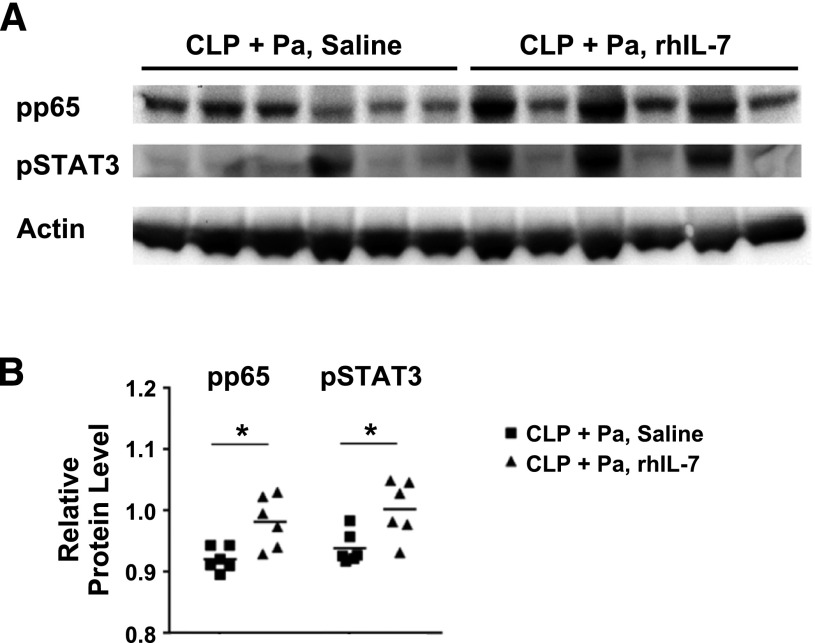
(A) Using lungs that were harvested on d 4 after CLP (at 16 h after intratracheal P. aeruginosa injection), Western blotting was performed to detect activation of the transcriptional factors NF-κB and STAT3. Phosphorylated p65 (pp65) is one of the active forms of NF-κB. β-actin was used as a total protein loading control. Lanes represent individual animals. (B) Quantification of pp65 and phosphorylated STAT3 (pSTAT3) expression was performed with Image J. Densitometric analysis of pp65 and pSTAT3 bands was performed relative to the actin band. In CLP mice, both pp65 and pSTAT3 protein levels were significantly increased in rhIL-7–treated mice over those in saline-treated mice. An asterisk indicates a significant difference in values (*P < 0.05). Pa, Pseudomonas aeruginosa infection.

References

    1. Martin G. S., Mannino D. M., Moss M. (2006) The effect of age on the development and outcome of adult sepsis. Crit. Care Med. 34, 15–21. - PubMed
    1. Kung H. C., Hoyert D. L., Xu J., Murphy S. L. (2008) Deaths: final data for 2005. Natl. Vital Stat. Rep. 56, 1–120. - PubMed
    1. Hotchkiss R. S., Monneret G., Payen D. (2013) Immunosuppression in sepsis: a novel understanding of the disorder and a new therapeutic approach. Lancet Infect. Dis. 13, 260–268. - PMC - PubMed
    1. Hotchkiss R. S., Monneret G., Payen D. (2013) Sepsis-induced immunosuppression: from cellular dysfunctions to immunotherapy. Nat. Rev. Immunol. 13, 862–874. - PMC - PubMed
    1. Angus D. C., van der Poll T. (2013) Severe sepsis and septic shock. N. Engl. J. Med. 369, 840–851. - PubMed

MeSH terms