Review
doi: 10.1021/jacs.6b08856.
Epub 2016 Sep 26.
Radicals: Reactive Intermediates with Translational Potential
Affiliations
- PMID: 27631602
- PMCID: PMC5054485
- DOI: 10.1021/jacs.6b08856
Item in Clipboard
Review
Radicals: Reactive Intermediates with Translational Potential
J Am Chem Soc.
.
Abstract
This Perspective illustrates the defining characteristics of free radical chemistry, beginning with its rich and storied history. Studies from our laboratory are discussed along with recent developments emanating from others in this burgeoning area. The practicality and chemoselectivity of radical reactions enable rapid access to molecules of relevance to drug discovery, agrochemistry, material science, and other disciplines. Thus, these reactive intermediates possess inherent translational potential, as they can be widely used to expedite scientific endeavors for the betterment of humankind.
Conflict of interest statement
The authors declare no competing financial interest.
Figures
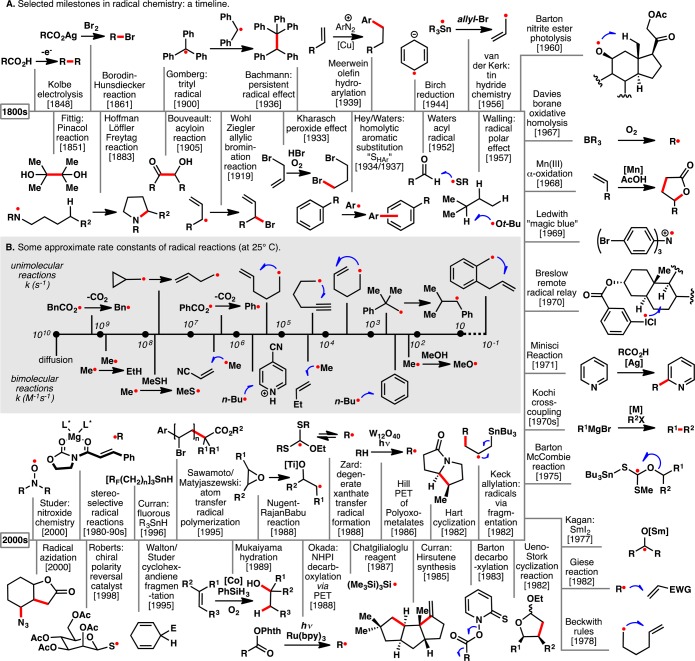
Selected milestones
in radical chemistry.
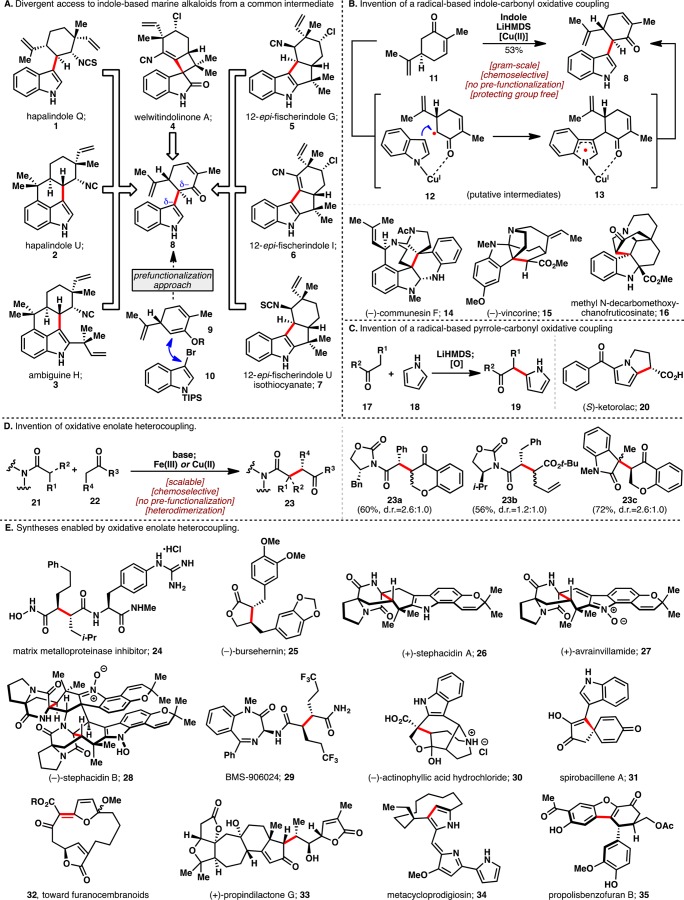
Evolution of enolate oxidative coupling in our laboratory
and its
synthetic applications.
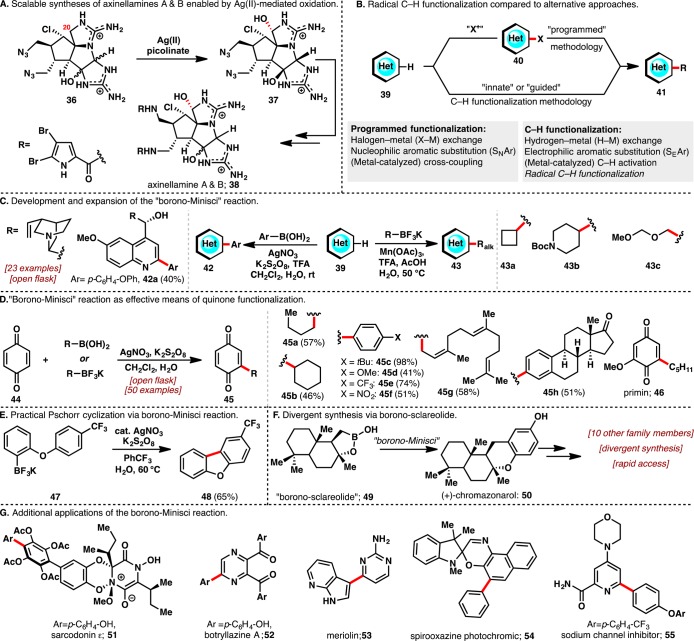
Development and applications of the borono-Minisci
reaction.
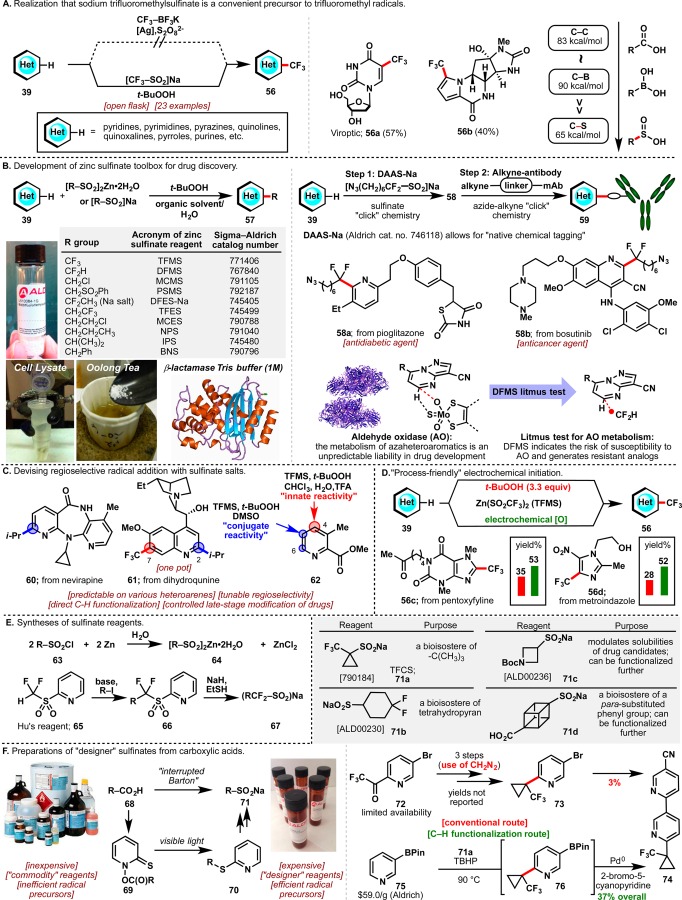
Development and applications of sulfinate
reagents as enabling
radical precursors in biomedical research.
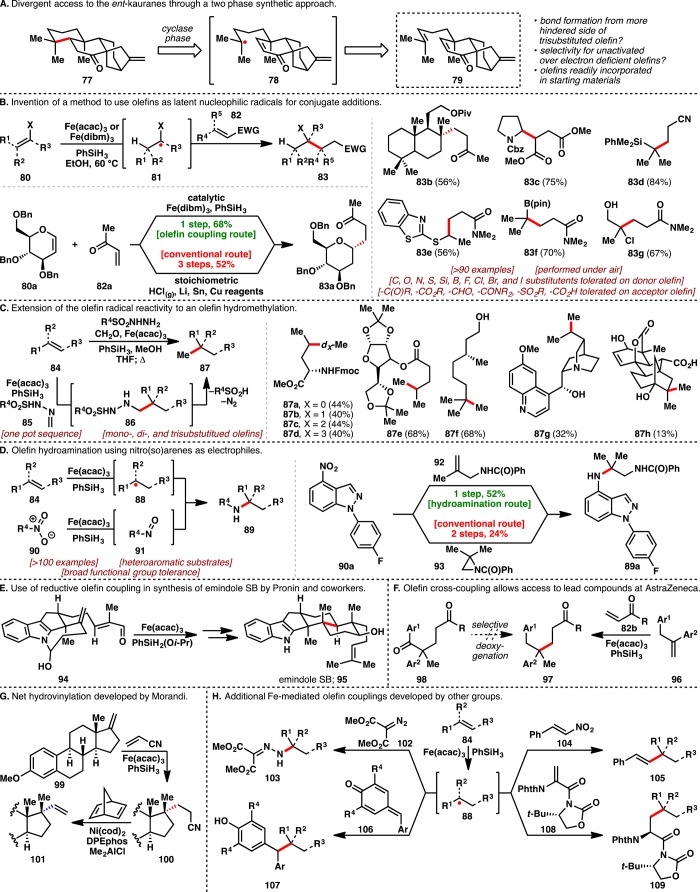
Olefins as latent radicals: applications to C–C
and C–N
bond construction.
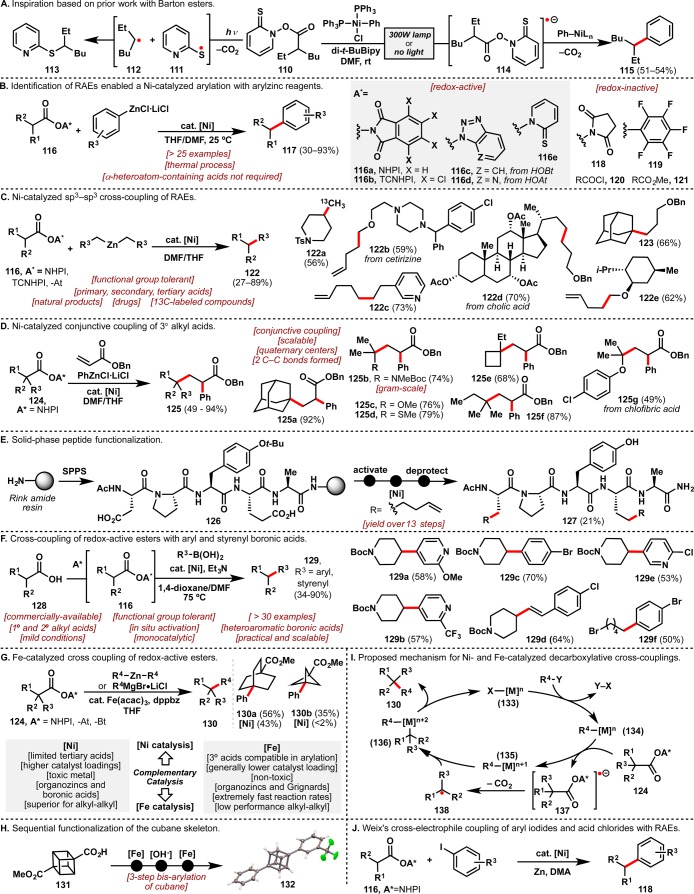
Development of redox-active esters (RAEs) as radical precursors
in cross-coupling reactions.
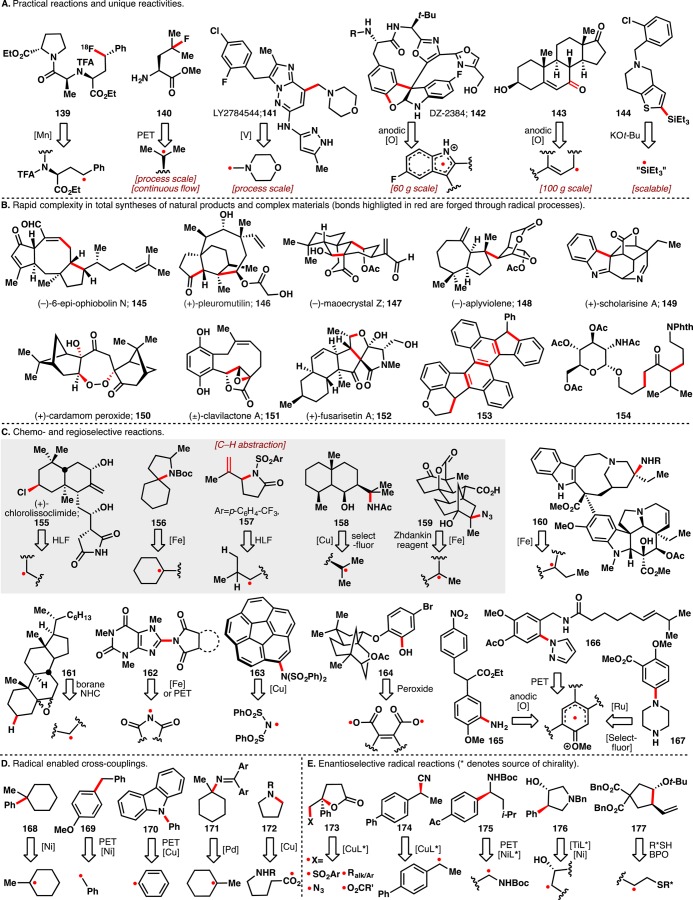
Radical chemistry: selected highlights from the past 5 years that
capitalize on the unique power of these reactive intermediates.
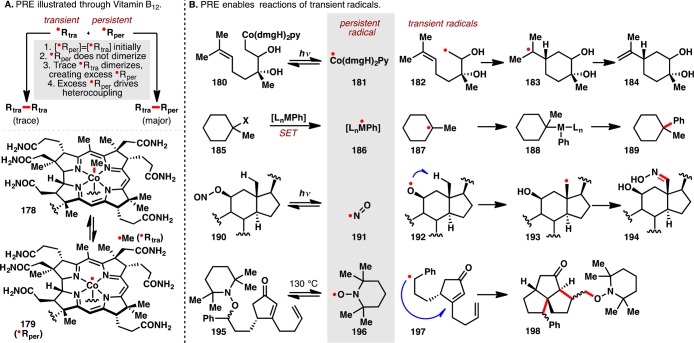
Revisiting
the persistent radical effect (PRE).
References
-
- Carey F. A.; Giuliano R. M.. Organic Chemistry, 10th ed.; McGraw-Hill Education: New York, 2016.
- Wade L. G.Organic Chemistry, 8th ed.; Pearson: New York, 2011.
- McMurry J.Organic Chemistry, 9th ed.; Cengage Learning: Boston, 2015.
- Clayden J.; Greeves N.; Warren S.. Organic Chemistry, 2nd ed.; Oxford University Press: Oxford, 2012.
-
-
For selected general reviews of radical chemistry, see:
- Kochi J. K., Ed. Free Radicals, Vol. 1: Dynamics of Elementary Processes; Wiley-Interscience: New York, 1973.
- Curran D. P. Synthesis 1988, 6, 417. 10.1055/s-1988-27600. - DOI
- Curran D. P. Synthesis 1988, 7, 489. 10.1055/s-1988-27620. - DOI
- Jasperse C. P.; Curran D. P.; Fevig T. L. Chem. Rev. 1991, 91, 1237. 10.1021/cr00006a006. - DOI
- Radicals in Organic Synthesis, 1st ed.; Renaud P., Sibi M., Eds.; Wiley-VCH: Weinheim, 2001.
- Togo H.Advanced Free Radical Reactions for Organic Synthesis; Elsevier: Amsterdam, 2003.
- Zard S. Z.Radical Reactions in Organic Synthesis; Oxford University Press: Oxford, 2003.
-
-
- Kolbe H. Ann. Chem. Pharm. 1848, 64, 339. 10.1002/jlac.18480640346. - DOI
Publication types
MeSH terms
Substances
Grants and funding
LinkOut - more resources
Full Text Sources
Other Literature Sources