


Nuclear morphologies: their diversity and functional relevance
- PMID: 27631793
- PMCID: PMC5371643
- DOI: 10.1007/s00412-016-0614-5
Nuclear morphologies: their diversity and functional relevance
Abstract
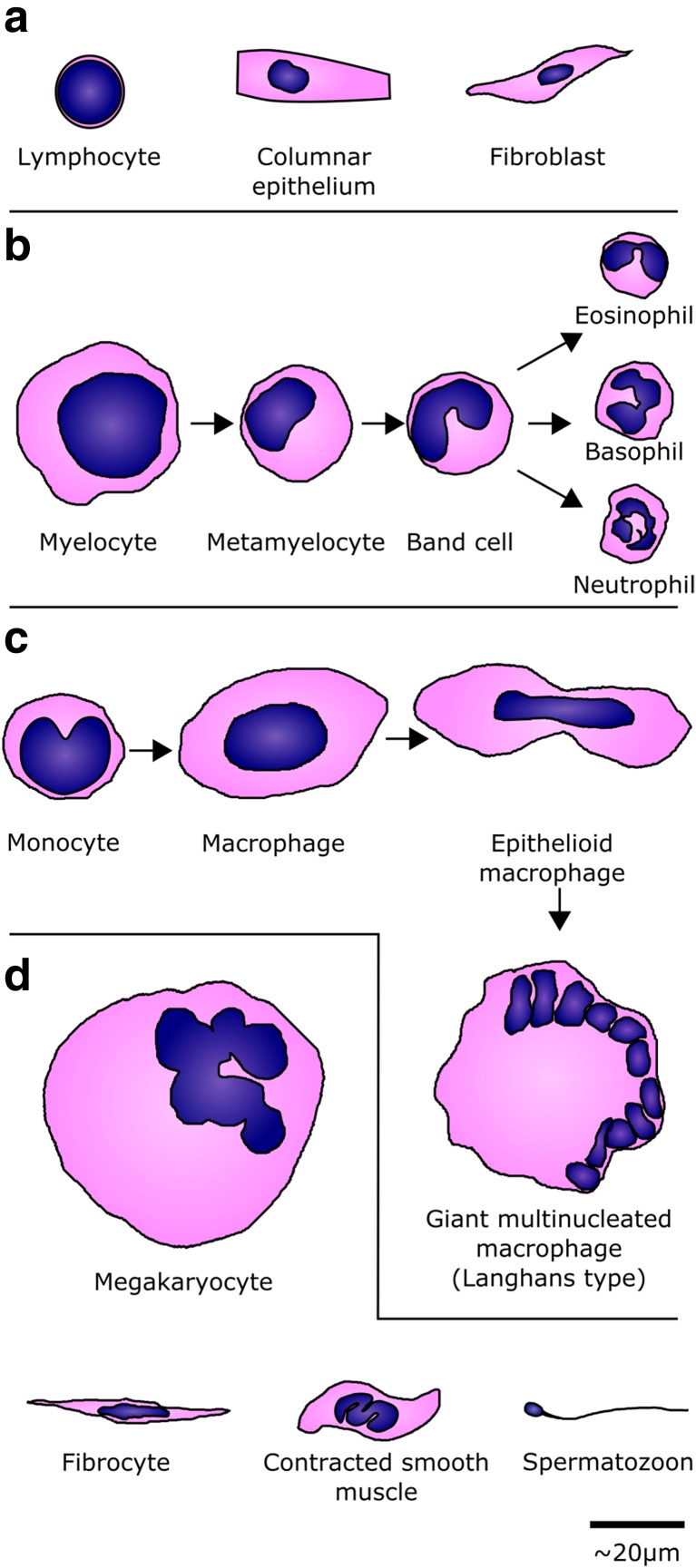
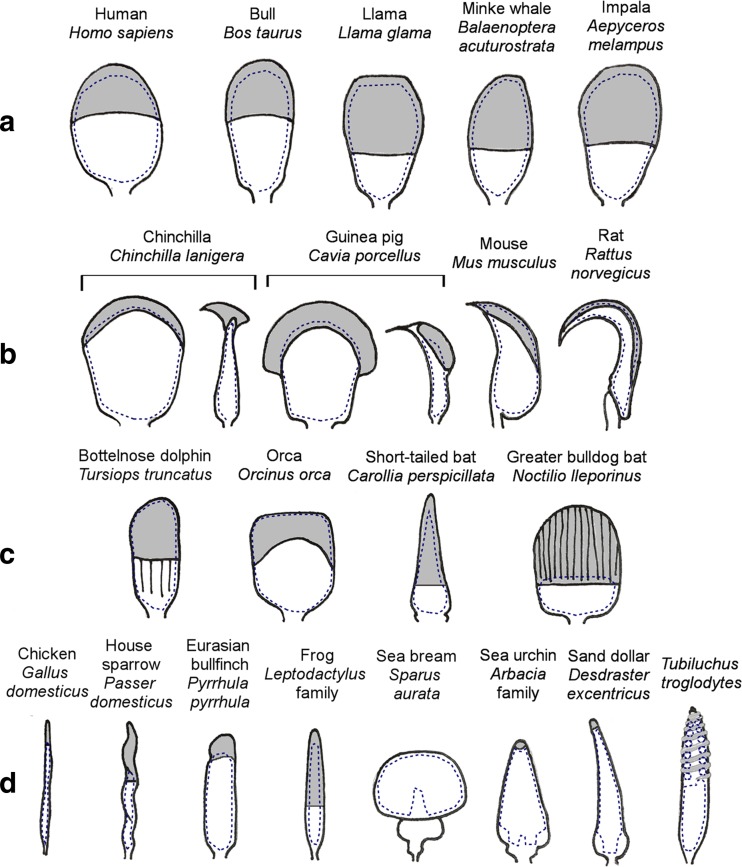
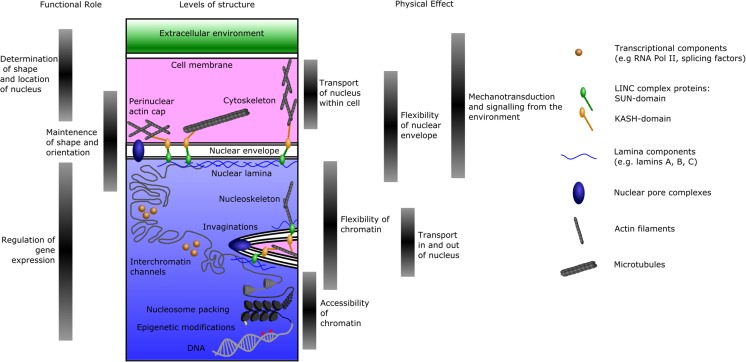
Studies of chromosome and genome biology often focus on condensed chromatin in the form of chromosomes and neglect the non-dividing cells. Even when interphase nuclei are considered, they are often then treated as interchangeable round objects. However, different cell types can have very different nuclear shapes, and these shapes have impacts on cellular function; indeed, many pathologies are linked with alterations to nuclear shape. In this review, we describe some of the nuclear morphologies beyond the spherical and ovoid. Many of the leukocytes of the immune system have lobed nuclei, which aid their flexibility and migration; smooth muscle cells have a spindle shaped nucleus, which must deform during muscle contractions; spermatozoa have highly condensed nuclei which adopt varied shapes, potentially associated with swimming efficiency. Nuclei are not passive passengers within the cell. There are clear effects of nuclear shape on the transcriptional activity of the cell. Recent work has shown that regulation of gene expression can be influenced by nuclear morphology, and that cells can drastically remodel their chromatin during differentiation. The link between the nucleoskeleton and the cytoskeleton at the nuclear envelope provides a mechanism for transmission of mechanical forces into the nucleus, directly affecting chromatin compaction and organisation.
Keywords: Chromatin; Differentiation; Eukaryote; Gene expression; Shape.
Conflict of interest statement
BMS and EEPJ both declare that they have no conflicts of interest. This article does not contain any studies with human participants or animals performed by any of the authors.
Figures
References
-
- Baroux C, Pecinka A, Fuchs J, et al. (2016) Non-random chromosome arrangement in triploid endosperm nuclei. Chromosoma 1–10. doi: 10.1007/s00412-016-0578-5 - PubMed
Publication types
MeSH terms
LinkOut - more resources
Full Text Sources
Other Literature Sources
