


Decoding how a soil bacterium extracts building blocks and metabolic energy from ligninolysis provides road map for lignin valorization
- PMID: 27634497
- PMCID: PMC5056086
- DOI: 10.1073/pnas.1606043113
Decoding how a soil bacterium extracts building blocks and metabolic energy from ligninolysis provides road map for lignin valorization
Abstract
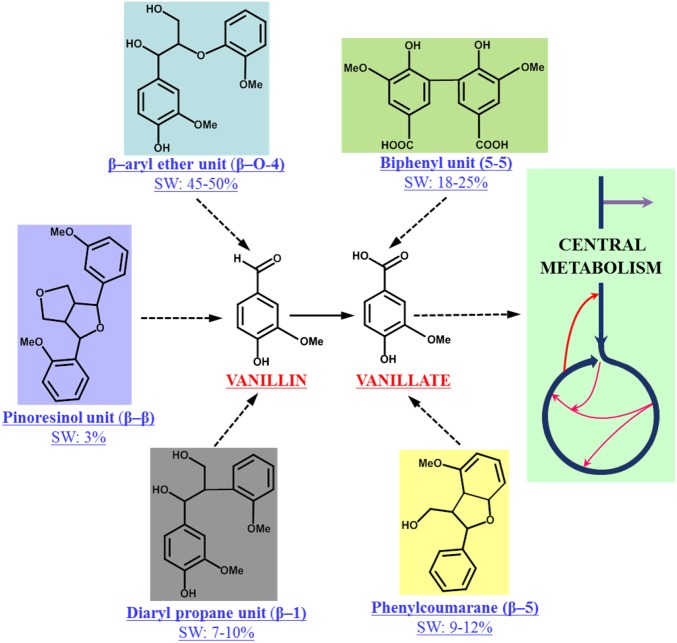
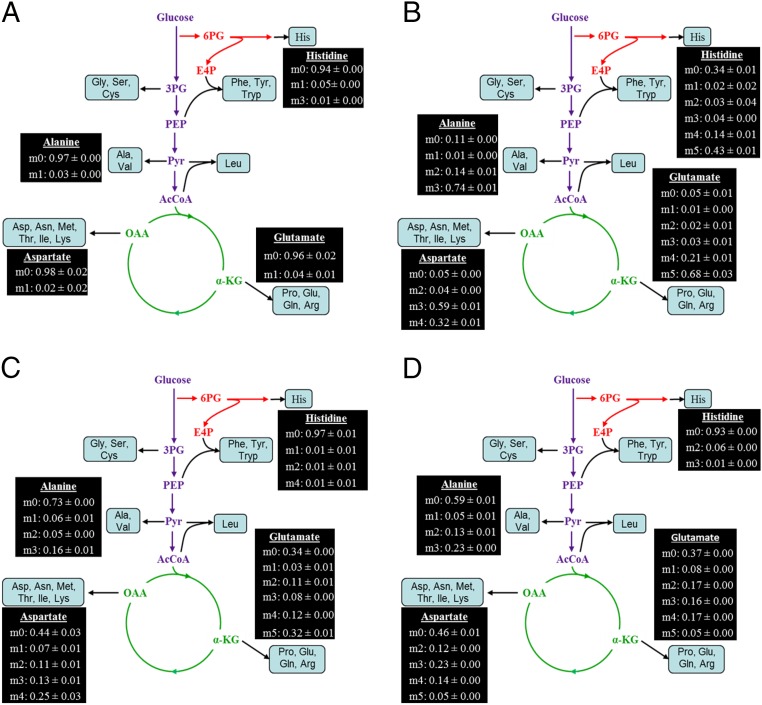
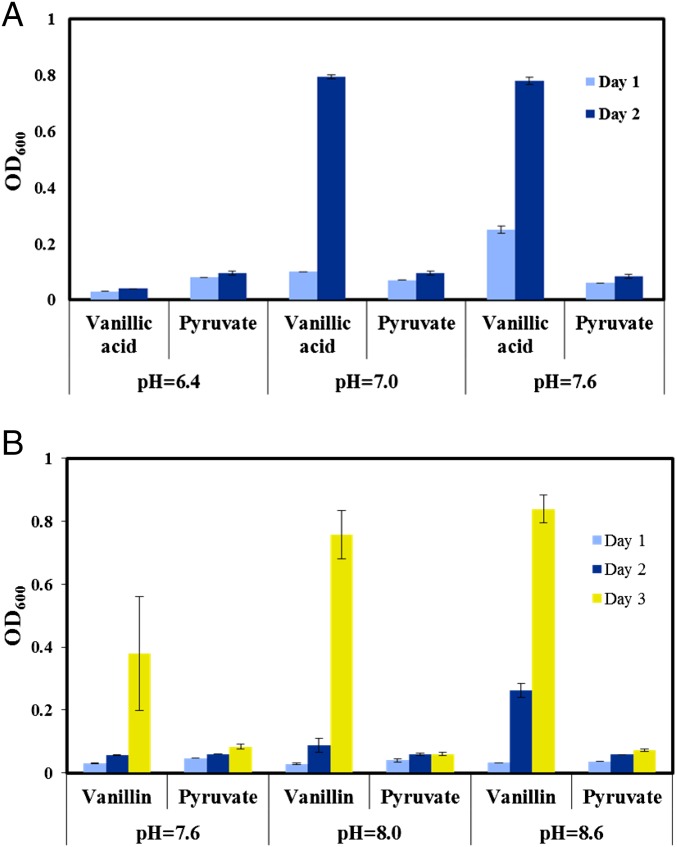
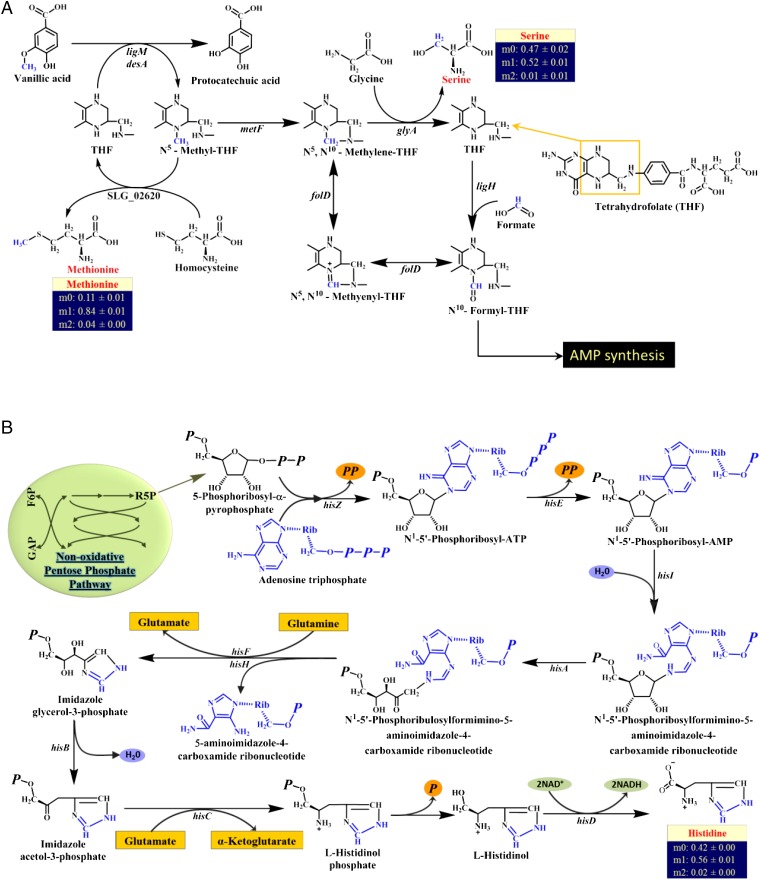
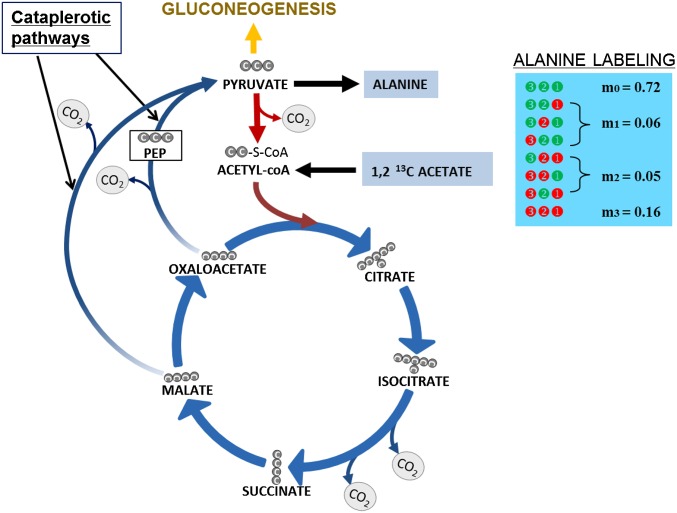
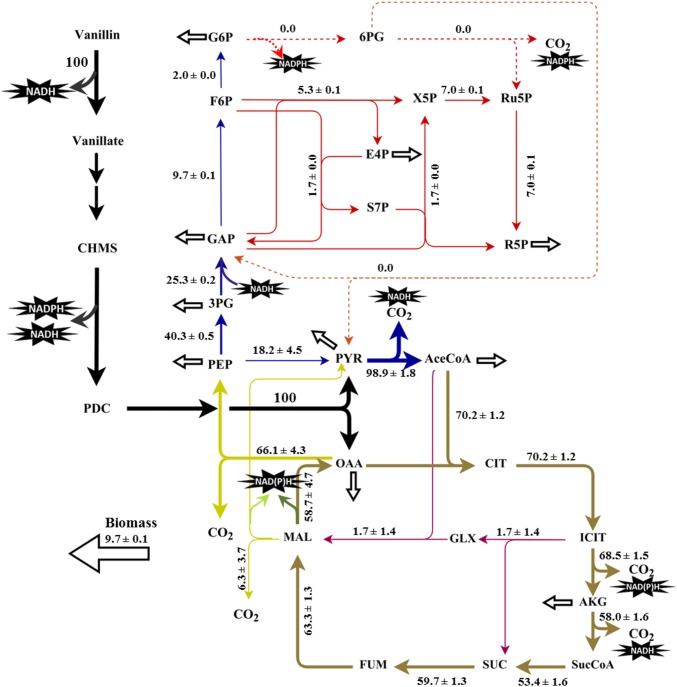
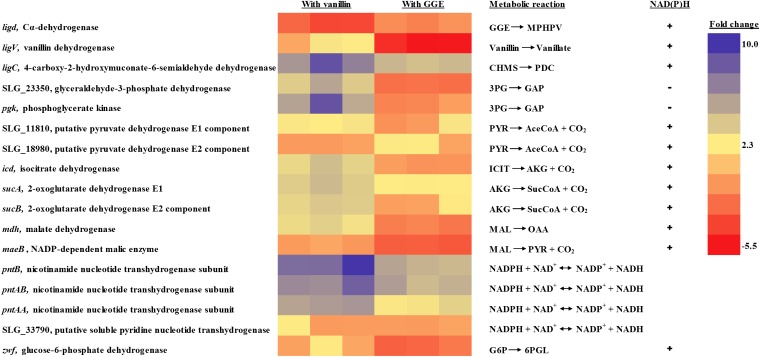
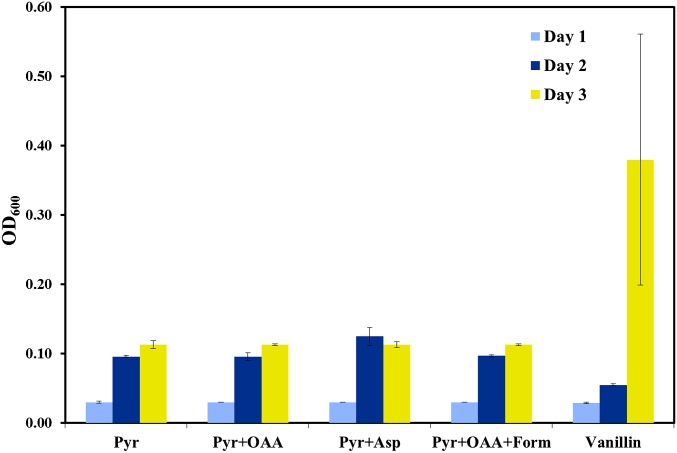
Sphingobium sp. SYK-6 is a soil bacterium boasting a well-studied ligninolytic pathway and the potential for development into a microbial chassis for lignin valorization. An improved understanding of its metabolism will help researchers in the engineering of SYK-6 for the production of value-added chemicals through lignin valorization. We used 13C-fingerprinting, 13C metabolic flux analysis (13C-MFA), and RNA-sequencing differential expression analysis to uncover the following metabolic traits: (i) SYK-6 prefers alkaline conditions, making it an efficient host for the consolidated bioprocessing of lignin, and it also lacks the ability to metabolize sugars or organic acids; (ii) the CO2 release (i.e., carbon loss) from the ligninolysis-based metabolism of SYK-6 is significantly greater than the CO2 release from the sugar-based metabolism of Escherichia coli; (iii) the vanillin catabolic pathway (which is the converging point of majority of the lignin catabolic pathways) is coupled with the tetrahydrofolate-dependent C1 pathway that is essential for the biosynthesis of serine, histidine, and methionine; (iv) catabolic end products of lignin (pyruvate and oxaloacetate) must enter the tricarboxylic acid (TCA) cycle first and then use phosphoenolpyruvate carboxykinase to initiate gluconeogenesis; and (v) 13C-MFA together with RNA-sequencing differential expression analysis establishes the vanillin catabolic pathway as the major contributor of NAD(P)H synthesis. Therefore, the vanillin catabolic pathway is essential for SYK-6 to obtain sufficient reducing equivalents for its healthy growth; cosubstrate experiments support this finding. This unique energy feature of SYK-6 is particularly interesting because most heterotrophs rely on the transhydrogenase, the TCA cycle, and the oxidative pentose phosphate pathway to obtain NADPH.
Keywords: 13C-MFA; NADPH; fingerprinting; gluconeogenesis; lignin.
Conflict of interest statement
The authors declare no conflict of interest.
Figures
References
-
- Szczodrak J, Fiedurek J. Technology for conversion of lignocellulosic biomass to ethanol. Biomass Bioenergy. 1996;10(5–6):367–375.
-
- Xu C, Arancon RAD, Labidi J, Luque R. Lignin depolymerisation strategies: Towards valuable chemicals and fuels. Chem Soc Rev. 2014;43(22):7485–7500. - PubMed
-
- Tuck CO, Pérez E, Horváth IT, Sheldon RA, Poliakoff M. Valorization of biomass: Deriving more value from waste. Science. 2012;337(6095):695–699. - PubMed
Publication types
MeSH terms
Substances
LinkOut - more resources
Full Text Sources
Other Literature Sources
Molecular Biology Databases
Miscellaneous
