


Practical multimodal care for cancer cachexia
- PMID: 27635765
- PMCID: PMC5087573
- DOI: 10.1097/SPC.0000000000000241
Practical multimodal care for cancer cachexia
Abstract
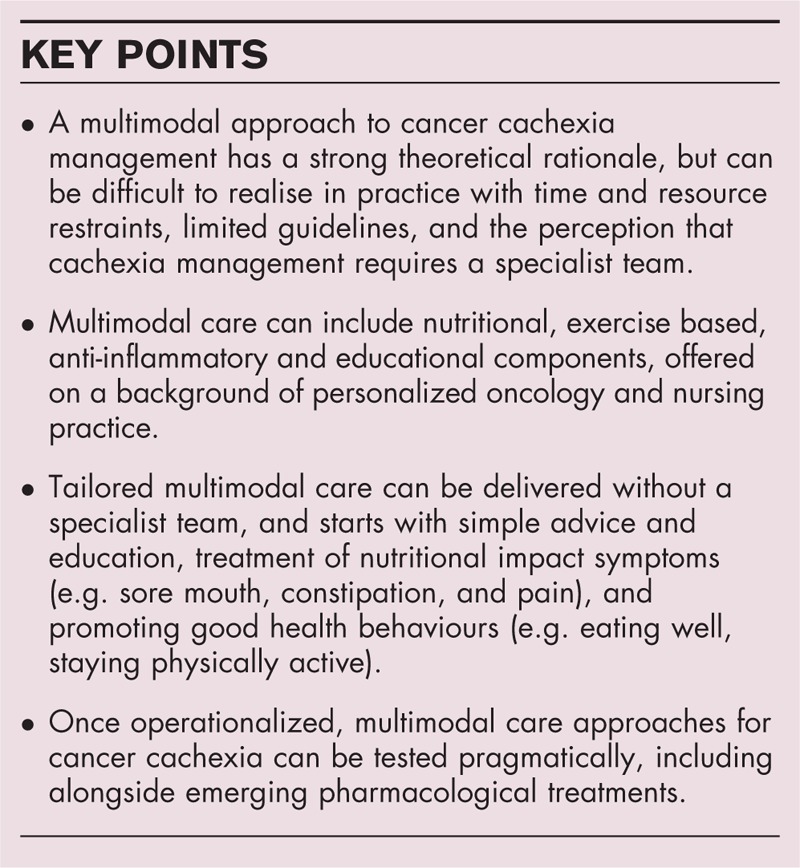
Purpose of review: Cancer cachexia is common and reduces function, treatment tolerability and quality of life. Given its multifaceted pathophysiology a multimodal approach to cachexia management is advocated for, but can be difficult to realise in practice. We use a case-based approach to highlight practical approaches to the multimodal management of cachexia for patients across the cancer trajectory.
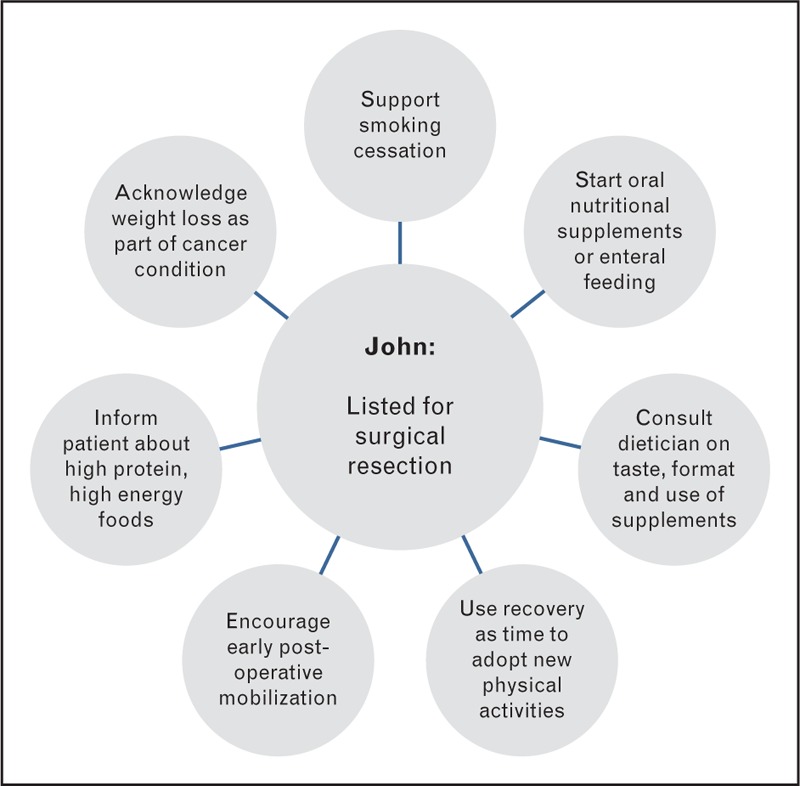
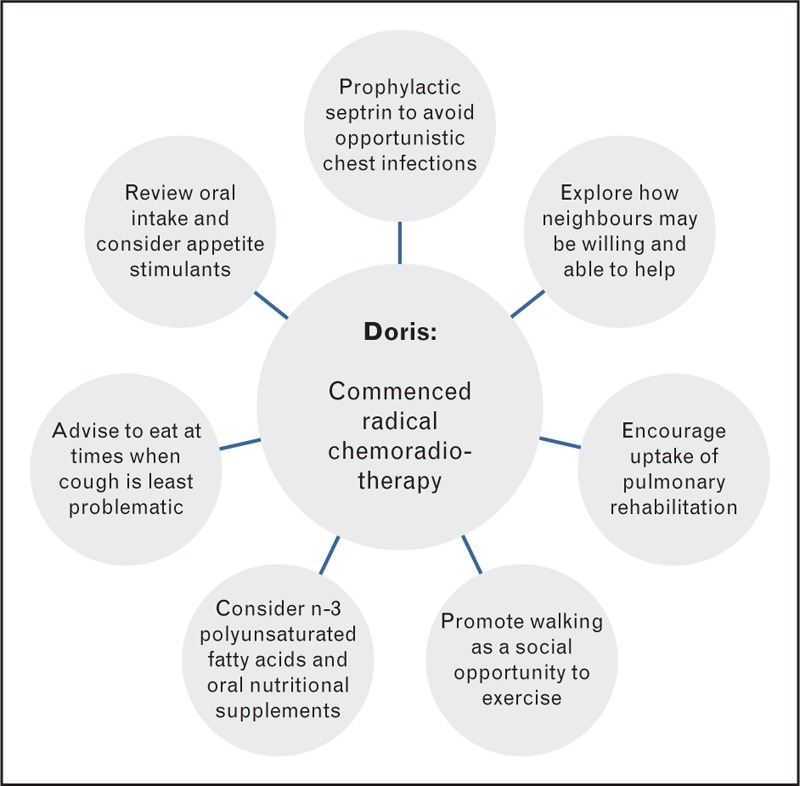
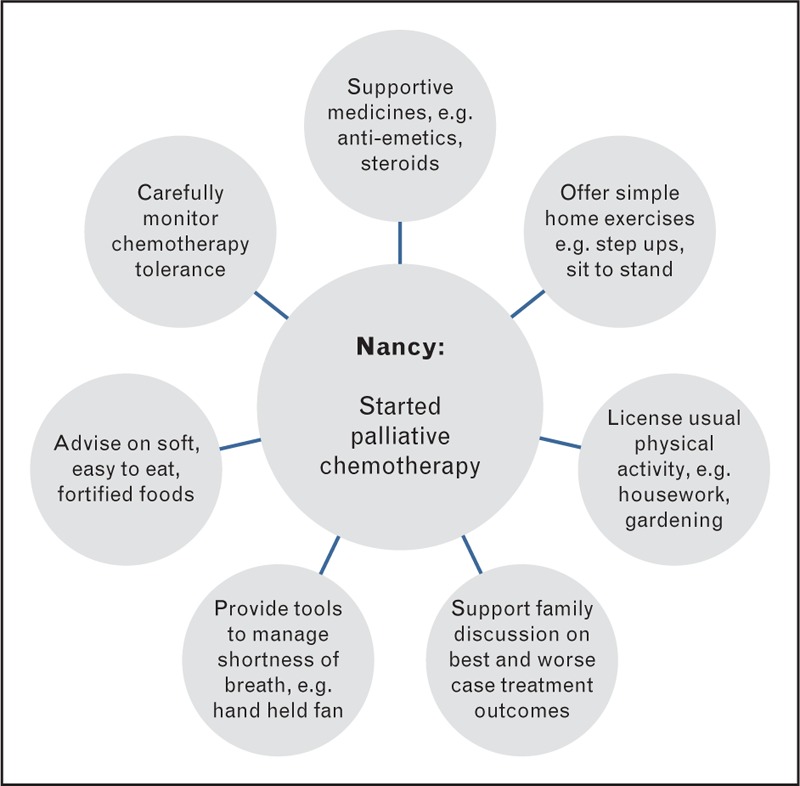
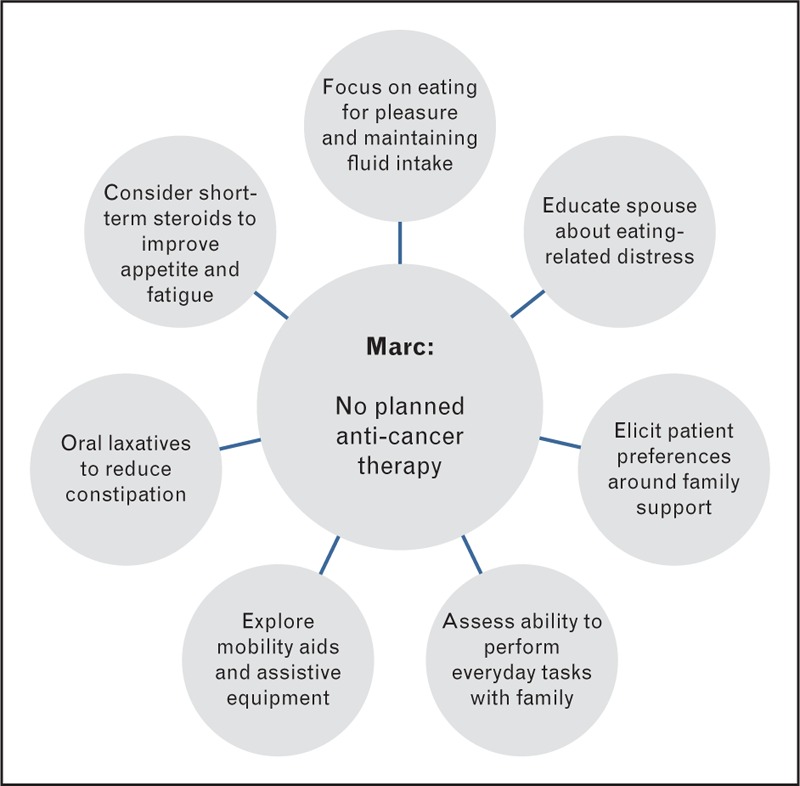
Recent findings: Four cases with lung cancer spanning surgical resection, radical chemoradiotherapy, palliative chemotherapy and no anticancer treatment are presented. We propose multimodal care approaches that incorporate nutritional support, exercise, and anti-inflammatory agents, on a background of personalized oncology care and family-centred education. Collectively, the cases reveal that multimodal care is part of everyone's remit, often focuses on supported self-management, and demands buy-in from the patient and their family. Once operationalized, multimodal care approaches can be tested pragmatically, including alongside emerging pharmacological cachexia treatments.
Summary: We demonstrate that multimodal care for cancer cachexia can be achieved using simple treatments and without a dedicated team of specialists. The sharing of advice between health professionals can help build collective confidence and expertise, moving towards a position in which every team member feels they can contribute towards multimodal care.
Figures
References
-
- Fearon K, Strasser F, Anker SD, et al. Definition and classification of cancer cachexia: an international consensus. Lancet Oncol 2011; 12:489–495. - PubMed
-
- Tan BH, Fearon KC. Cachexia: prevalence and impact in medicine. Curr Opin Clin Nutr Metabol Care 2008; 11:400–407. - PubMed
-
- Maddocks M, Murton AJ, Wilcock A. Improving muscle mass and function in cachexia: nondrug approaches. Curr Opin Support Palliat Care 2011; 5:361–364. - PubMed
-
- Maddocks M, Byrne A, Johnson CD, et al. Physical activity level as an outcome measure for use in cancer cachexia trials: a feasibility study. Support Care Cancer 2010; 18:1539–1544. - PubMed
-
- Kazemi-Bajestani SM, Mazurak VC, Baracos V. Computed tomography-defined muscle and fat wasting are associated with cancer clinical outcomes. Semin Cell Dev Biol 2016; 54:2–10. - PubMed
Publication types
MeSH terms
Substances
Grants and funding
LinkOut - more resources
Full Text Sources
Other Literature Sources
Medical
