Review
. 2016 Oct;27(4):529-35.
doi: 10.1016/j.nec.2016.05.009.

Repetitive Head Impacts and Chronic Traumatic Encephalopathy

Affiliations
Review

Repetitive Head Impacts and Chronic Traumatic Encephalopathy

Ann C McKee et al. Neurosurg Clin N Am. 2016 Oct.

Abstract

Chronic traumatic encephalopathy (CTE) is a distinctive neurodegenerative disease that occurs as a result of repetitive head impacts. CTE can only be diagnosed by postmortem neuropathologic examination of brain tissue. CTE is a unique disorder with a pathognomonic lesion that can be reliably distinguished from other neurodegenerative diseases. CTE is associated with violent behaviors, explosivity, loss of control, depression, suicide, memory loss and cognitive changes. There is increasing evidence that CTE affects amateur athletes as well as professional athletes and military veterans. CTE has become a major public health concern.

Keywords: Chronic traumatic encephalopathy; Concussion; Neurodegenerative disease; Repetitive head impacts; Subconcussion; Tau protein; Traumatic brain injury.


Conflict of interest statement

All authors report no financial conflicts.

Figures
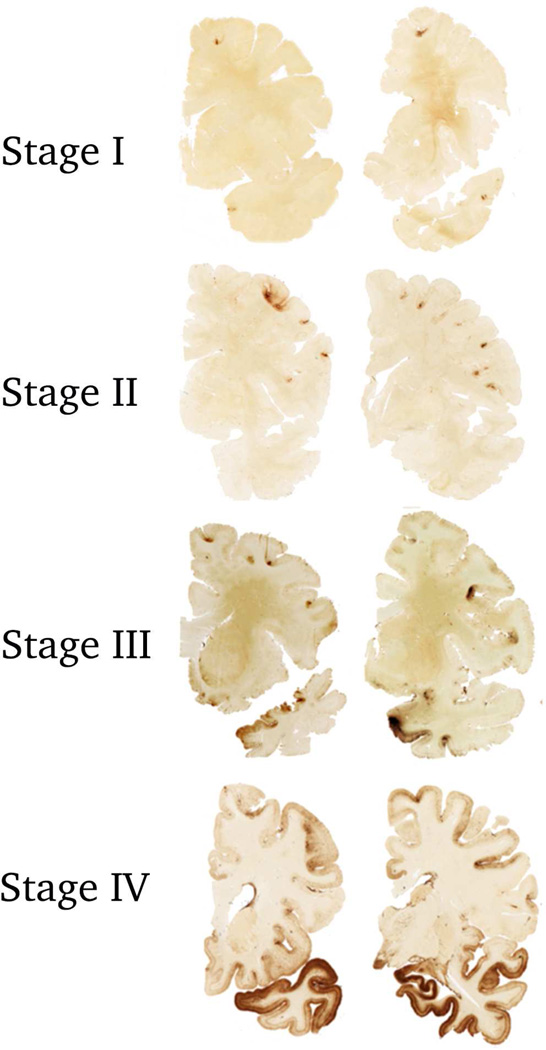
Figure 1
Figure 1. Stages of Hyperphosphorylated Tau Pathology in CTE
In stage I CTE, p-tau pathology is restricted to isolated foci in the cerebral cortex, the focal lesions consist of perivascular accumulation of p-tau as neuronal and astrocytic inclusions, with NFTs and dot-like structures. In stage II CTE, there are multiple p-tau lesions typically found at the depths of the cerebral sulci In stage III CTE, p-tau pathology is widespread in the cortex and the amygdala, hippocampus and entorhinal cortex show neurofibrillary pathology. In stage IV CTE, there is widespread severe p-tau pathology affecting most regions of the cerebral cortex and the medial temporal lobe, with sparing of the calcarine crtex. All images, CP-13 immunostained 50 μ tissue sections.
Figure 2
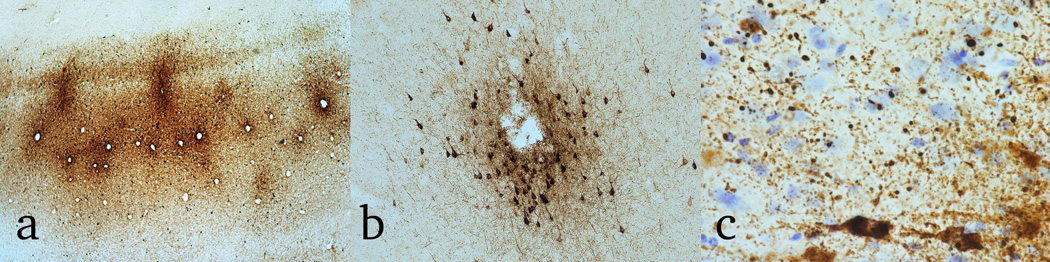
Figure 2. The Pathognomonic Lesion of CTE
The pathognomonic lesion of CTE consists of an accumulation of abnormally phosphorylated tau in neurons and astroglia distributed around small blood vessels at the depths of cortical sulci and in an irregular pattern. There are typically neurofibrillary tangles, ptau inclusions in thorned astrocytes as well as dot-like structures in the neuropil. a. Magnification ×40, b magnification × 200, c. magnification × 600; all images, CP-13 immunostained 50 μ tissue sections, (c) counterstained with cresyl violet.

References

    1. McKee AC, Cantu RC, Nowinski CJ, et al. Chronic traumatic encephalopathy in athletes: progressive tauopathy after repetitive head injury. J Neuropathol Exp Neurol. 2009;68(7):709–735. - PMC - PubMed
    1. McKee AC, Stern RA, Nowinski CJ, et al. The spectrum of disease in chronic traumatic encephalopathy. Brain. 2013;136(Pt 1):43–64. - PMC - PubMed
    1. McAllister T, Flashman L, Maerlender A, et al. Cognitive effects of one season of head impacts in a cohort of collegiate contact sport athletes. Neurology. 2012;78(22):1777–1784. - PMC - PubMed
    1. McKee AC, Cantu RC, Nowinski CJ, et al. Chronic Traumatic Encephalopathy in Athletes: Progressive Tauopathy After Repetitive Head Injury. J Neuropathol Exp Neurol. 2009;68(7):709–735. - PMC - PubMed
    1. Gavett BE, Stern RA, McKee AC. Chronic traumatic encephalopathy: a potential late effect of sport-related concussive and subconcussive head trauma. Clin Sports Med. 2011;30(1):179–188. - PMC - PubMed

MeSH terms