


Education, night splinting and exercise versus usual care on recovery and conversion to surgery for people awaiting carpal tunnel surgery: a protocol for a randomised controlled trial
- PMID: 27638495
- PMCID: PMC5051399
- DOI: 10.1136/bmjopen-2016-012053
Education, night splinting and exercise versus usual care on recovery and conversion to surgery for people awaiting carpal tunnel surgery: a protocol for a randomised controlled trial
Abstract
Introduction: Carpal tunnel syndrome (CTS) is a prevalent upper limb condition that results in significant individual and socioeconomic costs. Large patient numbers, long outpatient waiting times and traditional referral pathways in public health systems create delays in accessing treatment for this condition. Alternative care pathways aimed at streamlining access to treatment and reducing the need for surgical intervention warrant further investigation.
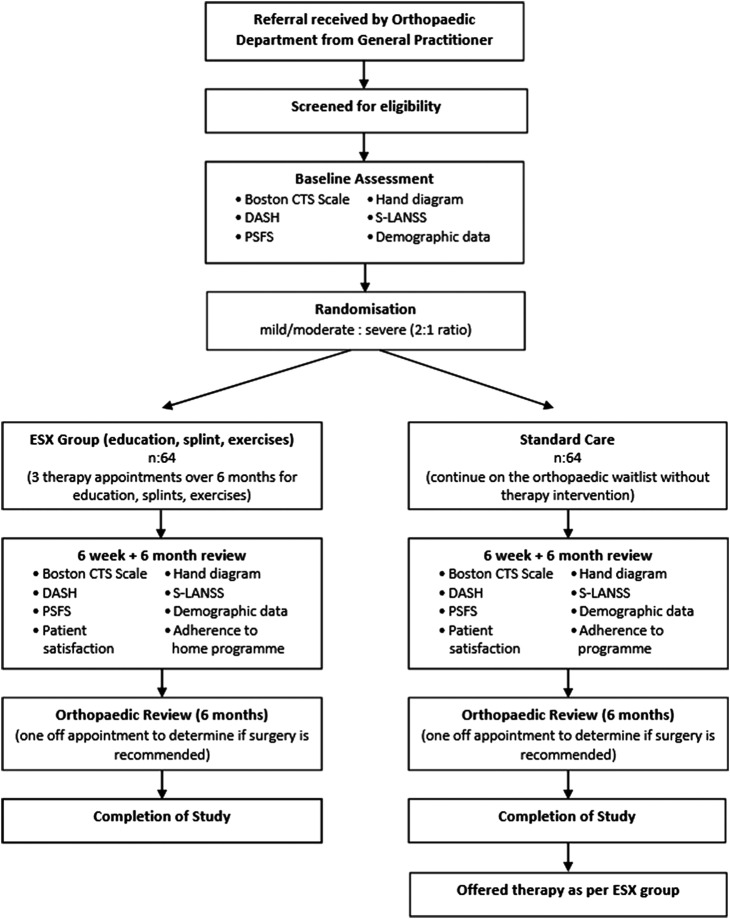
Methods: A randomised, single-blind controlled clinical trial will be conducted. 128 participants aged 18-75 years with CTS will be recruited from the carpal tunnel surgery waitlists of participating public hospitals. Suitable participants will be stratified for severity and randomly allocated to either receive therapy (education, provision of splints and a home exercise programme) or standard care (continuing on the waitlist without hand therapy intervention for the duration of the study). Outcomes will be measured at baseline and after 6 weeks and 6 months. Primary outcomes are conversion to surgery ratio and perceived effect via the Global Rating of Change Scale.Secondary measures include patient satisfaction, and monitoring of symptoms and function using outcome measures including the Boston CTS Questionnaire, Disability of Arm, Shoulder and Hand Questionnaire, Patient-Specific Functional Scale, patient completed diagram of symptoms and Self-reported Leeds Assessment of Neuropathic Symptoms and Signs pain scale.
Discussion: This paper outlines the design and rationale for a randomised controlled trial that aims to assess the efficacy of an alternative care pathway for the management of patients with CTS while on the surgery waitlist. It is anticipated that the outcomes of this study will contribute to improved and expedited management of this common condition in a public hospital setting.
Ethics and dissemination: Ethics approval was granted by the Princess Alexandra Hospital Centres for Health Research (HREC/13/QPAH/434-SSA/13/QPAH/447) and the Medical Research Ethics Committee at the University of Queensland. Results will be disseminated via conferences and peer-reviewed publications.
Trial registration number: ACTRN12613001095752.
Keywords: Carpal Tunnel Syndrome; alternative care pathways; conservative management; therapist-led care.
Published by the BMJ Publishing Group Limited. For permission to use (where not already granted under a licence) please go to http://www.bmj.com/company/products-services/rights-and-licensing/
Figures

References
-
- Diagnosis of the carpal tunnel syndrome. Lancet 1985;1:854–5. - PubMed
-
- Evans R. Therapist's management of carpal tunnel syndrome: a practical approach. In: Skirven TM, Fedorczyk JM, Amadio PC. In rehabilitaiton of the hand and upper extremity, O.A. eds Elsevier, 2011:666–77.
Publication types
MeSH terms
Associated data
LinkOut - more resources
Full Text Sources
Other Literature Sources
Medical
Research Materials
