Review
. 2016 Nov;31(11):831-841.
doi: 10.1016/j.tree.2016.08.003. Epub 2016 Sep 15.

When Climate Reshuffles Competitors: A Call for Experimental Macroecology

Affiliations
Review

When Climate Reshuffles Competitors: A Call for Experimental Macroecology

Jake M Alexander et al. Trends Ecol Evol. 2016 Nov.

Abstract

Climate change will likely reshuffle ecological communities, causing novel species interactions that could profoundly influence how populations and communities respond to changing conditions. Nonetheless, predicting the impacts of novel interactions is challenging, partly because many methods of inference are contingent on the current configuration of climatic variables and species distributions. Focusing on competition, we argue that experiments designed to quantify novel interactions in ways that can inform species distribution models are urgently needed, and suggest an empirical agenda to pursue this goal, illustrated using plants. An emerging convergence of ideas from macroecology and demographically focused competition theory offers opportunities to mechanistically incorporate competition into species distribution models, while forging closer ties between experimental ecology and macroecology.

Keywords: climate change; competition; demography; range dynamics; species distribution model.


Figures

Figure 1
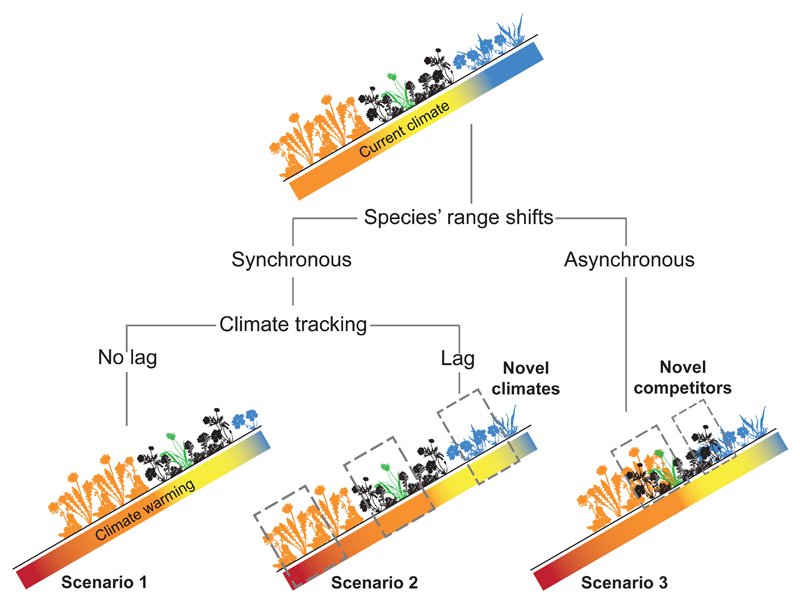
Figure 1. Scenarios for altered competitive environments after climate change.
The way in which competitive environments are altered following climate change will depend on whether species’ range shifts are synchronous, and how much they lag behind the pace of climate change, giving rise to three scenarios. Each colour represents a different community, consisting of multiple species, and a focal species (green) is highlighted to distinguish these scenarios. Scenario 1, in which all species migrate to track their suitable climates, results in no change in competitive environment. Under scenario 2, all species exhibit the same migration lag, causing them to compete against their same competitors but under altered climate conditions. In some parts of a species’ range (grey boxes), it will face its current competitors under climates different from those previously experienced by these pairs of competitors (e.g. at the trailing range edge; “novel climates”). Under scenario 3, asynchronous migrations alter competitive environments by additionally leading to new combinations of species (“novel competitors”).
Figure 2
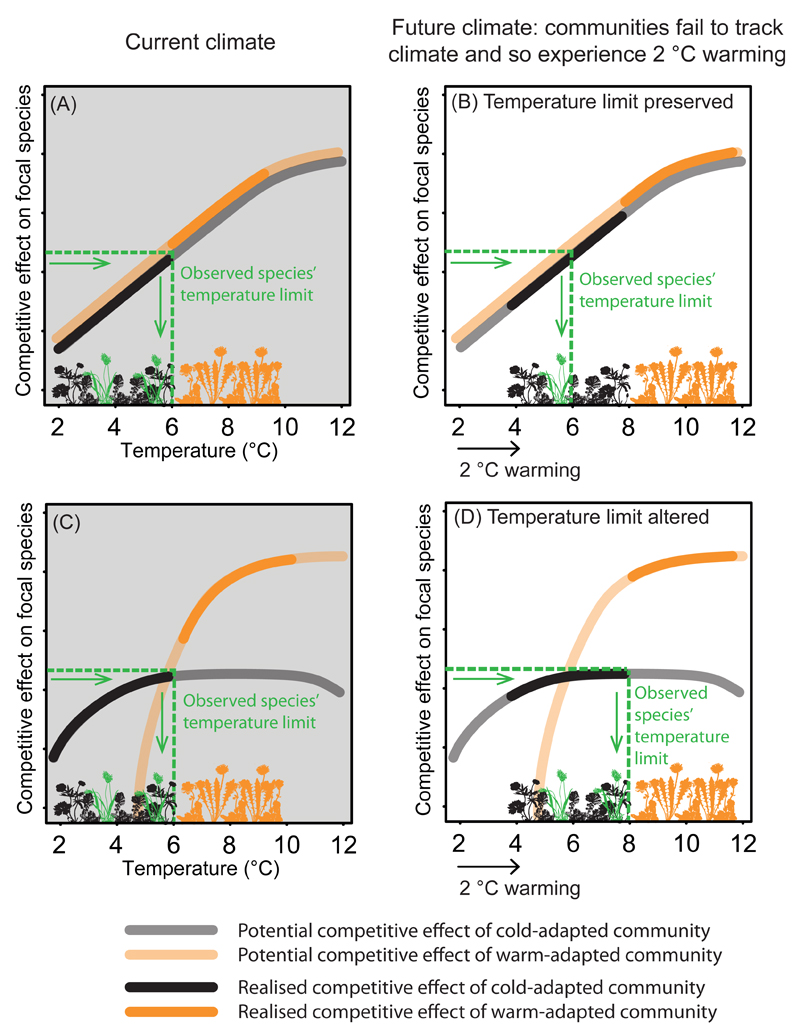
Figure 2. Associations between effects of competition and temperature after climate change.
The figure depicts the case of a focal species (green) with a distribution limited by the competitive effect of its surrounding community (horizontal dashed line). Competitive effects are correlated with the temperature where the competitors are found, resulting in a realised temperature limit for the focal species of 6 °C under current climate (vertical dashed line). In (A), the two communities (black, cold-adapted and orange, warm-adapted) exert the same competitive effect on the focal species under an identical temperature. (B) After climate change, existing populations experience a 2 °C climate warming (cf. scenario 2 in Fig. 1), inducing an increase in competitive effects such that the focal species is competitively excluded from any site warmer than 6 °C by the cold-adapted community. In this scenario, an SDM would accurately predict effects of competition on the focal species’ distribution using the temperature variable alone. (C) Alternatively, the cold- and warm-adapted communities might differ in their competitive effects under identical temperatures, with the cold-adapted community exerting stronger competition under cool temperatures and the warm-adapted community exerting stronger competition under warm temperatures. (D) As a result, the focal species can persist in sites up to 8 °C following climate warming. Predicting this alteration of the species’ realised temperature limit would require explicitly accounting for competitor identity.
Figure 3
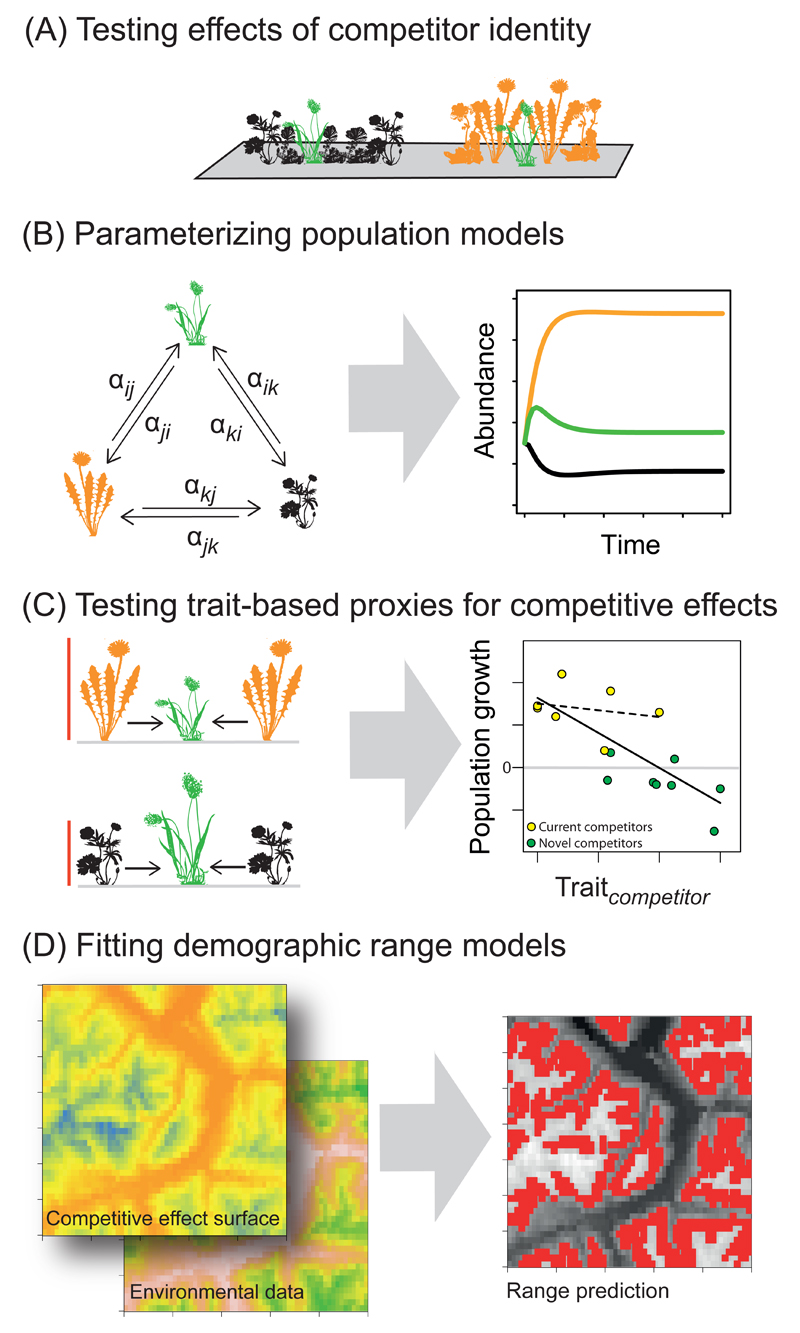
Figure 3. An empirical agenda for predicting effects of competition on range dynamics.
(A) Growing a focal species with different competitors under a common environment can test whether competitor identity influences the outcome of competition. (B) If competitor identity effects are important, experiments can parameterize population models to predict competitive outcomes among current and potential future competitors under a given environment. (C) Because estimating competition coefficients (α) among all species pairs will often be prohibitive, experiments can also test the power of functional traits (such as height) to predict competitive outcomes. We hypothesise that traits are stronger predictors of competitive outcomes when including novel competitors. (D) Finally, experimental results could inform demographic range models that integrate a focal species’ response to its abiotic and competitive environments (e.g. using traits of competitors to describe a “competitive effect surface”) to predict current and future distributions.

Comment in

References

    1. Wisz MS, et al. The role of biotic interactions in shaping distributions and realised assemblages of species: implications for species distribution modelling. Biol Rev. 2013;88:15–30. - PMC - PubMed
    1. Gilman SE, et al. A framework for community interactions under climate change. Trends Ecol Evol. 2010;25:325–331. - PubMed
    1. Tylianakis JM, et al. Global change and species interactions in terrestrial ecosystems. Ecol Lett. 2008;11:1351–1363. - PubMed
    1. Suttle KB, et al. Species interactions reverse grassland responses to changing climate. Science. 2007;315:640–642. - PubMed
    1. Svenning J-C, et al. The influence of interspecific interactions on species range expansion rates. Ecography. 2014;37:1198–1209. - PMC - PubMed