


Gut instincts: microbiota as a key regulator of brain development, ageing and neurodegeneration
- PMID: 27641441
- PMCID: PMC5233671
- DOI: 10.1113/JP273106
Gut instincts: microbiota as a key regulator of brain development, ageing and neurodegeneration
Abstract
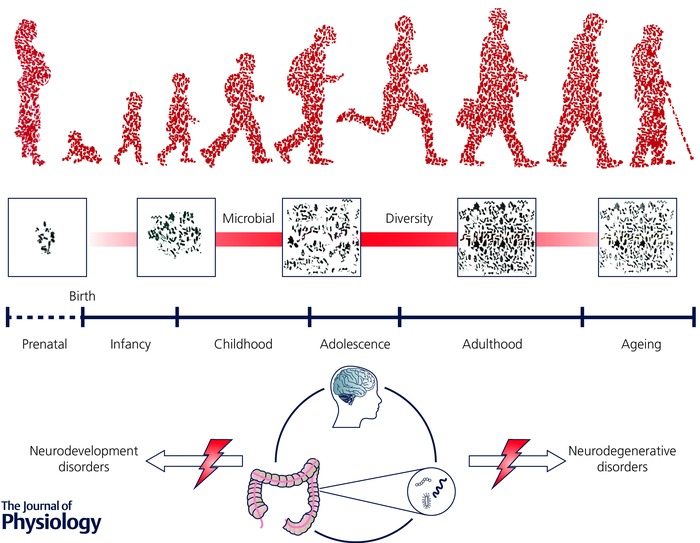
There is a growing realisation that the gut-brain axis and its regulation by the microbiota may play a key role in the biological and physiological basis of neurodevelopmental, age-related and neurodegenerative disorders. The routes of communication between the microbiota and brain are being unravelled and include the vagus nerve, gut hormone signalling, the immune system, tryptophan metabolism or by way of microbial metabolites such as short chain fatty acids. The importance of early life gut microbiota in shaping future health outcomes is also emerging. Disturbances of this composition by way of antibiotic exposure, lack of breastfeeding, infection, stress and the environmental influences coupled with the influence of host genetics can result in long-term effects on physiology and behaviour, at least in animal models. It is also worth noting that mode of delivery at birth influences microbiota composition with those born by Caesarean section having a distinctly different microbiota in early life to those born per vaginum. At the other extreme of life, ageing is associated with a narrowing in microbial diversity and healthy ageing correlates with a diverse microbiome. Recently, the gut microbiota has been implicated in a variety of conditions including depression, autism, schizophrenia and Parkinson's disease. There is still considerable debate as to whether or not the gut microbiota changes are core to the pathophysiology of such conditions or are merely epiphenomenal. It is plausible that such neuropsychiatric disorders might be treated in the future by targeting the microbiota either by microbiota transplantation, antibiotics or psychobiotics.
Keywords: ageing; gut-brain axis; stress.
© 2016 The Authors. The Journal of Physiology © 2016 The Physiological Society.
Figures
References
-
- Alam MZ, Alam Q, Kamal MA, Abuzenadah AM & Haque A (2014). A possible link of gut microbiota alteration in type 2 diabetes and Alzheimer's disease pathogenicity: an update. CNS Neurol Disord Drug Targets 13, 383–390. - PubMed
-
- Al‐Asmakh M & Zadjali F (2015). Use of germ‐free animal models in microbiota‐related research. J Microbiol Biotechnol 25, 1583–1588. - PubMed
-
- Allin KH, Nielsen T & Pedersen O (2015). Mechanisms in endocrinology: Gut microbiota in patients with type 2 diabetes mellitus. Eur J Endocrinol 172, R167–R177. - PubMed
-
- Arrieta MC, Walter J, Finlay BB (2016). Human microbiota‐associated mice: a model with challenges. Cell Host Microbe 19, 575–578. - PubMed
Publication types
MeSH terms
LinkOut - more resources
Full Text Sources
Other Literature Sources
Medical
