


Mechanosensory neurons control sweet sensing in Drosophila
- PMID: 27641708
- PMCID: PMC5031804
- DOI: 10.1038/ncomms12872
Mechanosensory neurons control sweet sensing in Drosophila
Abstract
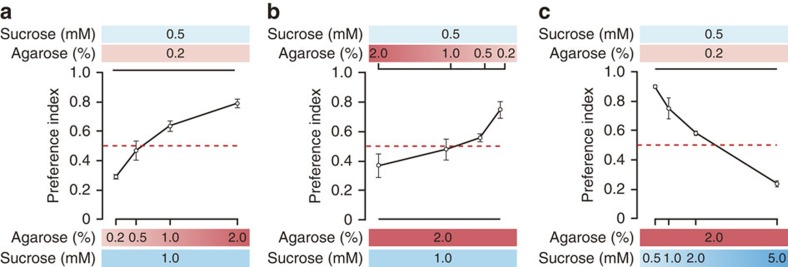
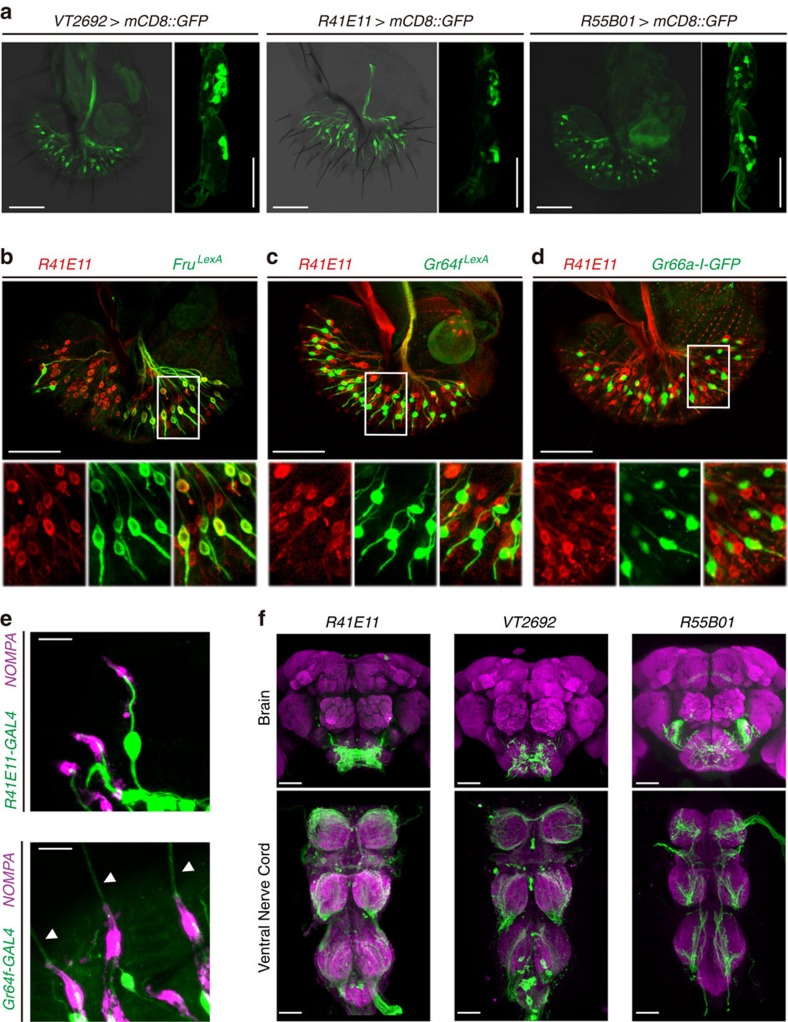
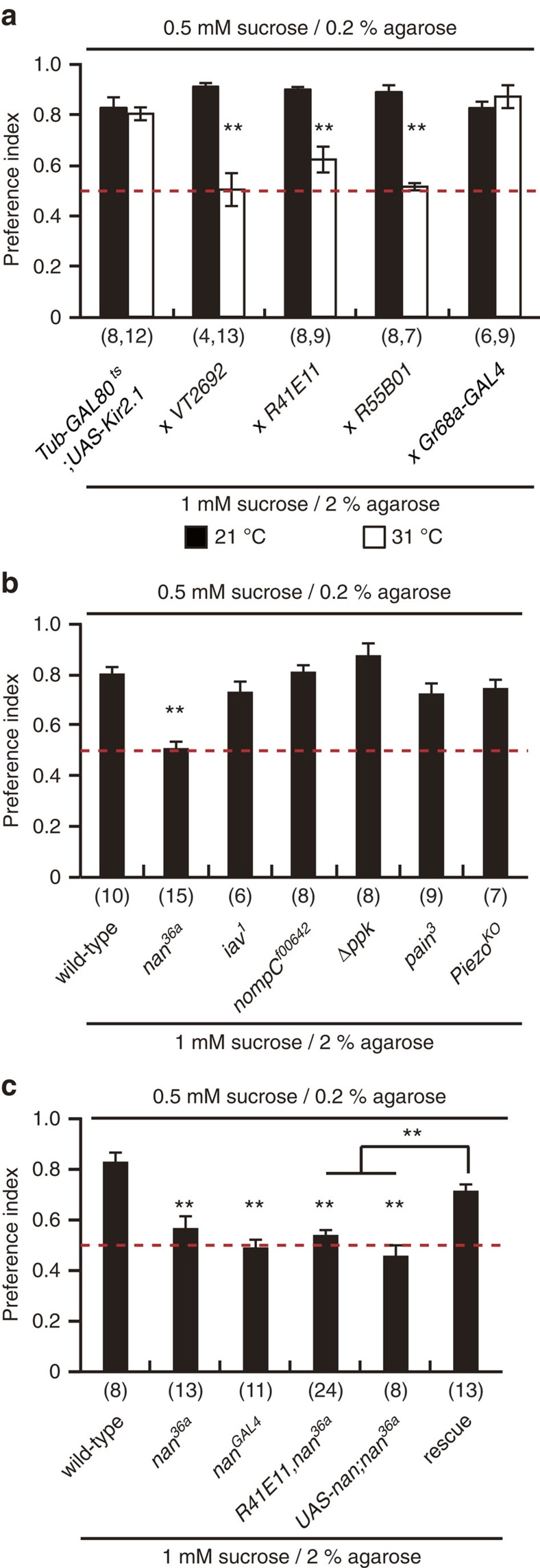
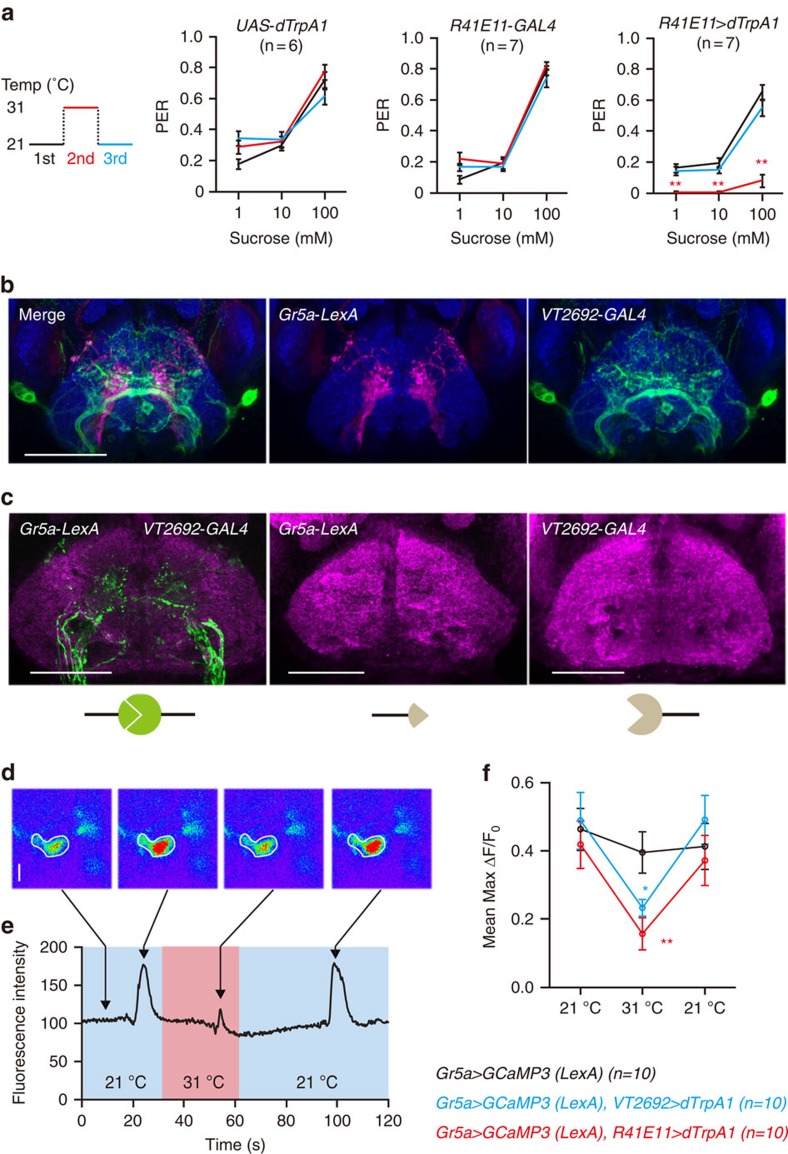
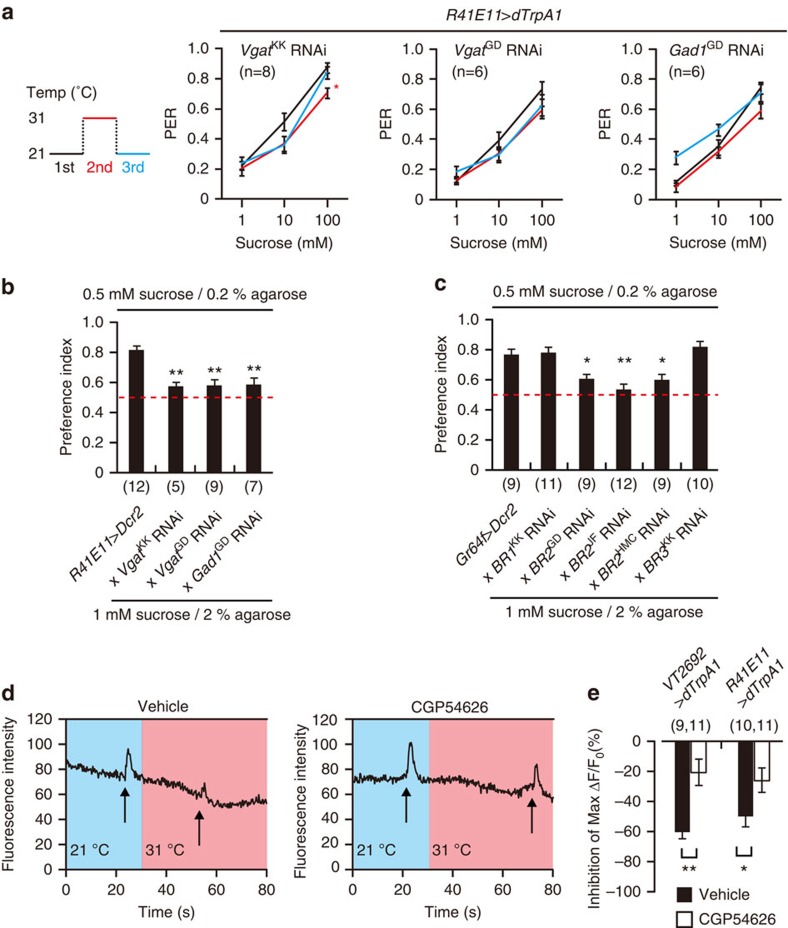
Animals discriminate nutritious food from toxic substances using their sense of taste. Since taste perception requires taste receptor cells to come into contact with water-soluble chemicals, it is a form of contact chemosensation. Concurrent with that contact, mechanosensitive cells detect the texture of food and also contribute to the regulation of feeding. Little is known, however, about the extent to which chemosensitive and mechanosensitive circuits interact. Here, we show Drosophila prefers soft food at the expense of sweetness and that this preference requires labellar mechanosensory neurons (MNs) and the mechanosensory channel Nanchung. Activation of these labellar MNs causes GABAergic inhibition of sweet-sensing gustatory receptor neurons, reducing the perceived intensity of a sweet stimulus. These findings expand our understanding of the ways different sensory modalities cooperate to shape animal behaviour.
Figures
References
-
- Spence C. Multisensory flavor perception. Cell 161, 24–35 (2015). - PubMed
-
- Todrank J. & Bartoshuk L. M. A taste illusion: taste sensation localized by touch. Physiol. Behav. 50, 1027–1031 (1991). - PubMed
-
- Hollowood T. A., Linforth R. S. & Taylor A. J. The effect of viscosity on the perception of flavour. Chem. Senses 27, 583–591 (2002). - PubMed
-
- Tournier C. et al. A study on texture-taste-aroma interactions: physico-chemical and cognitive mechanisms. Int. Dairy J. 19, 450–458 (2009).
Publication types
MeSH terms
Substances
LinkOut - more resources
Full Text Sources
Other Literature Sources
Medical
Molecular Biology Databases
