Review
. 2017 Jul:67:141-152.
doi: 10.1016/j.semcdb.2016.09.004. Epub 2016 Sep 15.

Cellular adaptation to biomechanical stress across length scales in tissue homeostasis and disease

Affiliations
Review

Cellular adaptation to biomechanical stress across length scales in tissue homeostasis and disease

Penney M Gilbert et al. Semin Cell Dev Biol. 2017 Jul.

Abstract

Human tissues are remarkably adaptable and robust, harboring the collective ability to detect and respond to external stresses while maintaining tissue integrity. Following injury, many tissues have the capacity to repair the damage - and restore form and function - by deploying cellular and molecular mechanisms reminiscent of developmental programs. Indeed, it is increasingly clear that cancer and chronic conditions that develop with age arise as a result of cells and tissues re-implementing and deregulating a selection of developmental programs. Therefore, understanding the fundamental molecular mechanisms that drive cell and tissue responses is a necessity when designing therapies to treat human conditions. Extracellular matrix stiffness synergizes with chemical cues to drive single cell and collective cell behavior in culture and acts to establish and maintain tissue homeostasis in the body. This review will highlight recent advances that elucidate the impact of matrix mechanics on cell behavior and fate across these length scales during times of homeostasis and in disease states.

Keywords: Actin-myosin contractility; Biomechanics; Cancer; Cell contractility; Development; EMT; Intracellular tension; Matrix stiffness; Mechanical force; Mechanical memory; Mechanosensing; Mechanotransduction; Tissue homeostasis; Tissue tension.


Figures

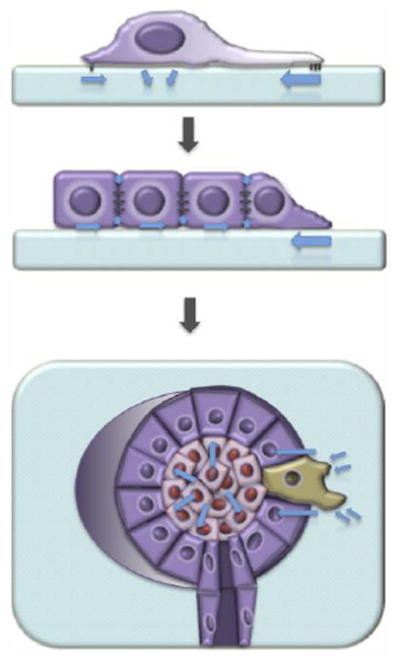
Figure 1
Figure 1. The influence of force across length scales
Distinct mechanical stresses influence mammary epithelial cell behavior and fate at the single cell (top), multicellular (middle), and tissue (bottom) levels.
Figure 2
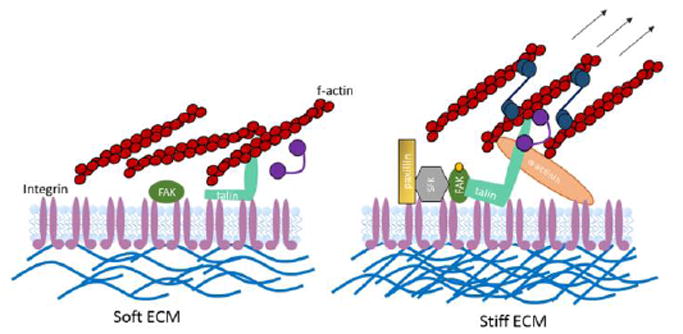
Figure 2. Focal adhesions and cell contractility
Immature focal adhesions form when cells are in contact with soft extracellular matrices (ECM; left), and therefore intracellular force generation does not occur. Focal adhesion maturation (right) is supported by cellular interactions with stiff matrices, which engage the actin-myosin network and ultimately initiate mechanotransduction events that drive cell behaviors in response to extracellular cues.
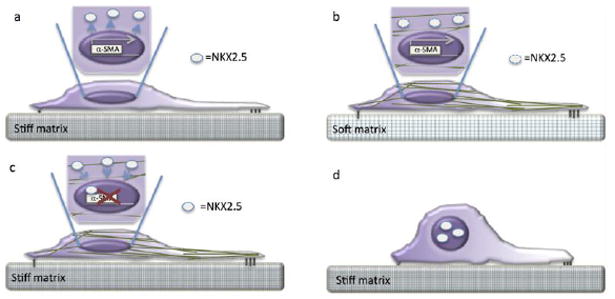
Figure 3
Figure 3. Erasing a mechanical memory
(a) Mesenchymal stromal cell culture on rigid substrates induces expression of α-SMA, which in turn transitions the cells from a more rounded morphology (as portrayed in d) to that of a contractile myofibroblast-like fate characterized by actin stress fiber formation (green fibrillar structures as seen in b and c) and cell spreading (as seen in a-c). On stiff culture substrates, α-SMA expression is reinforced by the nuclear deportation of NKX2.5 (white circles outside of dark purple nucleus), a potent inhibitor of α-SMA transcription. NKX2.5 is then either degraded or retained in the cytoplasm in association with stress fibers (as seen in b). (b) Typically, mesenchymal stromal cells propagated on soft substrates retain a rounded shape (as seen in d). If, however, mesenchymal stromal cells exposed to a stiff culture environment are then transitioned to a soft substrate, the ‘mechanical memory’ of the stiff environment prevails; NKX2.5 is excluded from the nucleus, α-SMA expression is retained, and the contractile morphology is observed. (c) Notably, by enforcing NKX2.5 expression and nuclear import, α-SMA expression is abolished and (d) it is possible convert a myofibroblast-like cell back to the original mesenchymal stromal cell fate, even if cultured on a stiff substrate. This indicates that the mechanical memory can be erased and cell fate reverted by understanding the molecular mechanisms at play when cell contact a stiff culture substrate.
Figure 4
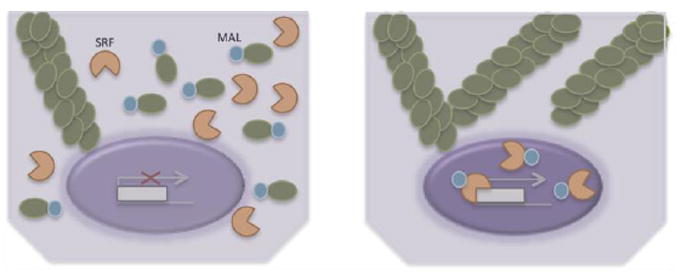
Figure 4. Actin dynamics control transcriptional activators
Non-contractile cells contain a pool of globular actin (g-actin) monomers in addition to fibrillar actin (f-actin) fibers. G-actin binds to MAL, a SRF transcriptional co-activator, and sequesters the factor in the cytoplasm (left). Intracellular tension is characterized by the formation of stress fibers causing the g-actin pool to diminish, and releasing MAL to bind to SRF, translocate to the nucleus, and initiate transcription (right).
Figure 5
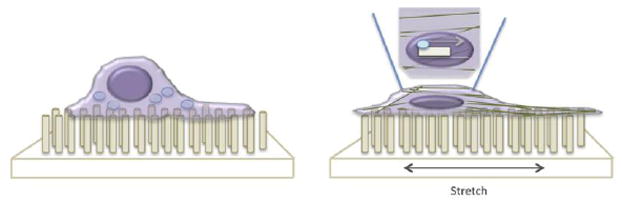
Figure 5. Stretch forces override matrix mechanics to control fibroblast identity
When cultured on soft micropillar arrays (left), cells maintain a rounded cell shape, small focal adhesions, and are devoid of stress fibers. However, if the soft micropillars are subjected to a cyclic stretch routine (right), cells respond by exhibiting phenotypes and gene expression patterns that are reminiscent of stiff culture substrates.
Figure 6
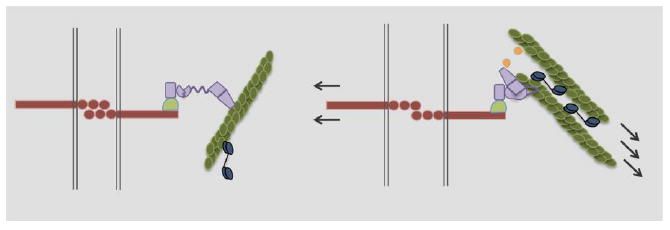
Figure 6. Cadherins mechanosense and transmit intracellular force
Epithelial cells maintain tight cell-cell contacts in part through the interaction of cadherin homodimers (red). In the absence of intracellular tension (left), cadherin interacts loosely and transiently with actin fibers through a β-catenin (pale green), α-catenin (purple) complex. In response to force (right), α-catenin undergoes a conformational change that allows for tight actin binding. In addition, vinculin (yellow) is recruited to α-catenin and can also bind to actin. In this way, intracellular force is transmitted between cells in an actin-myosin (blue) dependent manner.
Figure 7
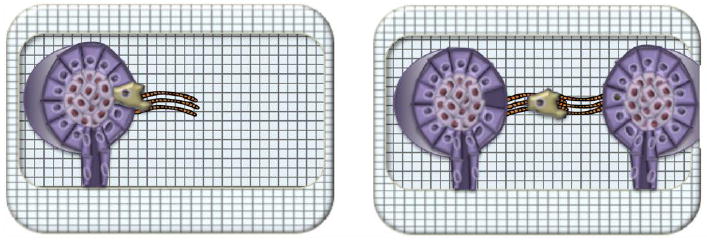
Figure 7. Long distance mechanical interactions accelerate cancer cell invasion
Transformed mammary acini orient collagen fibrils (orange) perpendicular to the invasive boundary, which serves as a track for metastatic cells (left). If two transformed mammary acini are within a critical distance, they will interact mechanically to produce a long, collagen fibril superhighway. Metastatic cells are observed to move at a faster rate via the superhighway than they do along a self-generated track that is not linked to a neighbor track.

References

    1. Handorf AM, Zhou Y, Halanski MA, Li W-J. Tissue stiffness dictates development, homeostasis, and disease progression. Organogenesis. 2015;11:1–15. doi: 10.1080/15476278.2015.1019687. - DOI - PMC - PubMed
    1. HUXLEY AF, NIEDERGERKE R. Structural changes in muscle during contraction; interference microscopy of living muscle fibres. [November 18, 2015];Nature. 1954 173:971–3. http://www.ncbi.nlm.nih.gov/pubmed/13165697. - PubMed
    1. HUXLEY H, HANSON J. Changes in the cross-striations of muscle during contraction and stretch and their structural interpretation. [October 16, 2015];Nature. 1954 173:973–6. http://www.ncbi.nlm.nih.gov/pubmed/13165698. - PubMed
    1. Spudich JA. The myosin swinging cross-bridge model. Nat Rev Mol Cell Biol. 2001;2:387–92. doi: 10.1038/35073086. - DOI - PubMed
    1. Abercrombie M, Heaysman JE, Pegrum SM. The locomotion of fibroblasts in culture. IV. Electron microscopy of the leading lamella. [February 19, 2016];Exp Cell Res. 1971 67:359–67. http://www.ncbi.nlm.nih.gov/pubmed/5097522. - PubMed

Publication types

MeSH terms