


The Effects of Different Extraction Methods on Antioxidant Properties, Chemical Composition, and Thermal Behavior of Black Seed (Nigella sativa L.) Oil
- PMID: 27642353
- PMCID: PMC5015008
- DOI: 10.1155/2016/6273817
The Effects of Different Extraction Methods on Antioxidant Properties, Chemical Composition, and Thermal Behavior of Black Seed (Nigella sativa L.) Oil
Abstract
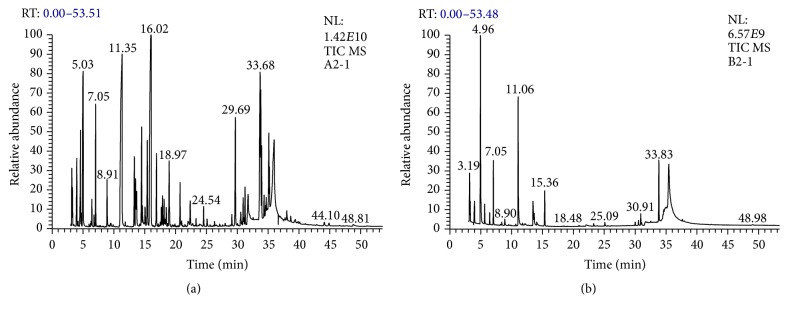
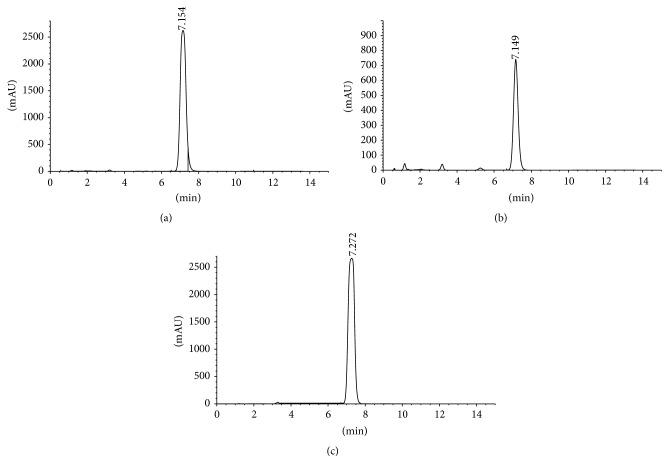
The Nigella sativa L. popularly referred to as black seeds are widely used as a form of traditional nutrition and medicine. N. sativa seeds were used for the extraction of their oil by way of supercritical fluid extraction (SFE) and cold press (CP) to determine the physicochemical properties, antioxidant activity, and thermal behavior. The GC-MS results showed the primary constituents in the Nigella sativa oil (NSO) were Caryophyllene (17.47%) followed by thymoquinone (TQ) (11.80%), 1,4-Cyclohexadiene (7.17%), longifolene (3.5%), and carvacrol (1.82%). The concentration of TQ was found to be 6.63 mg/mL for oil extracted using SFE and 1.56 mg/mL for oil extracted by CP method. The antioxidant activity measured by DPPH and the IC50 was 1.58 mg/mL and 2.30 mg/mL for SFE oil and cold pressed oil, respectively. The ferric reducing/antioxidant power (FRAP) activity for SFE oil and CP oil was 538.67 mmol/100 mL and 329.00 mmol/100 mL, respectively. The total phenolic content (TPC) of SFE oil was 160.51 mg/100 mL and 94.40 mg/100 mL for CP oil presented as gallic acid equivalents (GAE). This research showed that a high level of natural antioxidants could be derived from NSO extracted by SFE.
Figures
References
-
- Piras A., Rosa A., Marongiu B., et al. Chemical composition and in vitro bioactivity of the volatile and fixed oils of Nigella sativa L. extracted by supercritical carbon dioxide. Industrial Crops and Products. 2013;46:317–323. doi: 10.1016/j.indcrop.2013.02.013. - DOI
-
- Ramadan M. F. Nutritional value, functional properties and nutraceutical applications of black cumin (Nigella sativa L.): an overview. International Journal of Food Science and Technology. 2007;42(10):1208–1218. doi: 10.1111/j.1365-2621.2006.01417.x. - DOI
-
- Ramadan M. F., Kroh L. W., Mörsel J.-T. Radical scavenging activity of black cumin (Nigella sativa L.), coriander (Coriandrum sativum L.), and Niger (Guizotia abyssinica Cass.) crude seed oils and oil fractions. Journal of Agricultural and Food Chemistry. 2003;51(24):6961–6969. doi: 10.1021/jf0346713. - DOI - PubMed
LinkOut - more resources
Full Text Sources
Other Literature Sources
Miscellaneous
