. 2016 Sep 19:2:16151.
doi: 10.1038/nplants.2016.151.

Bidirectional cross-kingdom RNAi and fungal uptake of external RNAs confer plant protection

Affiliations

Bidirectional cross-kingdom RNAi and fungal uptake of external RNAs confer plant protection

Ming Wang et al. Nat Plants. .

Abstract

Aggressive fungal pathogens such as Botrytis and Verticillium spp. cause severe crop losses worldwide. We recently discovered that Botrytis cinerea delivers small RNAs (Bc-sRNAs) into plant cells to silence host immunity genes. Such sRNA effectors are mostly produced by Botrytis cinerea Dicer-like protein 1 (Bc-DCL1) and Bc-DCL2. Here we show that expressing sRNAs that target Bc-DCL1 and Bc-DCL2 in Arabidopsis and tomato silences Bc-DCL genes and attenuates fungal pathogenicity and growth, exemplifying bidirectional cross-kingdom RNAi and sRNA trafficking between plants and fungi. This strategy can be adapted to simultaneously control multiple fungal diseases. We also show that Botrytis can take up external sRNAs and double-stranded RNAs (dsRNAs). Applying sRNAs or dsRNAs that target Botrytis DCL1 and DCL2 genes on the surface of fruits, vegetables and flowers significantly inhibits grey mould disease. Such pathogen gene-targeting RNAs represent a new generation of environmentally friendly fungicides.


Figures
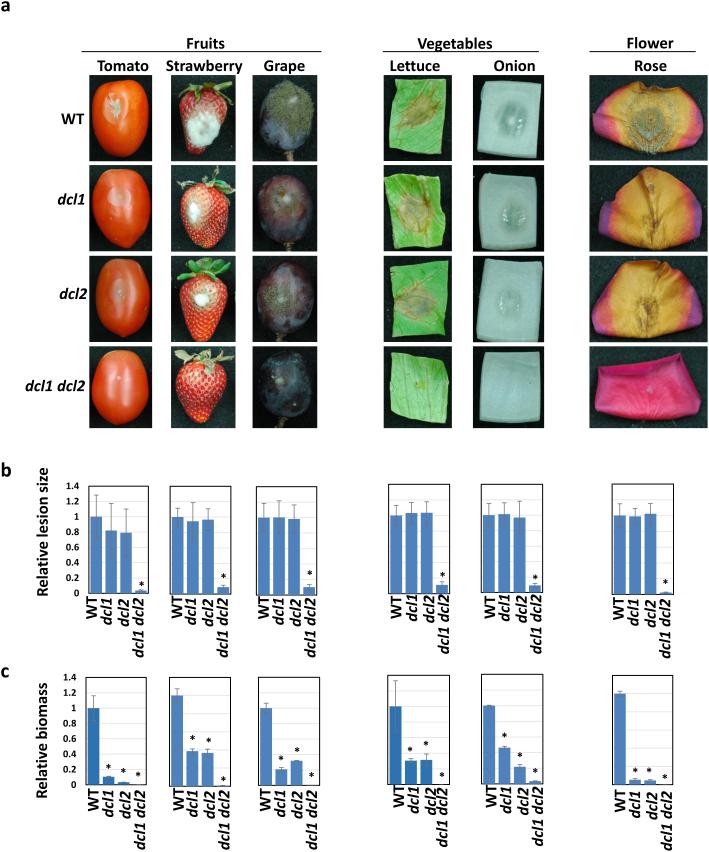
Figure 1
Figure 1. B. cinerea dcl1 dcl2 double mutant, but not the dcl1 or dcl2 single mutant, displays reduced virulence on fruits, vegetables, and flower petals
(a) B. cinerea dcl1 dcl2 double mutant shows compromised virulence on fruits (tomato, strawberry, and grape), vegetables (lettuce and onion), and flower petals (rose), while B. cinerea dcl1 and dcl2 single mutants showed similar virulence as the WT strain. (b) Relative lesion sizes of the infected plant samples were measured 3 days post inoculation (dpi) for lettuce, onion, and strawberry and 5 dpi for tomato, grape, and rose petal using ImageJ, and error bars indicate the standard deviations (SD) of 10 samples. (c) B. cinerea relative DNA content (relative biomass) was measured by quantitative PCR. Error bars indicate the SD of three technical replicates. Asterisks indicate statistically significant differences (P < 0.01). Similar results were obtained from at least three biological replicates.
Figure 2
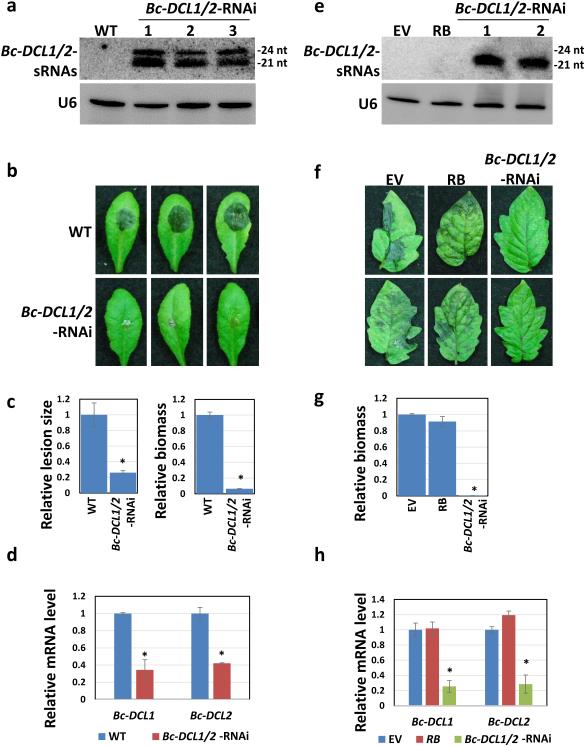
Figure 2. Arabidopsis and tomato Bc-DCL1/2-RNAi plants confer enhanced resistance against B. cinerea infection
(a) Bc-DCL1/2-sRNAs were highly expressed in the Arabidopsis transgenic plants, as detected by Northern blot. (b) Arabidopsis Bc-DCL1/2-RNAi plants show enhanced disease resistance against B. cinerea. Similar results were obtained from three biological replicates. (c) Relative lesion sizes were measured 3 dpi using imageJ, and error bars indicate the SD of 10 samples. B. cinerea relative biomass was measured 3 dpi by quantitative PCR, and error bars indicate the SD of three technical replicates. (d) The expression of Bc-DCL1 and Bc-DCL2 were downregulated in infected Arabidopsis Bc-DCL1/2-RNAi plants, as measured by quantitative RT-PCR. (e) Northern blot analysis reveals the expression levels of Bc-DCL1/2-sRNAs in the tomato Bc-DCL1/2-RNAi plants through virus-induced gene silencing (VIGS). (f) Tomato Bc-DCL1/2-RNAi plants were more resistant to B. cinerea compared to control plants (EV and RB). Similar results were obtained from three biological replicates. (g) B. cinerea relative biomass was measured 3 dpi, and error bars indicate the SD of three technical replicates. (h) Bc-DCL1 and Bc-DCL2 were silenced in infected tomato Bc-DCL1/2-RNAi plants, as measured by quantitative RT-PCR. Asterisks indicate statistically significant differences (P < 0.01).
Figure 3
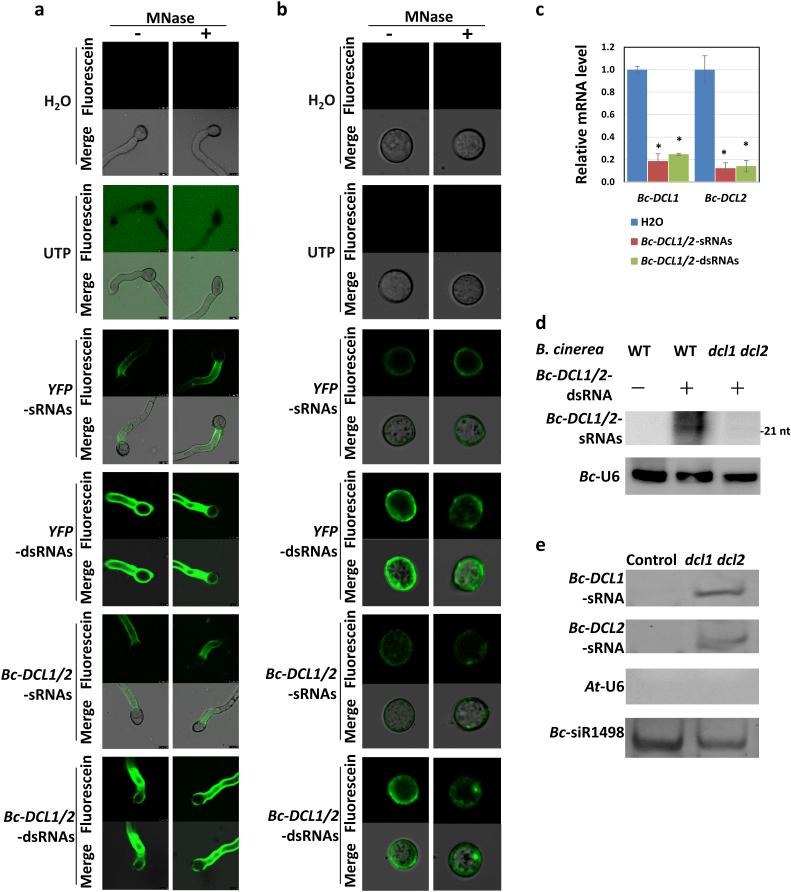
Figure 3. Environmental Bc-DCL1/2-sRNAs and -dsRNAs are taken into B. cinerea cells and where they silence fungal DCL genes; Bc-DCL1/2-sRNAs move from plants into fungal cells
(a) Fluorescein-labeled Bc-DCL1/2-sRNAs and -dsRNAs, as well as YFP-sRNAs and -dsRNAs, were applied onto B. cinerea spores and fluorescent signals were detected in the B. cinerea cells at 12 h post culturing on agar (malt extract) ME medium. Fluorescence signals remained visible in the B. cinerea cells after MNase treatment. Fluorescein-UTP and water were used as controls. (b) Fluorescein-labeled Bc-DCL1/2-sRNAs and -dsRNAs, as well as YFP-sRNAs and -dsRNAs, were observed in B. cinerea protoplasts after MNase treatment. Fluorescent sRNAs or dsRNAs were applied onto germinated B. cinerea spores and protoplasts were isolated after culturing for 20 h. The fluorescent signals were detected within fungal protoplasts, and the MNase enzyme treatment did not reduce the fluorescent signal intensities. (c) Bc-DCL1 and Bc-DCL2 were down-regulated in Bc-DCL1/2-RNA-treated B. cinerea. (d) In vitro synthesized Bc-DCL1/2-dsRNAs were taken up and processed into sRNAs after co-culturing with the B cinerea WT strain but not with the dcl1 dcl2 mutant. (e) Bc-DCL1-sRNAs and Bc-DCL2-sRNAs were detected by stem-loop RT-PCR in B. cinerea dcl1 dcl2 protoplasts after infection on Arabidopsis Bc-DCL1/2-RNAi plants but not in mock-treated Arabidopsis Bc-DCL1/2-RNAi plants mixed with B. cinerea dcl1 dcl2 mycelium prior to protoplast formation. Similar results were obtained from two biological replicates.
Figure 4
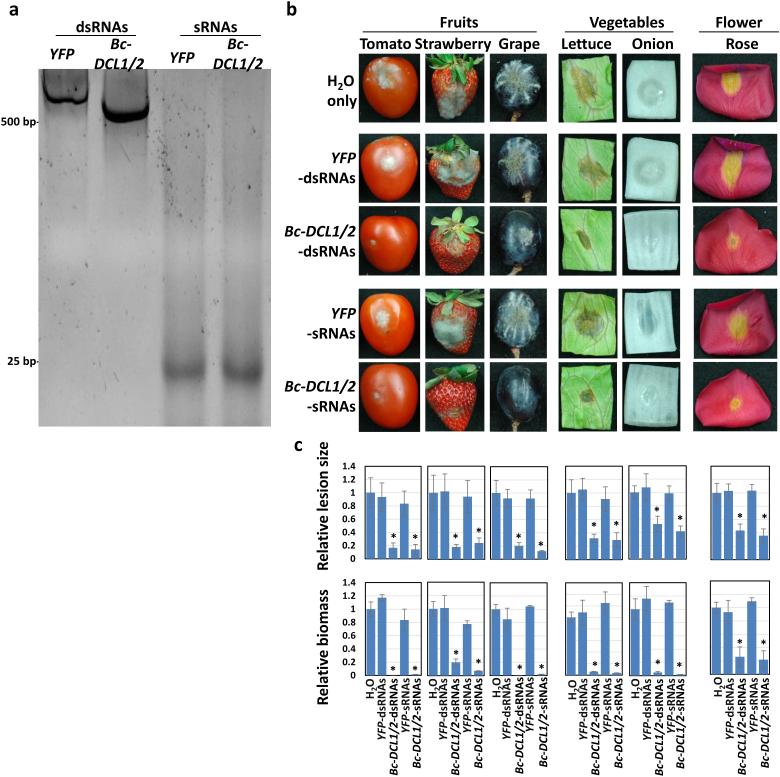
Figure 4. Externally applied Bc-DCL1/2-sRNAs and -dsRNAs inhibited pathogen virulence on fruits, vegetables, and flower petals
(a) Bc-DCL1/2-dsRNAs and -sRNAs, as well as YFP-dsRNAs and -sRNAs, were synthesized and processed, and 100 ng of RNAs was analyzed on a native PAGE gel to check the quality. (b) External application of Bc-DCL1/2-dsRNAs and -sRNAs (20ul of 20 ng/μl synthetic RNAs) inhibits the virulence of B. cinerea on fruits (tomato, strawberry, and grape), vegetables (lettuce and onion), and flower petals (rose), compared to the treatments using water, YFP-dsRNAs and -sRNAs. (c) The relative lesion sizes and fungal biomass were measured 3 dpi for lettuce, onion, rose, and strawberry and 5 dpi for tomato and grape fruits using ImageJ software and quantitative PCR, respectively. Error bars indicate the SD of 10 samples and three technical repeats for the relative lesion sizes and relative biomass, respectively. Asterisks indicate statistically significant differences (P < 0.01). Similar results were obtained from three biological replicates.
Figure 5
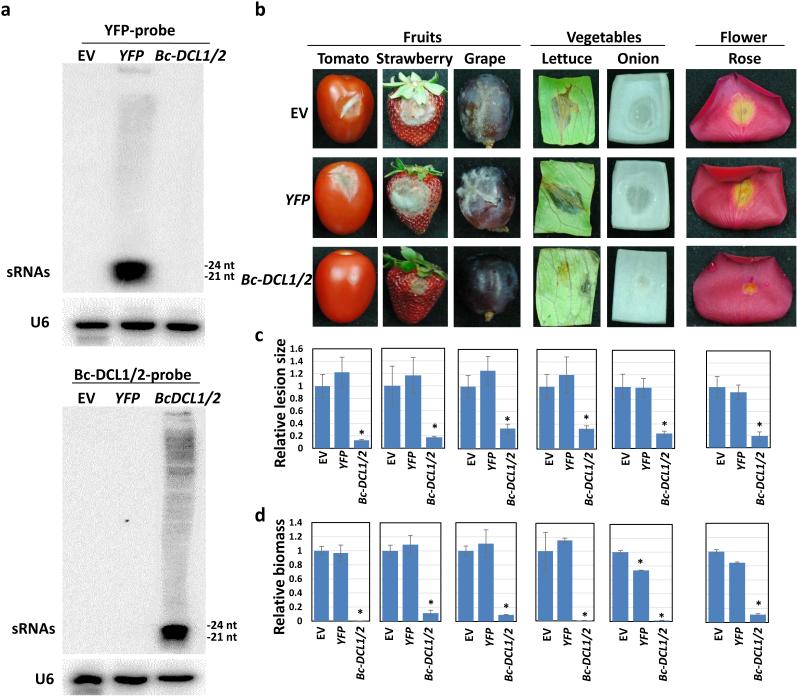
Figure 5. Treatment with N. benthamiana RNA extracts containing Bc-DCL1/2-sRNAs and -dsRNAs reduces gray mold disease symptoms caused by B. cinerea
(a) Total RNA extracted from the N. benthamiana plants expressing Hellsgate empty vector (EV), YFP or Bc-DCL1/2 RNAi constructs was examined by Northern blot analysis to measure the expression levels of YFP- and Bc-DCL1/2 sRNAs. (b) N. Benthamiana total RNAs containing Bc-DCL1/2-RNAs (20 ng/μl) were sprayed onto fruits (tomato, strawberry, and grape), vegetables (lettuce and onion), and flower petals (rose) reduced grey mold disease symptoms, when compared with the application of N. Benthamiana total RNA extracts from plants expressing YFP-sRNAs and -dsRNAs or no sRNAs (EV). (c) The relative lesion sizes were measured 3 dpi for lettuce, onion, rose and strawberry, and 5 dpi for tomato and grape fruits using imageJ, and error bars represent the SD of 10 plant samples. The relative biomass of B. cinerea was also calculated with quantitative PCR, and error bars represent the SD of three technical replicates. Asterisks indicate statistically significant differences (P < 0.01). Similar results were observed from three biological replicates.
Figure 6
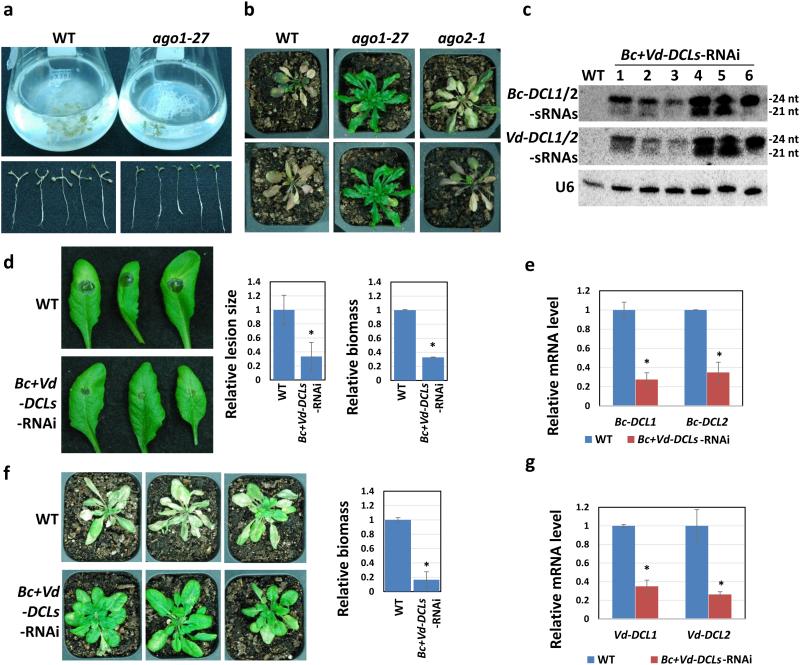
Figure 6. Arabidopsis plants expressing hairpin RNAs that simultaneously target DCL genes of B. cinerea and V. dahilae show enhanced disease resistance to both pathogens
(a) The Arabidopsis ago1-27 mutant was more resistant to V. dahilae compared with WT plants in root culture conditions. (b) Arabidopsis ago1-27, but not ago2-1 mutant, was less susceptible to V. dahilae when compared with WT plants grown in soil. (c) The expression levels of Bc-DCL1/2-sRNAs and Vd-DCL1/2-sRNAs in the Arabidopsis Bc+Vd-DCLs-RNAi transgenic plants were examined by Northern blot analysis. (d) Arabidopsis Bc+Vd-DCLs-RNAi plants display reduced disease after infection of B. cinerea. Relative lesion sizes were measured 3 dpi using ImageJ, and error bars indicate the SD of 10 leaves. B. cinerea biomass was measured 3 dpi by quantitative PCR, and error bars indicate the SD of three technical replicates. (e) Quantitative RT-PCR showed that Bc-DCL1 and Bc-DCL2 were silenced in B. cinerea-infected Arabidopsis Bc+Vd-DCLs-RNAi plants compared with WT plants. (f) Arabidopsis Bc+Vd-DCLs-RNAi plants were less susceptible to V. dahilae compared to WT plants. Relative biomass of V. dahilae was measured at 3 weeks post inoculation, and error bars indicate the SD of three technical replicates. (g) The expression level of Vd-DCL1 and Vd-DCL2 were suppressed in V. dahilae-infected Arabidopsis Bc+Vd-DCLs-RNAi plants. Asterisks represent statistically significant differences (P < 0.01). Similar results were obtained from three biological replicates (a-g).

References

    1. Ghildiyal M, Zamore PD. Small silencing RNAs: an expanding universe. Nat. Rev. Genet. 2009;10:94–108. - PMC - PubMed
    1. Baulcombe D. RNA silencing in plants. Nature. 2004;431:356–363. - PubMed
    1. Vaucheret H. Plant ARGONAUTES. Trends Plant Sci. 2008;13:350–358. - PubMed
    1. Hutvagner G, Simard MJ. Argonaute proteins: key players in RNA silencing. Nat. Rev. Mol. Cell Biol. 2008;9:22–32. - PubMed
    1. Weiberg A, et al. Fungal Small RNAs Suppress Plant Immunity by Hijacking Host RNA Interference Pathways. Science. 2013;342:118–123. - PMC - PubMed

Publication types