


Mothers Secretor Status Affects Development of Childrens Microbiota Composition and Function: A Pilot Study
- PMID: 27644050
- PMCID: PMC5028039
- DOI: 10.1371/journal.pone.0161211
Mothers Secretor Status Affects Development of Childrens Microbiota Composition and Function: A Pilot Study
Abstract
Background: One mechanism by which early life environment may influence long term health is through modulation of the gut microbiota. It is widely accepted that the optimal source of nutrition in early life is breast milk, with Human Milk Oligosaccharides (HMOs) thought to play an important role in nourishing the developing microbiota. However, mothers with inactive secretor genes have altered HMO composition and quantities in their breast milk. In this pilot study we examine the influence of secretor status and breast-feeding on microbiota composition at 2 to 3 years of age.
Methods: 37 children and 17 eligible mothers were recruited. Secretor status was determined from blood and saliva samples using hemagglutination inhibition technique and faecal microbiota composition was examined by 16S rRNA gene sequencing.
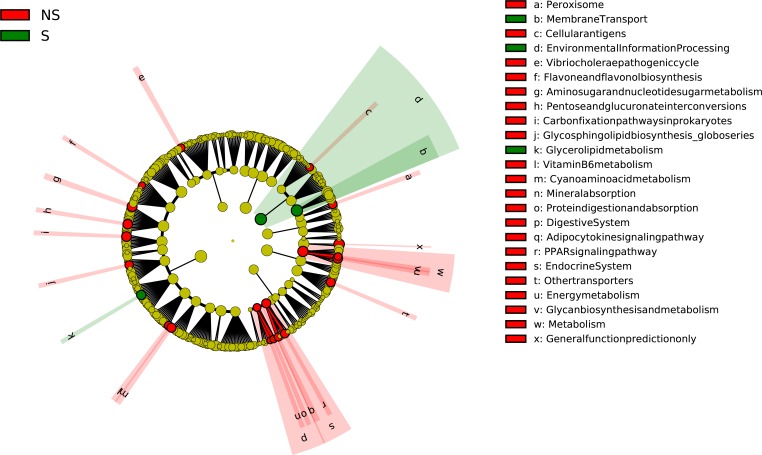
Results: Secretor status was determined for 28 eligible children with 20 being secretors (S, 71.4%). Eleven of the 17 mothers were secretors (S, 64.7%). Unweighted UniFrac distances were significantly associated with child secretor status (R2 = 0.069, p = 0.030) and with mother secretor status in children exclusively breastfed for at least 4 months (R2 = 0.167, p = 0.028), suggesting an influence on the presence/absence of microbes, with Prevotella not detected in samples from secretor children and children of secretor mothers. In children who were exclusively breast-fed for at least 4 months of life the abundance of the known HMO consumers Bifidobacterium were increased in the children of secretor mothers compared to non-secretor mothers. The relative abundance of an OTU related to Bacteroides plebeius, a bacterium noted for its capacity to utilise sulphated polysaccharides for growth, was decreased in these children.
Conclusions: Child and mothers' secretor status have an impact on childrens' microbiota composition at 2 to 3 years of age.
Conflict of interest statement
PSB received a Ph.D. living allowance stipend from Danone Nutricia, Australia. This does not alter the authors' adherence to PLOS ONE policies on sharing data and materials.
Figures
References
-
- World Health Organisation. Global Strategty for Infant and Young Child Feeding. Geneva2003.
Publication types
MeSH terms
Substances
LinkOut - more resources
Full Text Sources
Other Literature Sources
Medical
