


Maternal allergic disease history affects childhood allergy development through impairment of neonatal regulatory T-cells
- PMID: 27646403
- PMCID: PMC5028930
- DOI: 10.1186/s12931-016-0430-8
Maternal allergic disease history affects childhood allergy development through impairment of neonatal regulatory T-cells
Erratum in
-
Erratum to: Maternal allergic disease history affects childhood allergy development through impairment of neonatal regulatory T-cells.Respir Res. 2016 Oct 21;17(1):134. doi: 10.1186/s12931-016-0443-3. Respir Res. 2016. PMID: 27769248 Free PMC article. No abstract available.
Abstract
Background: Maternal allergic disease history and impaired regulatory T-cells (Tregs) are critical risk factors for allergy development in children. However, the mechanisms that underlie these risk factors remain poorly defined. Therefore, the aim of this study was to assess whether maternal allergies affect the Tregs of offspring and lead to allergy development in childhood.
Methods: A total of 332 mothers of healthy newborns (234 from no allergic mothers, 98 from allergic mothers) were recruited to this study. Detailed questionnaires were administered yearly to determine the allergy status of the mothers and the newborns from birth to 3 years of age. Cord blood samples obtained at the time of birth were analysed for Treg counts, as well Treg activity, based on their response to Toll-like receptor (TLR) stimuli such as lipid A (LPA) and peptidoglycans (PPG). Surface markers, associated genes, suppressive capacity, and cytokine levels of Tregs were also measured. Possible correlations between Treg activity and maternal or neonate allergies were assessed. In addition, environmental microbial content and other known risk factors for allergies were measured.
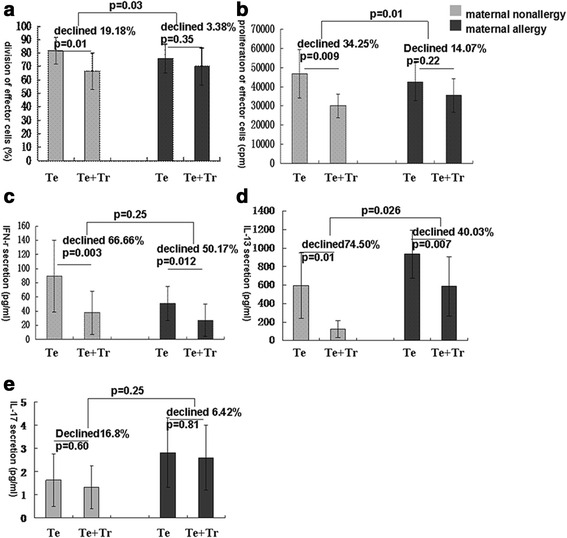
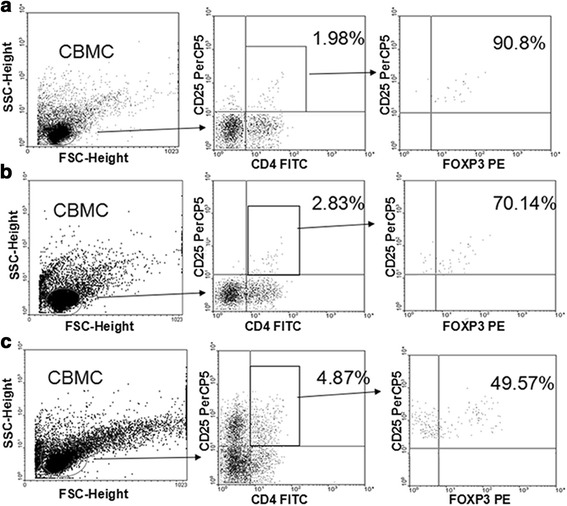
Results: Cord blood mononuclear cells (CBMCs) from offspring with allergic mothers showed fewer CD4(+)CD25(+)FOXP3(+) T cells, lower expression levels of associated genes, and reduced cytokine production of interleukin (IL)-10 and interferon-γ (P < 0.05), especially via the PPG-TLR2 pathway. Suppression of effector T cells by Tregs from children of mothers with allergies was impaired, especially IL-13 production by Type 2 T helper (Th2) cells (P = 0.026). Children who developed allergies in the first 3 years of life had lower numbers of CD4(+)CD25(+)FOXP3(+) T cells and reduced FOXP3 expression and IL-10 production as newborns (P < 0.05). Maternal allergic background was identified as a risk factor for allergy development in the children (Odds ratio (OR) = 2.46, 95 % CI = 1.05-5.79); while declining Treg numbers, IL-10 production, and FOXP3 expression in neonates (PPG and LPA stimulated) were identified as independent risk factors for allergic diseases in offspring at 3 years of age after adjusting for maternal allergic history and environmental factors (P < 0.05).
Conclusion: Maternal allergy correlated with impaired Tregs in neonates, and this could enhance the susceptibility of offspring to allergic diseases in early childhood due to an imbalance of Th1 and Th2 cells.
Keywords: Allergy; Children; Cord blood; Regulatory T-cell; Toll like receptor.
Figures
References
-
- Gough H, Grabenhenrich L, Reich A, Eckers N, Nitsche O, Schramm D, Beschorner J, Hoffmann U, Schuster A, Bauer CP, Forster J, Zepp F, Lee YA, Bergmann RL, Bergmann KE, Wahn U, Lau S, Keil T, group MASs Allergic multimorbidity of asthma, rhinitis, and eczema over 20 years in the German birth cohort MAS. Pediatr Allergy Immunol. 2015;26:431–437. doi: 10.1111/pai.12410. - DOI - PMC - PubMed
Publication types
MeSH terms
Substances
LinkOut - more resources
Full Text Sources
Other Literature Sources
Medical
Research Materials
Miscellaneous
