


Effects of ω-3 Fatty Acids and Catechins on Fatty Acid Synthase in the Prostate: A Randomized Controlled Trial
- PMID: 27646578
- PMCID: PMC5154733
- DOI: 10.1080/01635581.2016.1224365
Effects of ω-3 Fatty Acids and Catechins on Fatty Acid Synthase in the Prostate: A Randomized Controlled Trial
Abstract
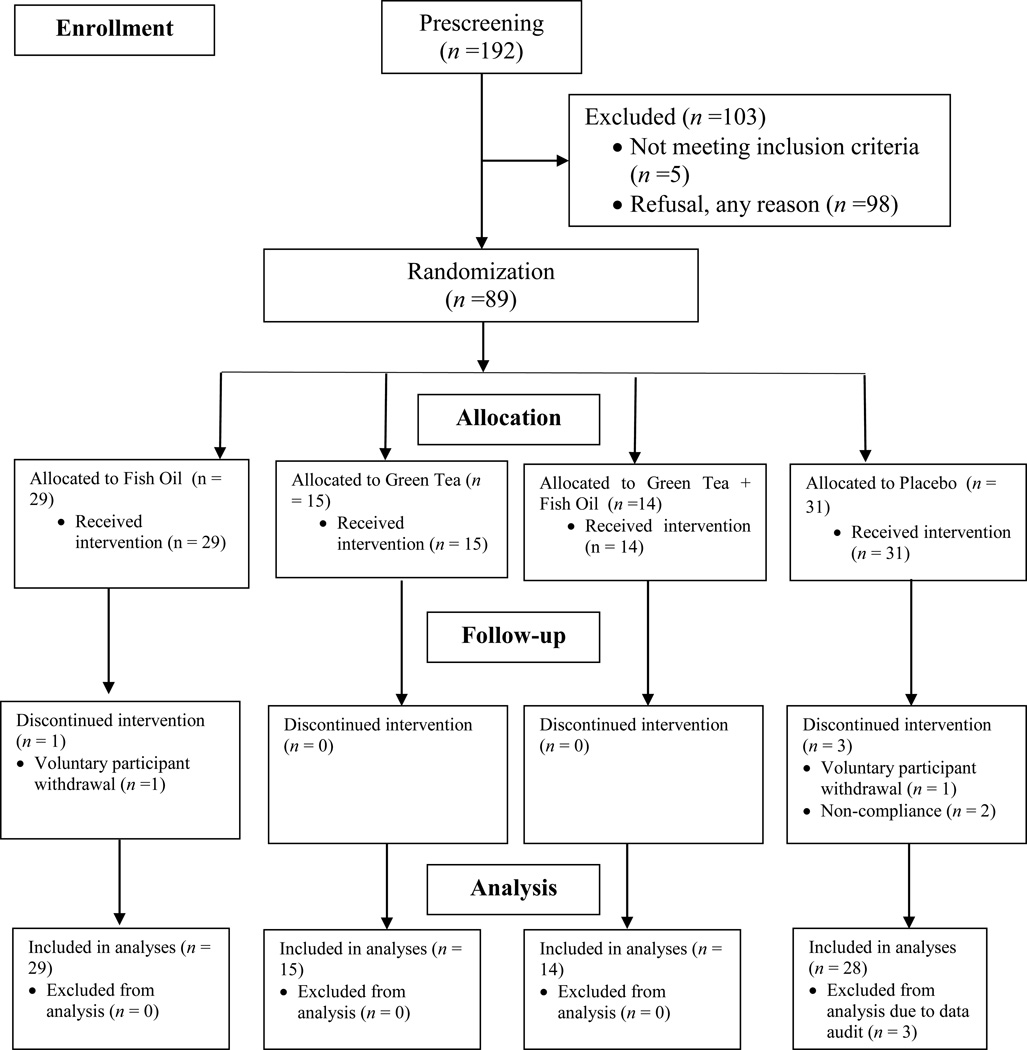
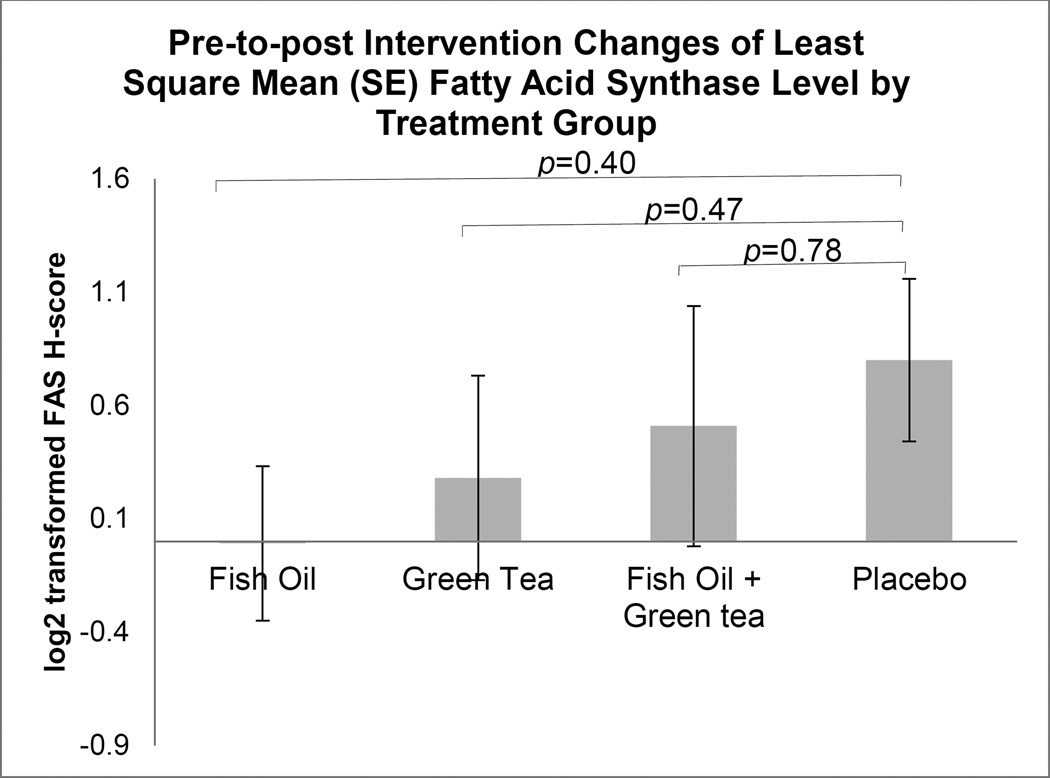
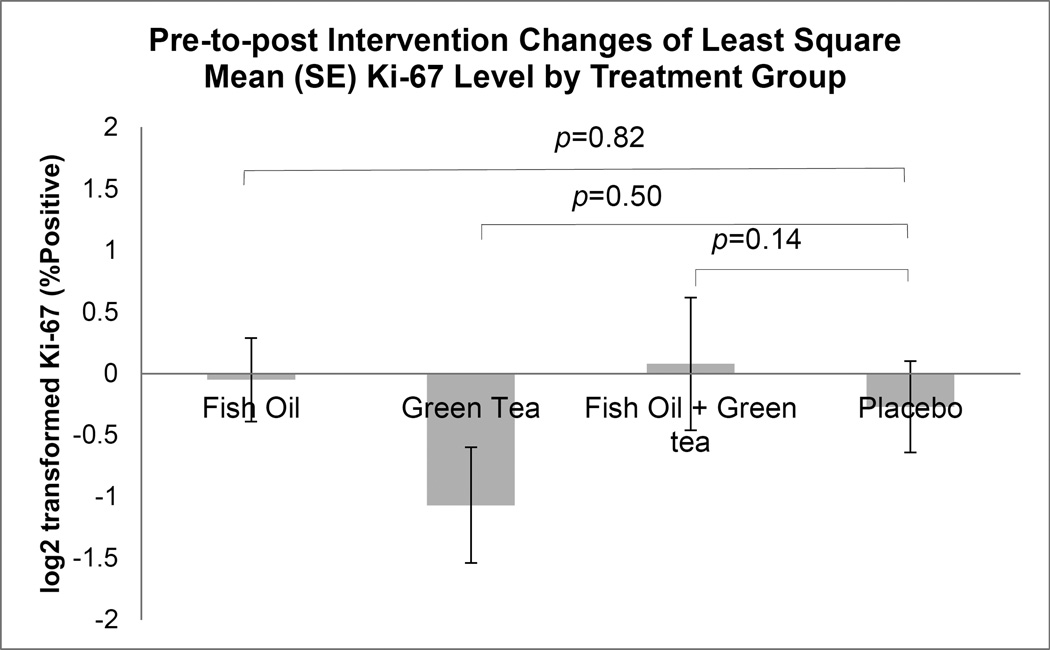
Animal and human studies suggest fish oil and green tea may have protective effect on prostate cancer. Fatty acid synthase (FAS) has been hypothesized to be linked to chemoprotective effects of both compounds. This study evaluated the independent and joint effects of fish oil (FO) and green tea supplement (epigallocatechin-3-gallate, EGCG) on FAS and Ki-67 levels in prostate tissue. Through a double-blinded, randomized controlled trial with 2 × 2 factorial design, 89 men scheduled for repeat prostate biopsy following an initial negative prostate biopsy were randomized into either FO alone (1.9 g DHA + EPA/day), EGCG alone (600 mg/day), a combination of FO and EGCG, or placebo. We used linear mixed-effects models to test the differences of prostate tissue FAS and Ki-67 by immunohistochemistry between pre- and post-intervention within each group, as well as between treatment groups. Results did not show significant difference among treatment groups in pre-to-post-intervention changes of FAS (P = 0.69) or Ki-67 (P = 0.26). Comparing placebo group with any of the treatment groups, we did not find significant difference in FAS or Ki-67 changes (all P > 0.05). Results indicate FO or EGCG supplementation for a short duration may not be sufficient to produce biologically meaningful changes in FAS or Ki-67 levels in prostate tissue.
Trial registration: ClinicalTrials.gov NCT00253643.
Conflict of interest statement
None
Figures
References
Publication types
MeSH terms
Substances
Associated data
Grants and funding
LinkOut - more resources
Full Text Sources
Other Literature Sources
Medical
Research Materials
Miscellaneous
