


A randomized, double blind placebo controlled study of efficacy and tolerability of Withaina somnifera extracts in knee joint pain
- PMID: 27647541
- PMCID: PMC5052364
- DOI: 10.1016/j.jaim.2016.05.003
A randomized, double blind placebo controlled study of efficacy and tolerability of Withaina somnifera extracts in knee joint pain
Abstract
Background: Root extracts of Withania somnifera (Ashwagandha) are known to possess analgesic, anti-inflammatory and chondroprotective effects. An aqueous extract of roots plus leaves of this plant has shown to yield higher percentages of withanolide glycosides and, accordingly, may possess better analgesic, anti-inflammatory and chondroprotective effects than root alone extracts.
Objectives: To evaluate efficacy and tolerability of a standardized aqueous extract of roots plus leaves of W. somnifera in patients with knee joint pain and discomfort.
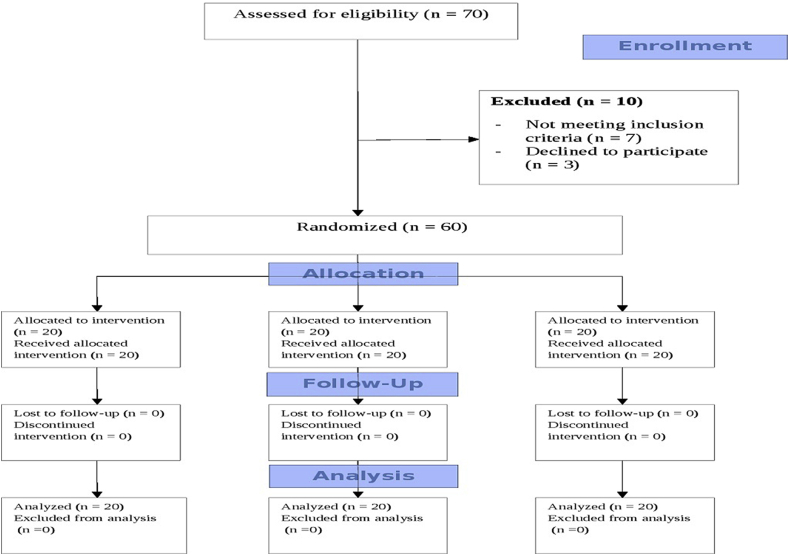
Material and methods: Sixty patients with knee joint pain and discomfort were randomized in a double-blind manner to W. somnifera 250 mg, W. somnifera 125 mg and placebo, all given twice daily. Assessment was done by Modified WOMAC, Knee Swelling Index (KSI), Visual Analogue Scale (VAS) at baseline and at the end of 4, 8, 12 weeks. Tolerability was assessed by incidence of adverse effects in treatment groups. Student's 't' test and ANOVA were used to compare mean change from baseline within and between the study groups. A p < 0.05 was considered significant.
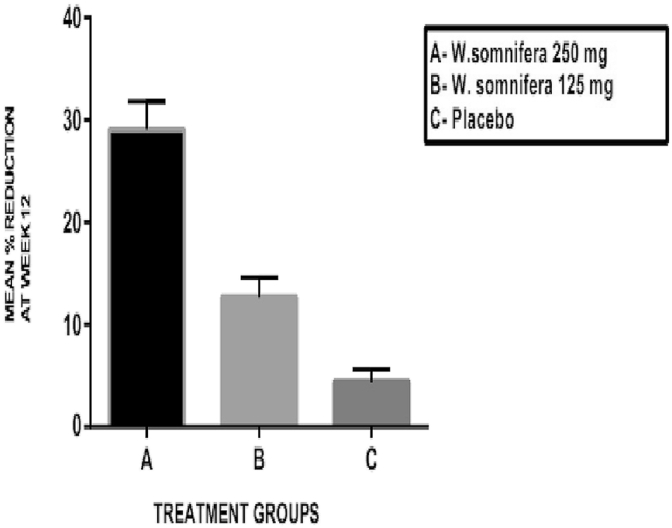
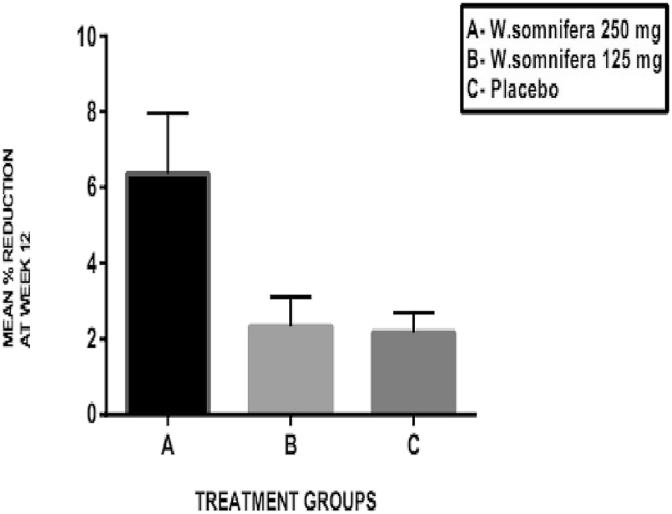
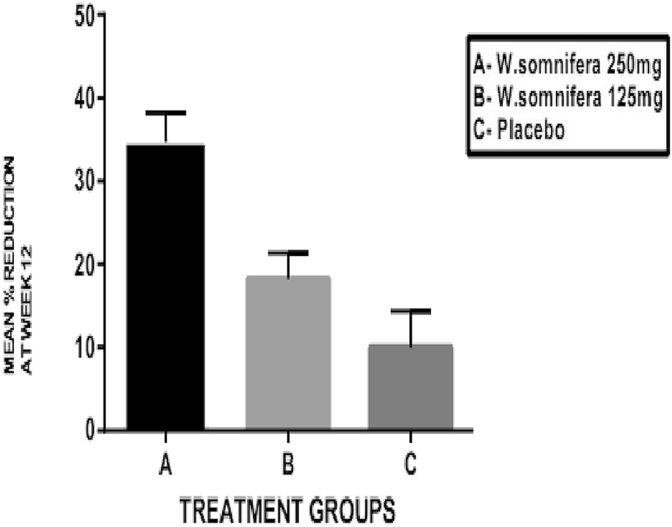
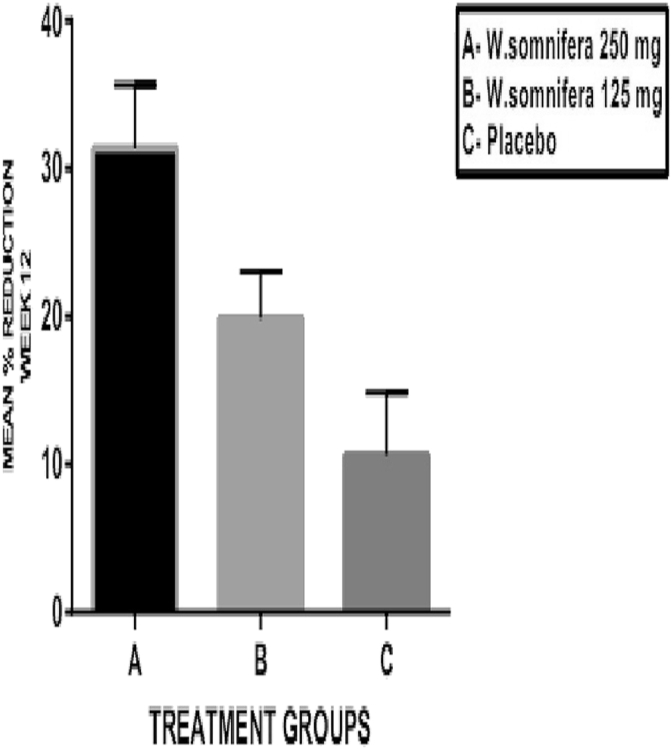
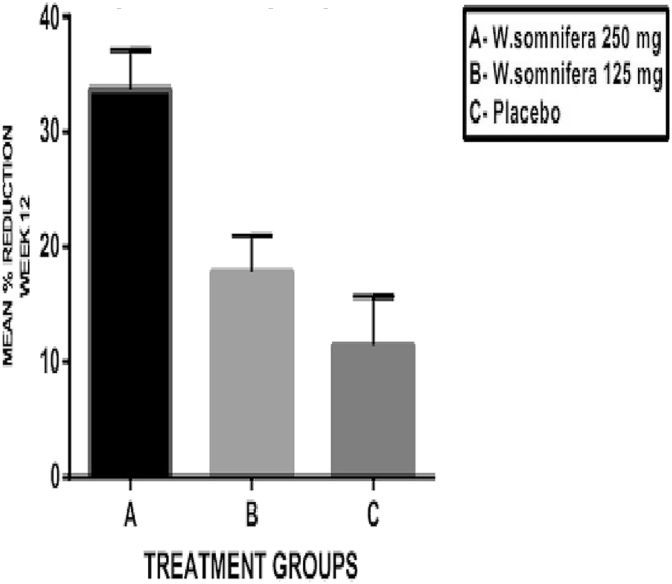
Results: At the end of 12 weeks, compared to baseline and placebo, significant reductions were observed in mean mWOMAC and KSI in W. somnifera 250 mg (p < 0.001), W. somnifera 125 mg (p < 0.05) groups. VAS scores for pain, stiffness and disability were significantly reduced in W. somnifera 250 mg (p < 0.001), W. somnifera 125 mg (p < 0.01) groups. W. somnifera 250 mg group showed earliest efficacy (at 4 weeks). All treatments were well tolerated.
Conclusions: Both the doses of an aqueous extract of W. somnifera produced significant reduction in outcome variables, with the 250 mg group showing significantly better response. In addition, the therapeutic response appears to be dose-dependent and free of any significant GI disturbances.
Keywords: Ashwagandha; Knee joint; WOMAC; Withania somnifera.
Copyright © 2016 Transdisciplinary University, Bangalore and World Ayurveda Foundation. Published by Elsevier B.V. All rights reserved.
Figures
References
-
- World Health Organization . WHO; Geneva: 2002. World health report 2002. Reducing risks, Promoting Healthy Life. - PubMed
-
- Saloni Tanna, Osteoarthritis: Opportunities to Address Pharmaceutical Gaps; 7 October 2004; Priority Medicines for Europe and the World; “A Public Health Approach to Innovation” – Background Paper available on http://archives.who.int/prioritymeds/report/background/osteoarthritis.doc (accessed on 31st August 2016).
-
- Australian Orthopaedic Association . 2009. Hip and knee arthroplasty. Natl Jt Replace Regist Annu Rep 2009.
-
- Jordan K.M., Arden N.K., Doherty M., Bannwarth B. EULAR Recommendations 2003: An evidence based approach to the Management of knee osteoarthritis: report of a task force of the standing committee for international clinical studies including therapeutic trials (ESCISIT) Ann Rheum Dis. 2003;62:1145–1155. - PMC - PubMed
-
- Tramer M.R., Moore R.A., Reynolds D.J., McQuay H.J. Quantitative estimation of rare adverse events which follow a biological progression: a new model applied to chronic NSAID use. Pain. 2000;85:169–182. - PubMed
LinkOut - more resources
Full Text Sources
Other Literature Sources
