


A General Tool for Engineering the NAD/NADP Cofactor Preference of Oxidoreductases
- PMID: 27648601
- PMCID: PMC8611728
- DOI: 10.1021/acssynbio.6b00188
A General Tool for Engineering the NAD/NADP Cofactor Preference of Oxidoreductases
Abstract
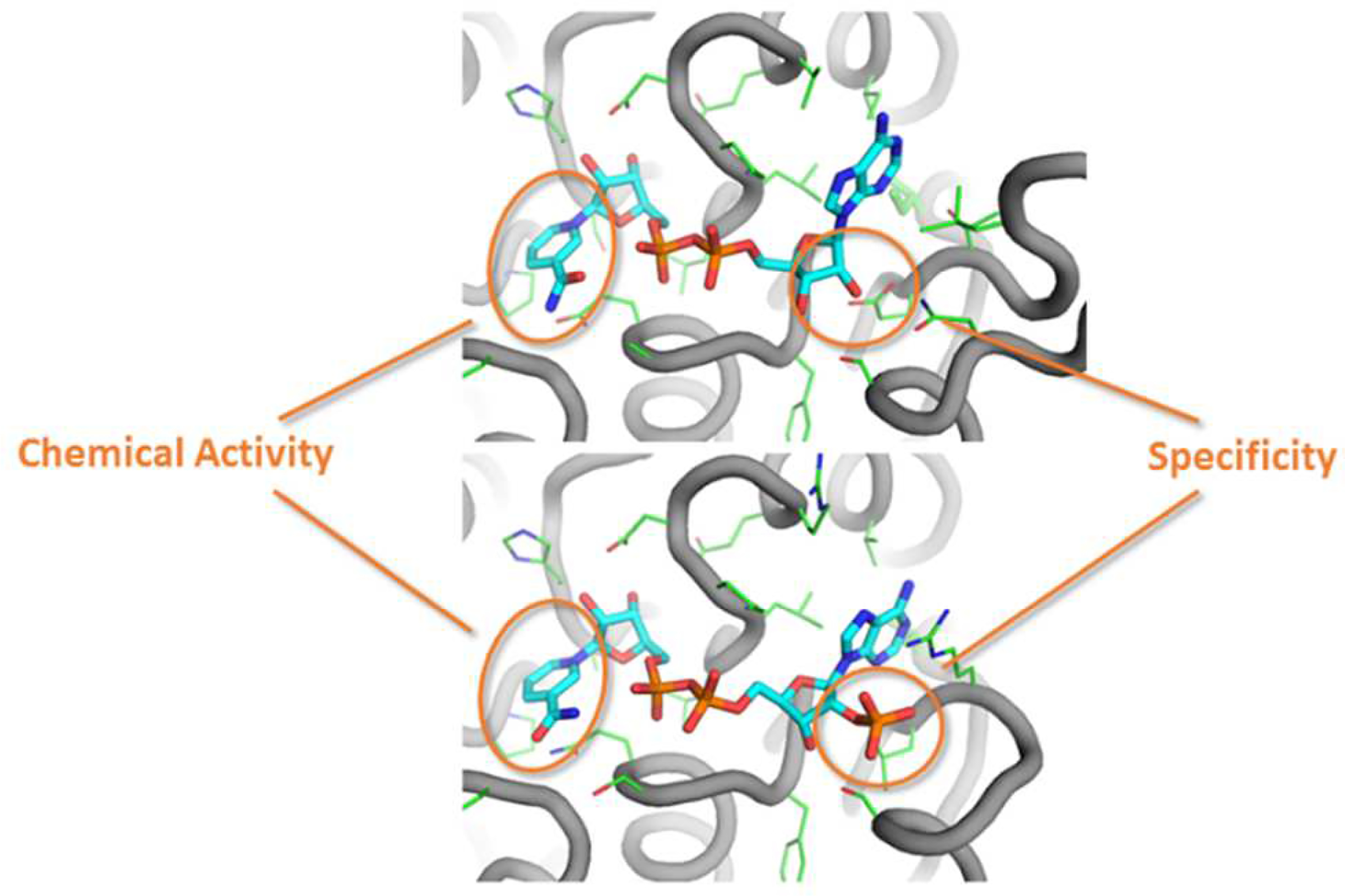
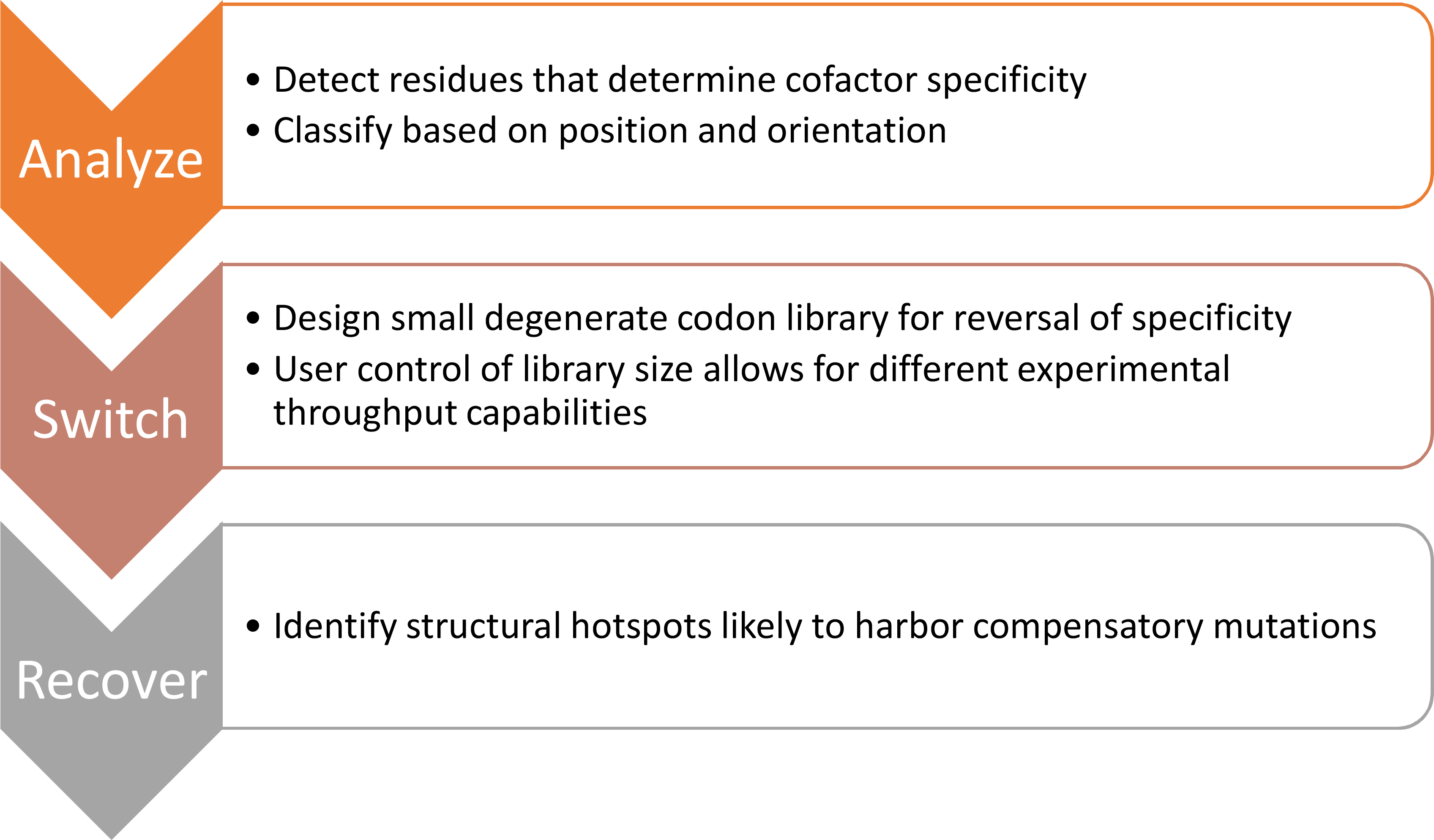
The ability to control enzymatic nicotinamide cofactor utilization is critical for engineering efficient metabolic pathways. However, the complex interactions that determine cofactor-binding preference render this engineering particularly challenging. Physics-based models have been insufficiently accurate and blind directed evolution methods too inefficient to be widely adopted. Building on a comprehensive survey of previous studies and our own prior engineering successes, we present a structure-guided, semirational strategy for reversing enzymatic nicotinamide cofactor specificity. This heuristic-based approach leverages the diversity and sensitivity of catalytically productive cofactor binding geometries to limit the problem to an experimentally tractable scale. We demonstrate the efficacy of this strategy by inverting the cofactor specificity of four structurally diverse NADP-dependent enzymes: glyoxylate reductase, cinnamyl alcohol dehydrogenase, xylose reductase, and iron-containing alcohol dehydrogenase. The analytical components of this approach have been fully automated and are available in the form of an easy-to-use web tool: Cofactor Specificity Reversal-Structural Analysis and Library Design (CSR-SALAD).
Keywords: cofactor specificity; library design; oxidoreductases; protein engineering; semirational engineering.
Figures
References
-
- Wang Y, San K-Y and Bennett GN (2013) Cofactor engineering for advancing chemical biotechnology, Curr. Opin. Biotechnol. 24, 994–999. - PubMed
-
- Matsushika A, Watanabe S, Kodaki T, Makino K, Inoue H, Murakami K, Takimura O, and Sawayama S (2008) Expression of protein engineered NADP+-dependent xylitol dehydrogenase increases ethanol production from xylose in recombinant Saccharomyces cerevisiae, Appl. Microbiol. Biotechnol. 81, 243–255. - PubMed
-
- Bastian S, Liu X, Meyerowitz JT, Snow CD, Chen MMY, and Arnold FH (2011) Engineered ketol-acid reductoisomerase and alcohol dehydrogenase enable anaerobic 2-methylpropan-1-ol production at theoretical yield in Escherichia coli, Metab. Eng. 13, 345–352. - PubMed
Publication types
MeSH terms
Substances
Grants and funding
LinkOut - more resources
Full Text Sources
Other Literature Sources
