


Essential competencies in prescribing: A first european cross-sectional study among 895 final-year medical students
- PMID: 27648725
- PMCID: PMC5260337
- DOI: 10.1002/cpt.521
Essential competencies in prescribing: A first european cross-sectional study among 895 final-year medical students
Abstract
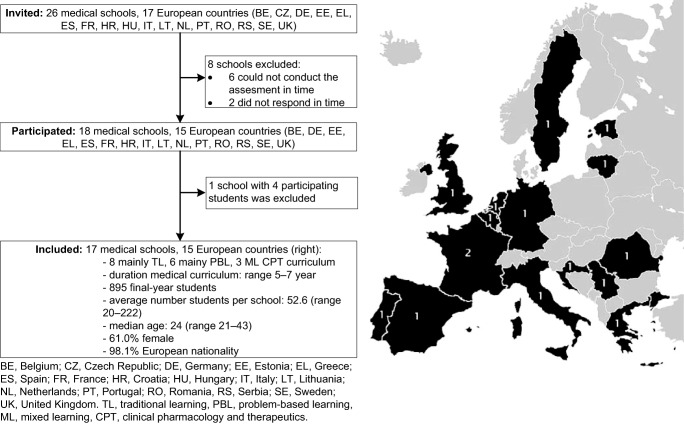
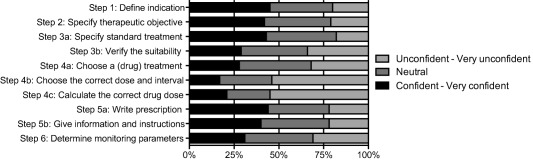
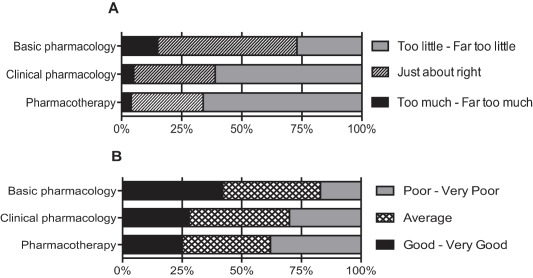
European medical students should have acquired adequate prescribing competencies before graduation, but it is not known whether this is the case. In this international multicenter study, we evaluated the essential knowledge, skills, and attitudes in clinical pharmacology and therapeutics (CPT) of final-year medical students across Europe. In a cross-sectional design, 26 medical schools from 17 European countries were asked to administer a standardized assessment and questionnaire to 50 final-year students. Although there were differences between schools, our results show an overall lack of essential prescribing competencies among final-year students in Europe. Students had a poor knowledge of drug interactions and contraindications, and chose inappropriate therapies for common diseases or made prescribing errors. Our results suggest that undergraduate teaching in CPT is inadequate in many European schools, leading to incompetent prescribers and potentially unsafe patient care. A European core curriculum with clear learning outcomes and assessments should be urgently developed.
© 2016 The Authors. Clinical Pharmacology & Therapeutics published by Wiley Periodicals, Inc. on behalf of The American Society for Clinical Pharmacology and Therapeutics.
Figures
References
-
- Maxwell, S.R. , Cascorbi, I. , Orme, M. & Webb, D.J. Joint BPS/EACPT Working Group on Safe Presribing. Educating European (junior) doctors for safe prescribing. Basic Clin. Pharmacol. Toxicol. 101, 395–400 (2007). - PubMed
-
- An indepth investigation into causes of prescribing errors by foundation trainees in relation to their medical education: EQUIP study. <http://www.gmc‐uk.org/FINAL_Report_prevalence_and_causes_of_prescribing_...> (2009). Accessed 24 May 2016.
-
- Lewis, P.J. , Dornan, T. , Taylor, D. , Tully, M.P. , Wass, V. & Ashcroft, D.M. Prevalence, incidence and nature of prescribing errors in hospital inpatients: a systematic review. Drug. Saf. 32, 379–389 (2009). - PubMed
Publication types
MeSH terms
LinkOut - more resources
Full Text Sources
Other Literature Sources
