


Molecular epidemiology of human enterovirus 71 at the origin of an epidemic of fatal hand, foot and mouth disease cases in Cambodia
- PMID: 27651091
- PMCID: PMC5113052
- DOI: 10.1038/emi.2016.101
Molecular epidemiology of human enterovirus 71 at the origin of an epidemic of fatal hand, foot and mouth disease cases in Cambodia
Abstract
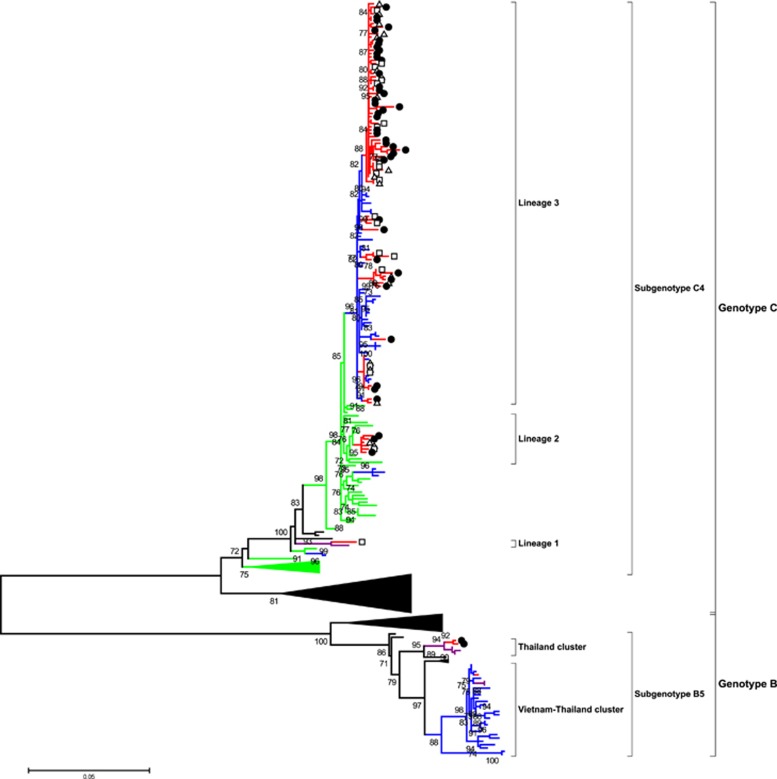
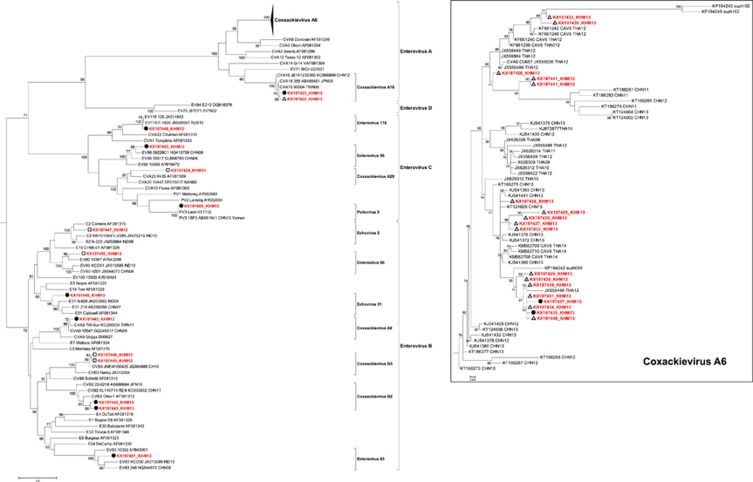
Human enterovirus 71 (EV-A71) causes hand, foot and mouth disease (HFMD). EV-A71 circulates in many countries and has caused large epidemics, especially in the Asia-Pacific region, since 1997. In April 2012, an undiagnosed fatal disease with neurological involvement and respiratory distress occurred in young children admitted to the Kantha Bopha Children's Hospital in Phnom Penh, Cambodia. Most died within a day of hospital admission, causing public panic and international concern. In this study, we describe the enterovirus (EV) genotypes that were isolated during the outbreak in 2012 and the following year. From June 2012 to November 2013, 312 specimens were collected from hospitalized and ambulatory patients and tested by generic EV and specific EV-A71 reverse transcription PCR. EV-A71 was detected in 208 clinical specimens while other EVs were found in 32 patients. The VP1 gene and/or the complete genome were generated. Our phylogenetic sequencing analysis demonstrated that 80 EV-A71 strains belonged to the C4a subgenotype and 3 EV-A71 strains belonged to the B5 genotype. Furthermore, some lineages of EV-A71 were found to have appeared in Cambodia following separate introductions from neighboring countries. Nineteen EV A (CV-A6 and CV-A16), 9 EV B (EV-B83, CV-B3, CV-B2, CV-A9, E-31, E-2 and EV-B80) and 4 EV C (EV-C116, EV-C96, CV-A20 and Vaccine-related PV-3) strains were also detected. We found no molecular markers of disease severity. We report here that EV-A71 genotype C4 was the main etiological agent of a large outbreak of HFMD and particularly of severe forms associated with central nervous system infections. The role played by other EVs in the epidemic could not be clearly established.
Figures
References
-
- Pallansch M, Roos R. Enteroviruses: polioviruses, Coxsackieviruses, echoviruses, and newer enteroviruses. In: Knipe DM, Howley PM (eds). Field Virology, 5th edn. Vol. 1. Lippincott Williams & Wilkins: Philadelphia, USA. 2007, 840–893.
-
- Adams MJ, Lefkowitz EJ, King AM et al. Ratification vote on taxonomic proposals to the International Committee on Taxonomy of Viruses. Arch Virol 2015; 160: 1837–1850. - PubMed
-
- Cabrerizo M, Tarrago D, Munoz-Almagro C et al. Molecular epidemiology of enterovirus 71, coxsackievirus A16 and A6 associated with hand, foot and mouth disease in Spain. Clin Microbiol Infect 2013; 20: 150–156. - PubMed
-
- Schmidt NJ, Lennette EH, Ho HH. An apparently new enterovirus isolated from patients with disease of the central nervous system. J Infect Dis 1974; 129: 304–309. - PubMed
MeSH terms
Substances
Grants and funding
LinkOut - more resources
Full Text Sources
Other Literature Sources
Miscellaneous
