


Memory deficits, gait ataxia and neuronal loss in the hippocampus and cerebellum in mice that are heterozygous for Pur-alpha
- PMID: 27651147
- PMCID: PMC5458736
- DOI: 10.1016/j.neuroscience.2016.09.018
Memory deficits, gait ataxia and neuronal loss in the hippocampus and cerebellum in mice that are heterozygous for Pur-alpha
Abstract
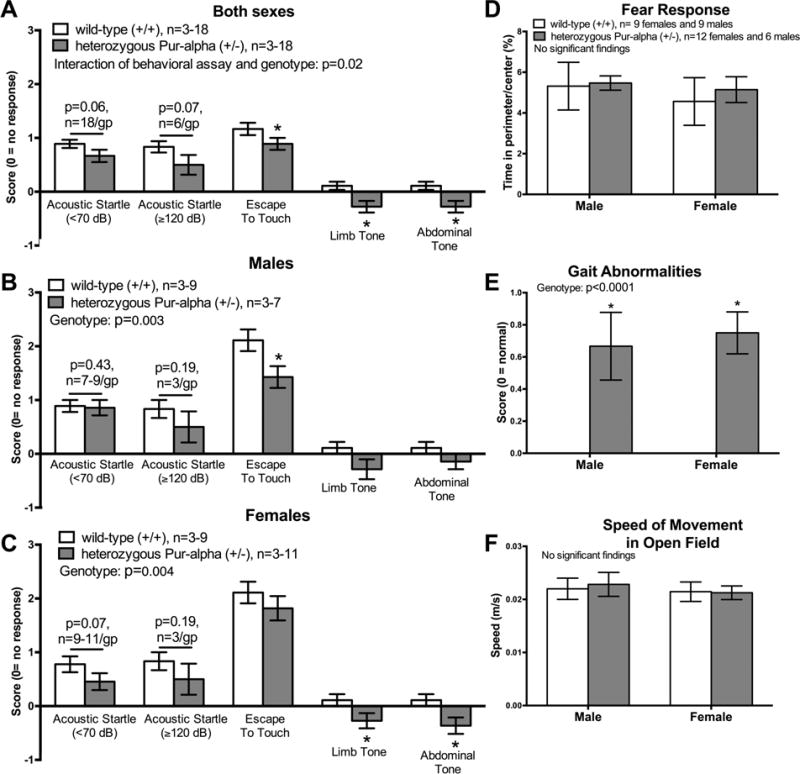
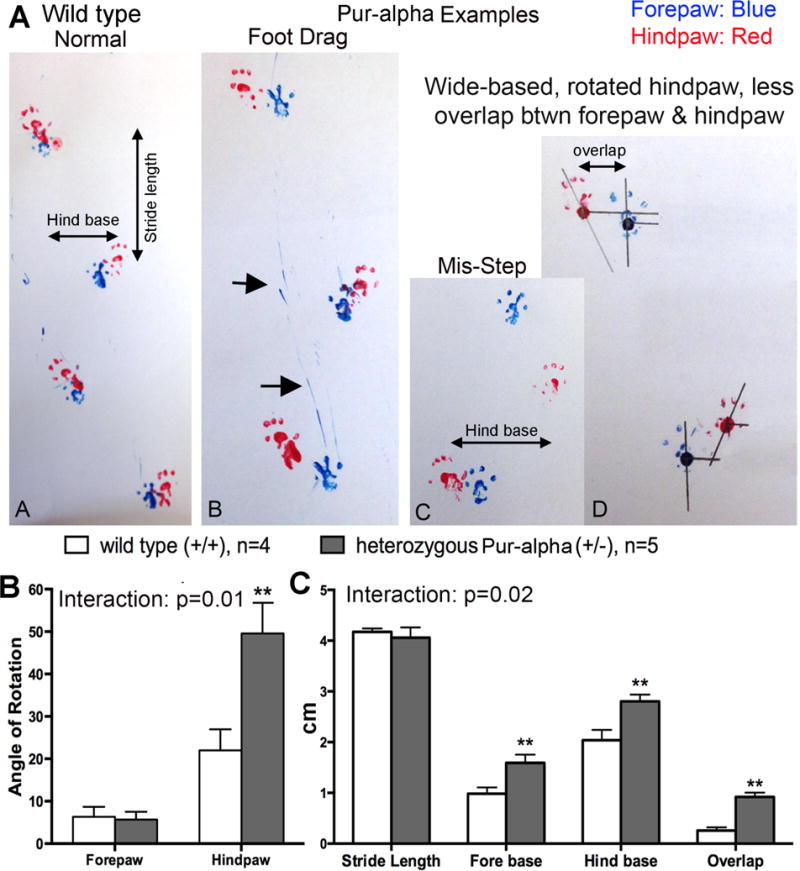
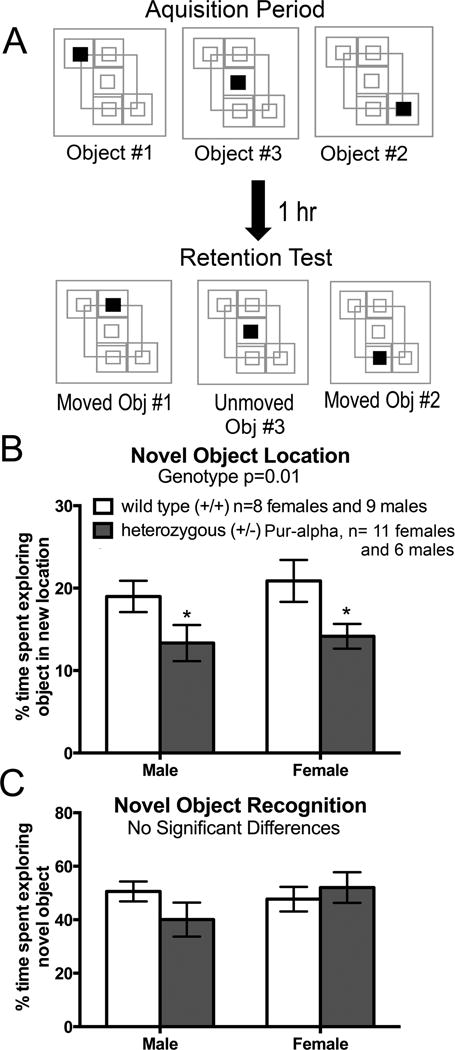
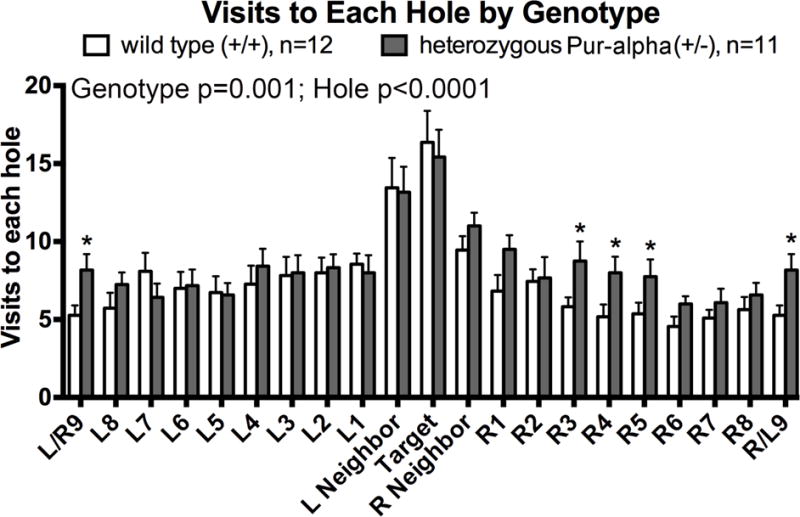
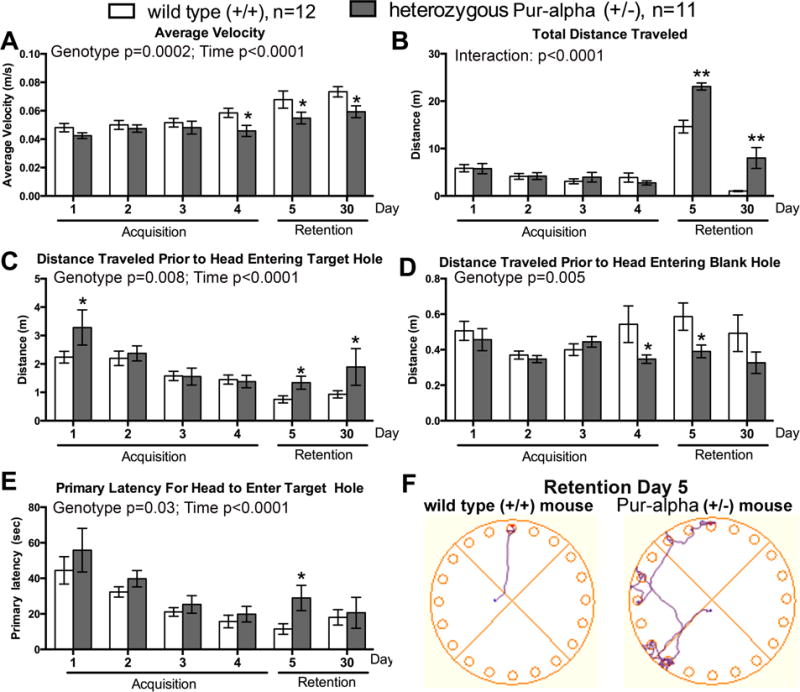
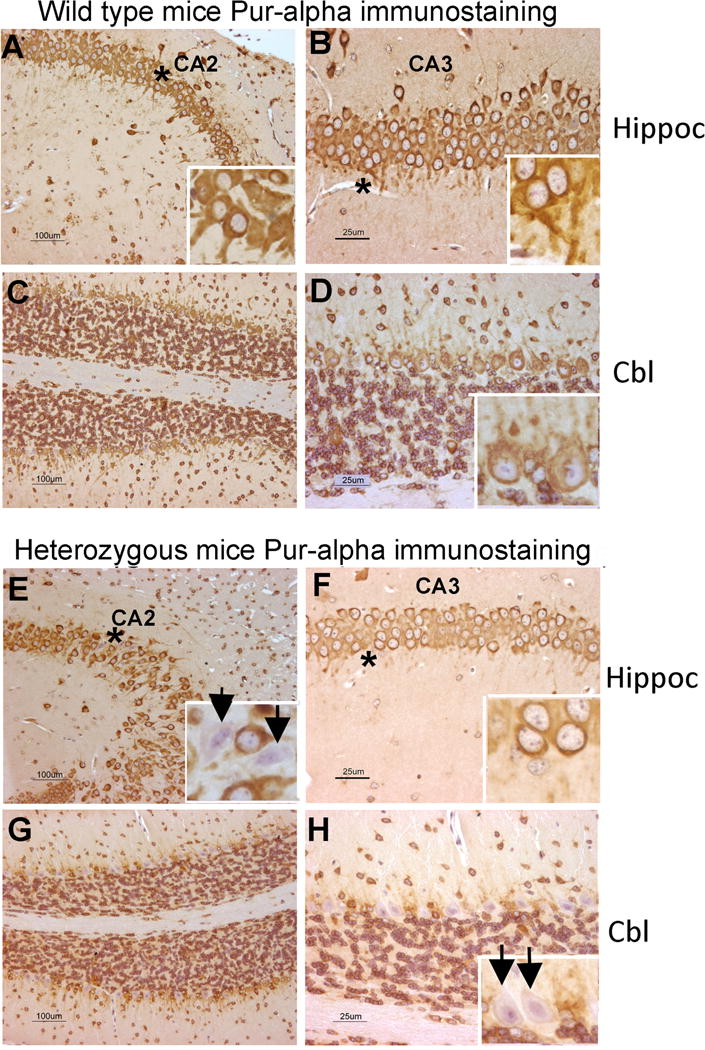
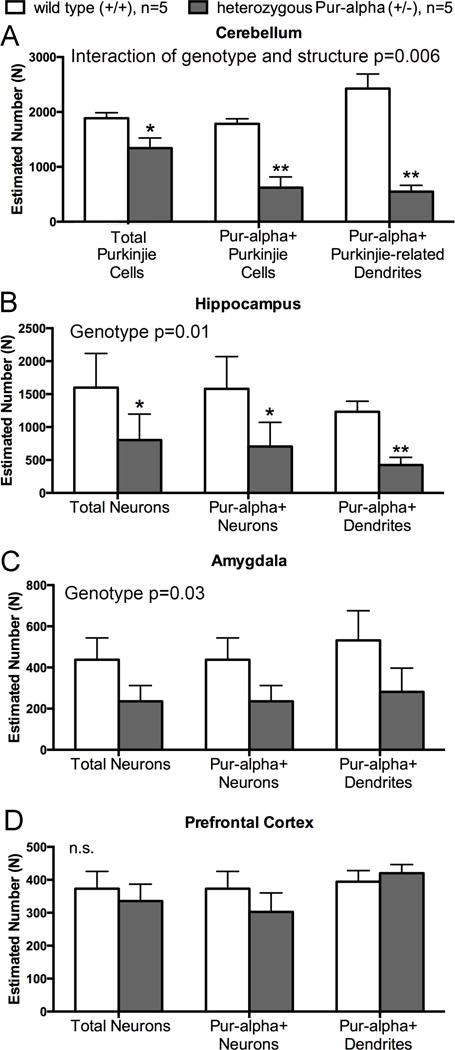
Pur-alpha is a highly conserved sequence-specific DNA and RNA binding protein with established roles in DNA replication, RNA translation, cell cycle regulation, and maintenance of neuronal differentiation. Prior studies have shown that mice lacking Pur-alpha (-/-) display decreased neurogenesis and impaired neuronal differentiation. We sought to examine for the first time, the behavioral phenotype and brain histopathology of mice that are heterozygous (+/-) for Pur-alpha. Standardized behavioral phenotyping revealed a decreased escape response to touch, limb and abdominal hypotonia, and gait abnormalities in heterozygous Pur-alpha (+/-) mice, compared to wild-type (+/+) littermates. Footprint pattern analyses showed wider-based steps, increased missteps and more outwardly rotated hindpaws in heterozygous Pur-alpha (+/-) mice, suggestive of cerebellar pathology. The Barnes maze and novel object location testing revealed significant memory deficits in heterozygous Pur-alpha mice, suggestive of hippocampal pathology. Quantitative immunohistochemical assays of the vermal region of the cerebellum and CA1-3 regions of the hippocampus revealed reduced numbers of neurons in general, as well as reduced numbers of Pur-alpha+-immunopositive neurons and dendrites in heterozygous Pur-alpha mice, compared to wild-type littermates. Past studies have implicated mutations in Pur-alpha in several diseases of brain development and neurodegeneration. When combined with these new findings, the Pur-alpha heterozygous knockout mice may provide an animal model to study mechanisms of and treatments for Pur-alpha-related cognitive deficiencies and neuropathology.
Keywords: PURA; animals; brain pathology; knockout; mice; puralpha.
Copyright © 2016 IBRO. Published by Elsevier Ltd. All rights reserved.
Figures
References
-
- Bach ME, Hawkins RD, Osman M, Kandel ER, Mayford M. Impairment of spatial but not contextual memory in CaMKII mutant mice with a selective loss of hippocampal LTP in the range of the theta frequency. Cell. 1995;81:905–915. - PubMed
-
- Benice TS, Raber J. Object recognition analysis in mice using nose-point digital video tracking. J Neurosci Methods. 2008;168:422–430. - PubMed
-
- Benice TS, Rizk A, Kohama S, Pfankuch T, Raber J. Sex-differences in age-related cognitive decline in C57BL/6J mice associated with increased brain microtubule-associated protein 2 and synaptophysin immunoreactivity. Neuroscience. 2006;137:413–423. - PubMed
-
- Chepenik LG, Tretiakova AP, Krachmarov CP, Johnson EM, Khalili K. The single-stranded DNA binding protein, Pur-alpha, binds HIV-1 TAR RNA and activates HIV-1 transcription. Gene. 1998;210:37–44. - PubMed
MeSH terms
Substances
Grants and funding
LinkOut - more resources
Full Text Sources
Other Literature Sources
Medical
Molecular Biology Databases
Miscellaneous
