


XMetDB: an open access database for xenobiotic metabolism
- PMID: 27651835
- PMCID: PMC5025591
- DOI: 10.1186/s13321-016-0161-3
XMetDB: an open access database for xenobiotic metabolism
Abstract
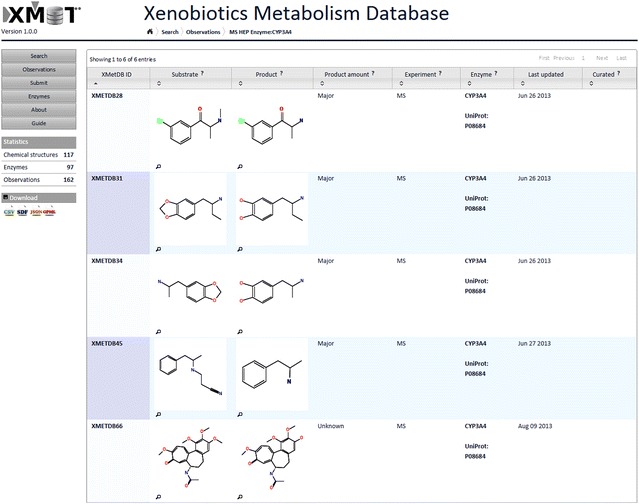
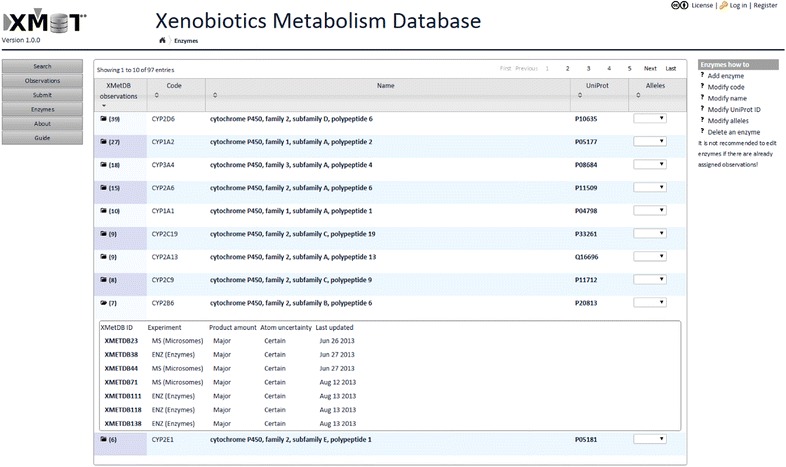
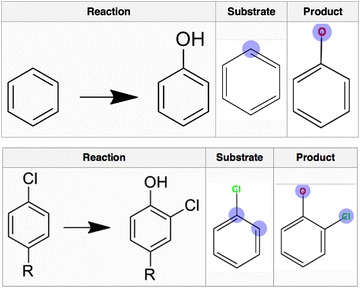
Xenobiotic metabolism is an active research topic but the limited amount of openly available high-quality biotransformation data constrains predictive modeling. Current database often default to commonly available information: which enzyme metabolizes a compound, but neither experimental conditions nor the atoms that undergo metabolization are captured. We present XMetDB, an open access database for drugs and other xenobiotics and their respective metabolites. The database contains chemical structures of xenobiotic biotransformations with substrate atoms annotated as reaction centra, the resulting product formed, and the catalyzing enzyme, type of experiment, and literature references. Associated with the database is a web interface for the submission and retrieval of experimental metabolite data for drugs and other xenobiotics in various formats, and a web API for programmatic access is also available. The database is open for data deposition, and a curation scheme is in place for quality control. An extensive guide on how to enter experimental data into is available from the XMetDB wiki. XMetDB formalizes how biotransformation data should be reported, and the openly available systematically labeled data is a big step forward towards better models for predictive metabolism.
Keywords: Cytochrome; Database; Metabolism; P450; Xenobiotic.
Figures
References
-
- Ito K, Iwatsubo T, Kanamitsu S, Ueda K, Suzuki H, Sugiyama Y. Prediction of pharmacokinetic alterations caused by drug–drug interactions: metabolic interaction in the liver. Pharmacol Rev. 1998;50(3):387–412. - PubMed
-
- Wu S, Blackburn K, Amburgey J, Jaworska J, Federle T. A framework for using structural, reactivity, metabolic and physicochemical similarity to evaluate the suitability of analogs for SAR-based toxicological assessments. Regul Toxicol Pharmacol. 2010;56(1):67–81. doi: 10.1016/j.yrtph.2009.09.006. - DOI - PubMed
LinkOut - more resources
Full Text Sources
Other Literature Sources
