


Identification of HIV-1-Based Virus-like Particles by Multifrequency Atomic Force Microscopy
- PMID: 27653476
- PMCID: PMC5034347
- DOI: 10.1016/j.bpj.2016.07.046
Identification of HIV-1-Based Virus-like Particles by Multifrequency Atomic Force Microscopy
Abstract
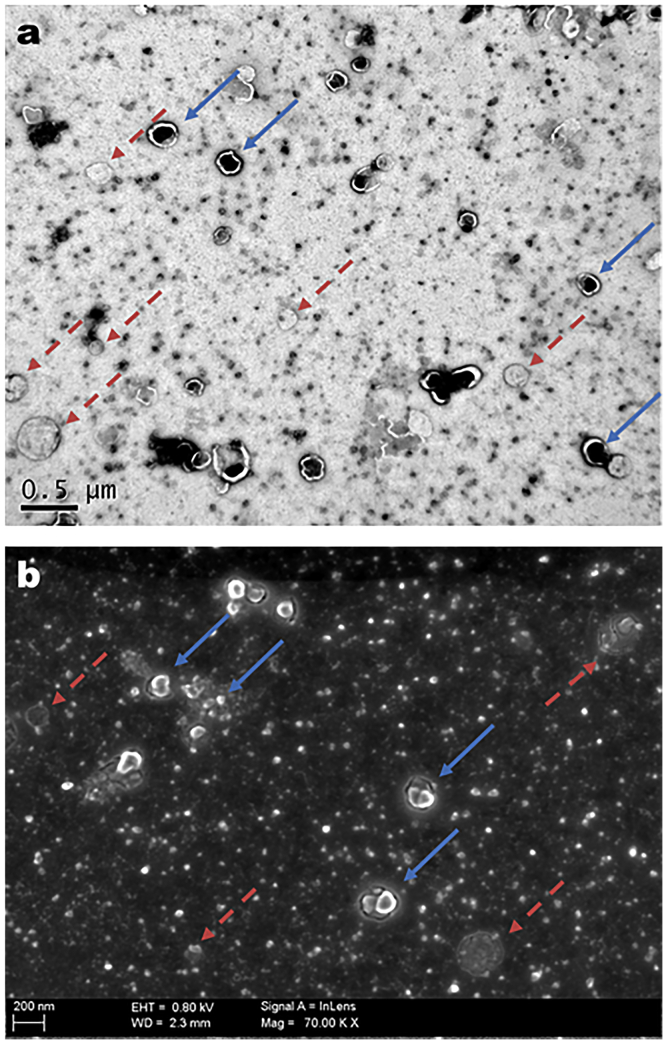
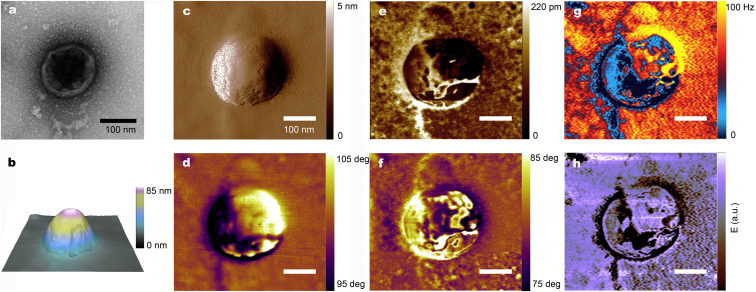
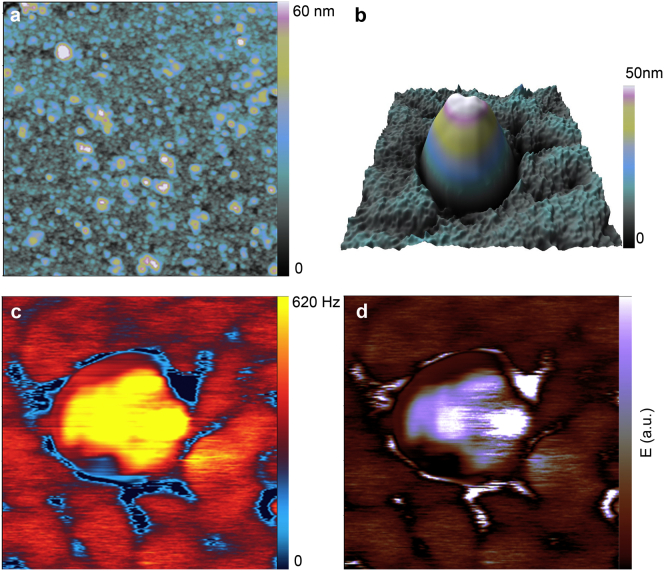
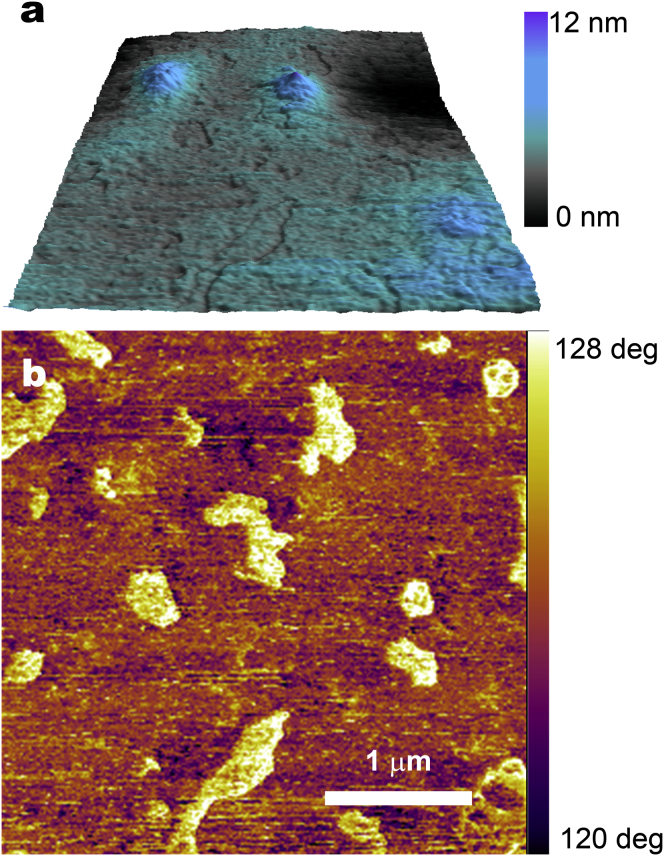
Virus-like particles (VLPs) have become a promising platform for vaccine production. VLPs are formed by structural viral proteins that inherently self-assemble when expressed in a host cell. They represent a highly immunogenic and safe vaccine platform, due to the absence of the viral genome and its high protein density. One of the most important parameters in vaccine production is the quality of the product. A related bottleneck in VLP-based products is the presence of cellular vesicles as a major contaminant in the preparations, which will require the set up of techniques allowing for specific discrimination of VLPs from host vesicular bodies. In this work novel, to our knowledge, multifrequency (MF) atomic force microscopy (AFM) has permitted full structural nanophysical characterization by its access to the virus capsid of the HIV-based VLPs. The assessment of these particles by advanced amplitude modulation-frequency modulation (AM-FM) viscoelastic mapping mode has enhanced the imaging resolution of their nanomechanical properties, opening a new window for the study of the biophysical attributes of VLPs. Finally, the identification and differentiation of HIV-based VLPs from cellular vesicles has been performed under ambient conditions, providing, to our knowledge, novel methodology for the monitoring and quality control of VLPs.
Copyright © 2016 Biophysical Society. Published by Elsevier Inc. All rights reserved.
Figures
References
-
- World Health Organization. 2015. World AIDS Day 2015: Getting to zero. Web 02 Feb: http://www.who.int/.
-
- Göttlinger H.G. HIV-1 Gag: a molecular machine driving viral particle assembly and release. In: Kuiken C., McCutchan F., Foley B., Mellors J.W., Hahn B., Mullins J., Marx P., Wolinsky S., Korber B., editors. HIV Sequence Compendium 2001. Theoretical Biology and Biophysics Group, Los Alamos National Laboratory; Los Alamos, NM: 2001. LA-UR 02–2877. 2–28.
-
- Naskalska A., Pyrć K. Virus-like particles as immunogens and universal nanocarriers. Pol. J. Microbiol. 2015;64:3–13. - PubMed
Publication types
MeSH terms
Substances
LinkOut - more resources
Full Text Sources
Other Literature Sources
Miscellaneous
